Basket Summary
There are no more items in your basket
By Type
We spend our days designing furniture for people who ask the same question again and again: how do I fit my whole life into this space?
Over the past few years, that question has become urgent. The home stopped being one thing. It became the office, the gym, the guest room, and the dining room, often within the same four walls.
We looked at the numbers behind this shift. They tell a clear story about where UK homes are heading.
Hybrid work is now a permanent feature of British life. Around 28% of people in Great Britain work in a hybrid pattern, with another 13% working from home full time.
That means over 40% of workers need their home to function as a workplace for part of every week. In London, the figure rises to 51%, the highest concentration in the UK.
This changes what a room needs to do. A bedroom now doubles as an office. A living room hosts video calls in the morning and guests in the evening.
Furniture built for one purpose struggles in a home built for five.
Here is the tension at the heart of hybrid living. Our lives expanded inside the home while the homes themselves stayed small.
UK new-builds average around 76 square metres, among the smallest in Western Europe, and they have been shrinking since the 1980s. In London, high property values push sizes down further.
At the same time, urbanisation in the UK reached 83.2% in 2024, up from 78.6% in 1960. More people are living in dense cities, in smaller flats, with more demands on every square metre.
? Tip: Before buying any new piece of furniture, ask what it does when you are asleep, at work, or hosting. If the answer is “nothing,” the space is working against you.
The market has noticed. The global multifunctional furniture market is projected to grow from $9.12 billion in 2026 to $15.78 billion by 2034.
The buyers driving this growth look a lot like the people who visit our showrooms. Industry research finds that:
People are paying more for furniture that does more. That confirms something we have believed since 2007: quality space-saving design is worth investing in.
The best hybrid pieces share one trait. They transform without compromise.
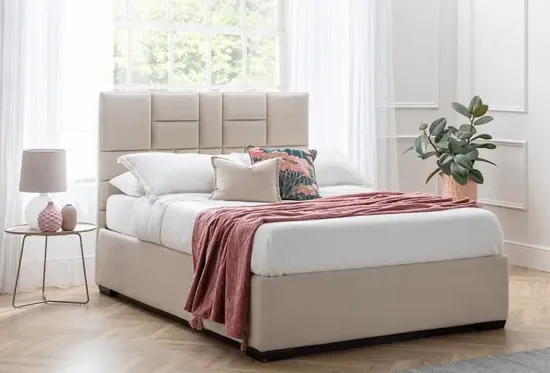
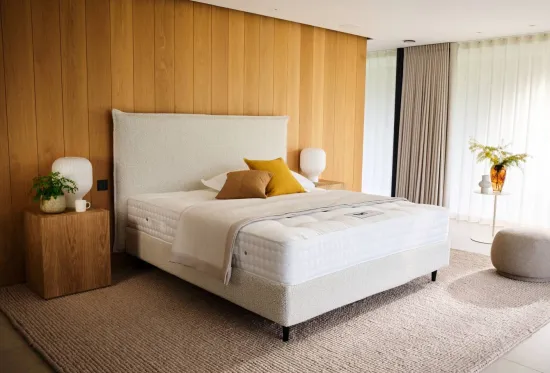
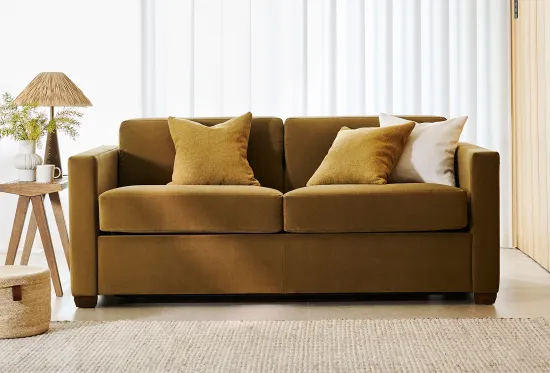
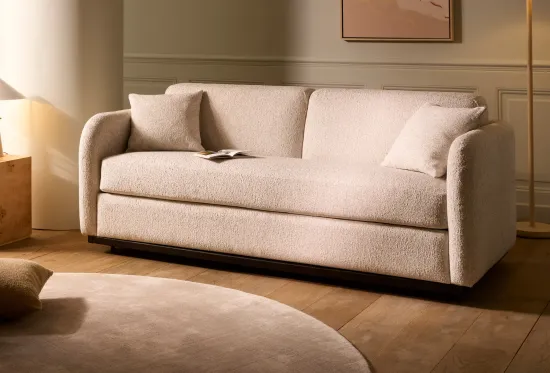
A sofa bed used to mean a dreadful night’s sleep. We built ours for everyday use, so guests sleep as well as you do. A storage bed used to mean a shallow drawer. Ours swallows full suitcases, ironing boards, Christmas trees, and entire seasonal wardrobes.
The same logic applies across the home:
Our founding principle puts it simply: keep your clutter, but have better storage.
This is often overlooked in the hybrid living conversation. The goal is comfort and beauty alongside function. Furniture that saves space but looks temporary makes a home feel temporary too.
We see hybrid living as a permanent redefinition of the home. Rooms are becoming fluid rather than fixed. The data supports this: the residential segment holds 64.9% of the modular furniture market, and convertible designs are the fastest-growing product category.
There is a sustainability angle here as well. One well-made piece that serves three purposes replaces three pieces that serve one. Buying furniture built to last a decade or more reduces waste and cost over time.
That is why we hand-craft everything in our Nottingham workshop, with British materials and craftsmen who have been with us for over a decade. Furniture that works this hard needs to be built this well.
Hybrid living rewards people who plan their space deliberately. Measure your rooms. List the jobs each one needs to do. Then choose pieces that cover more than one of them.
If you want to test the idea in person, visit our showrooms in Swiss Cottage and Chelsea. Bring your own suitcase and see how much a storage bed really holds.
Your home has more space than you think.
The right furniture reveals it.
Visit a Showroom Book a Consultation