
Basket Summary
There are no more items in your basket
By Type
GUIDES · LIVING ROOM
Everything you need to know before you buy — from size and layout to filling, fabric, and colour.
Choosing a new sofa can feel like a bigger decision than it should be. It's usually the biggest piece of furniture in the room, the one everyone sits on every single day, and the one you'll be living with for years to come. With so many shapes, fillings, fabrics and colours to choose from, it's easy to feel a little overwhelmed before you've even started. This guide breaks it all down into straightforward sections covering sofa types, fillings, room layout and size, and honest guidance on sofa beds versus storage sofas versus regular sofas, before ending with how Furl approaches sofa selection ourselves.
In this article
I. How to measure space for your sofa
II. What is the ⅔ rule for sofas?
III. What are the different types of sofa?
IV. Finding the right sofa layout for your room
V. What style of sofa should you choose?
VI. Choosing the right sofa filling
VII. What fabric should you go for?
VIII. What colour should you go for?
IX. Should you choose a sofa bed, storage sofa, or regular sofa?
XI. Furl's top tips for choosing a new sofa
XII. Sofa FAQs
XIII. Sofa inspiration
Before you fall for a particular style or fabric, take a proper look at the space you're furnishing. Measure the floor space where the sofa will sit, but don't stop there — measure the space around it too, so you can still walk through the room comfortably once it's in place. Leave at least 60–90cm of clear walking space wherever possible, more if the route passes in front of a door or into another room. It's also worth measuring your doorways, hallways, and any tight corners along the delivery route, so you know your new sofa will actually make it into the room. Furl sofas are delivered in sections for exactly this reason, but it's a habit worth keeping whatever you're buying, and from wherever.
The ⅔ rule is a simple design principle that says your sofa should be roughly two-thirds the length of the wall it sits against. Any surrounding décor — a coffee table, a piece of wall art, a media unit — should in turn be about two-thirds the length of the sofa itself. It sounds like a small detail, but it's the difference between a room that feels properly proportioned and one where the furniture looks slightly too big or too small for the space. Treat it as a useful starting point rather than a strict rule, but it's a good gut check before you commit to a size.
There isn't one "right" type of sofa — only the right type for your room, your household, and how you actually use your living space. Here's a quick guide to the main shapes you'll come across.
A straight sofa is the classic shape most people picture: a single, straight run of seating, usually as a 2 or 3 seater. It's the most flexible option for smaller or more traditional rooms, works well against a single wall, and pairs easily with other seating if you want to build the room up over time.
A chaise sofa — often called an L-shaped sofa — has an extended chaise section at one end for stretching out. It offers more lounging space than a straight sofa without needing the full footprint of a corner sofa, and works particularly well as a family sofa or in front of the TV.
A corner sofa wraps around, typically seating four to seven people, and is built to maximise seating in larger or open-plan rooms. It's a strong choice if you regularly host, or if your living room doubles as the main family space.
A modular sofa is made up of individual sections you can rearrange, add to, or split apart entirely. It's the most flexible option of all, ideal for households whose needs change — or who simply like being able to reconfigure the room.
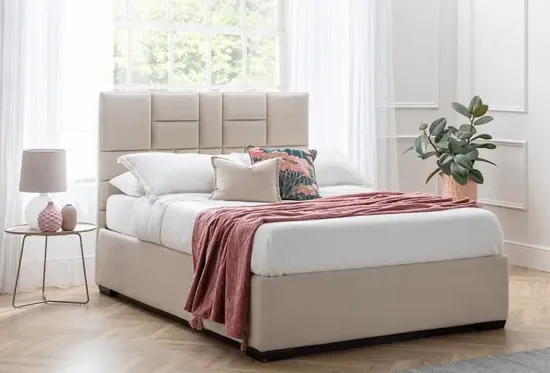
A storage sofa looks like any other sofa from the outside but includes hidden storage, usually in the base or the arms, for everything from spare bedding to remote controls and toys. They typically come as 2 or 3 seaters and are a brilliant option if your living room doubles as a catch-all for clutter. Take a look at our storage sofa range to see how much space they can genuinely reclaim.
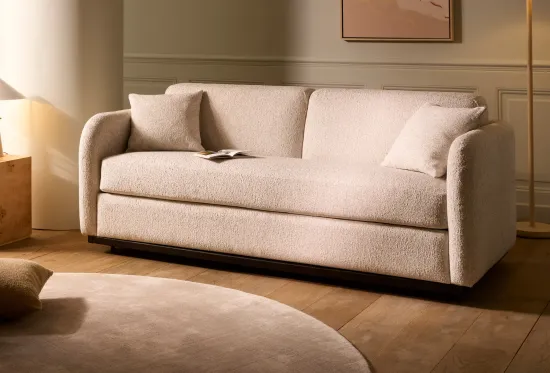
A sofa bed does exactly what it says: a fully functional sofa by day that folds out into a proper bed by night. At Furl, every sofa bed is built as a proper bed first, with real bed sizes and a proper mattress, so it works just as well for regular guests as it does for occasional ones. Browse the full sofa bed range to see the different styles and sizes available.
Different sofa types suit different room layouts, and getting this right makes as much difference as the sofa itself.
Best suited to larger rooms, open-plan living spaces, or family households, where they create clear zoning and maximise seating without needing extra chairs.
Best in smaller rooms with one strong focal point — a TV, a large window, a statement coffee table — and in more minimalist layouts. They also work well paired with a corner or L-shaped sofa if your room is large enough for multiple seating zones.
Perfect for busy households that need a layout that can change for different occasions, and for rooms with an unusual shape where more traditional sofa types don't quite fit.
Ideal for busy households where space, and storage, is at a premium — particularly useful in smaller living rooms doing double duty as a playroom or guest space.
Best for rooms that occasionally need to double as a guest bedroom, or households without a dedicated spare room. They come in a range of styles, so finding one that matches your room's layout and aesthetic isn't a compromise.
Beyond shape and size, finding a sofa that matches your overall aesthetic is just as important for a cohesive living space.
Modern sofa styles tend to favour clean lines, low profiles, and neutral tones, making them a natural fit for minimalist and contemporary interiors.
Traditional sofa styles often feature more decorative detailing — rolled arms, deep buttoning, turned feet — along with richer colours and materials, suiting a more classic or vibrant scheme.
The filling inside your sofa cushions has a bigger impact on comfort and durability than most people realise, so it's worth understanding your options.
Feather-filled cushions feel wonderfully soft and luxurious, moulding to your shape as you sit. The trade-off is that they need regular plumping to keep their shape and can flatten over time with heavy use.
Fibre filling holds its shape well and needs very little maintenance, making it a practical, low-fuss choice, though it can feel firmer and less indulgent than feather.
Foam cushions are supportive, consistent, and hold their shape for years, which makes them a popular choice for everyday family sofas — though the feel can be firmer than feather or fibre.
Blended fillings combine two materials — commonly feather and fibre, or feather and foam — to balance softness with support. It's a good middle ground if you want comfort without the maintenance feather alone requires.
Different fabrics suit different lifestyles, so it's worth thinking about how the sofa will actually be used before you fall for a colour or texture.
Breathable, soft to the touch, and available in a huge range of colours and weaves, cotton and wool blends suit almost any style of room.
They can be more prone to marking than synthetic fabrics and generally need more careful cleaning, so they suit calmer households better than very high-traffic ones.
Leather is hard-wearing, easy to wipe clean, and ages beautifully over time, developing a natural patina that many people love.
It can feel cold to sit on in winter and warm in summer, and it comes at a higher price point than most fabric alternatives.
Synthetic fabrics, including performance weaves, are typically the most stain-resistant and durable option, making them a strong choice for families and pet owners.
They can feel less natural underfoot than cotton, wool, or leather, and quality varies significantly between manufacturers.
Ultimately, the fabric you choose comes down to your lifestyle and how much durability you need day to day.
Your sofa colour is one of the easiest ways to tie a room together — or to create a genuine statement piece.
Blue. Creates a real sense of calm, works equally well in modern and traditional schemes, and pairs easily with almost any other colour in the room.
Beige. A warm, versatile neutral that's easy to live with and rarely dates, making it a dependable choice if you like to change your accessories often.
Dark green. Shades like olive and sage bring a natural, grounded feel — rich and characterful without being too bold.
Brown. A classic, earthy choice with real durability, particularly well suited to family homes that need a sofa to work hard.
Cream. Elegant and light, though it can be harder to keep looking pristine in busy households or homes with pets.
Black. A bold, anchoring choice that pairs well with almost any decor style, particularly modern and minimalist schemes.
Red. A genuine statement colour that brings warmth and energy into a room.
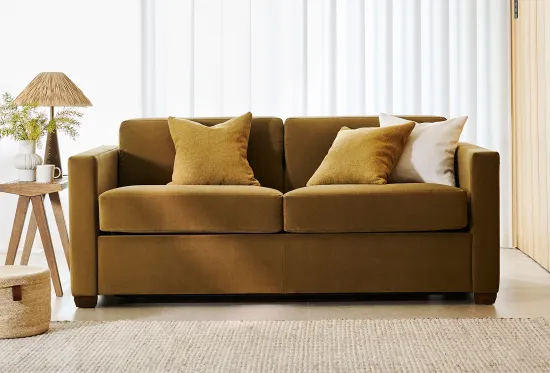
Yellow. Cheerful and warm, yellow brightens a room and works particularly well against neutral schemes.
Pink. Soft and gentle, pink pairs beautifully with metallic accents for a more considered, grown-up look.
Whatever you choose, your sofa colour should work with your existing furniture and soft furnishings — your coffee table, your curtains, your rug. Ordering some free fabric samples is the easiest way to see exactly how a colour will look against what you already have, in your own light, before you commit.
There isn't a single "best" choice between a sofa bed, a storage sofa, or a regular sofa — the right one depends entirely on your lifestyle, your aesthetic, and how much space you have to work with. If guests come to stay regularly, a sofa bed earns its keep. If storage is at a premium, a storage sofa quietly solves a problem most regular sofas can't. And if neither of those is a pressing need, a regular sofa gives you the widest choice of shapes and styles. The best approach is to be honest about how the room is actually used day to day, rather than how you imagine it might be used occasionally.
At Furl, we believe every piece of furniture should earn its place by doing more than one job. That's why storage and sofa beds sit right at the heart of what we make, alongside our regular sofa ranges — because a beautiful sofa shouldn't have to compromise on being genuinely useful too. Every sofa bed we make is built as a proper bed first, and every storage sofa is designed to make the most of every inch, in the arms as well as the base. It's the same thinking that shapes our entire sofa bed range: furniture that looks right and works properly, for as long as you own it.
Furl's team has been helping customers choose the right sofa since 2009, so we've picked up a few things along the way.
These are the questions our team gets asked most often when customers are choosing a new sofa. Honest, straightforward answers below.
A sectional sofa is another name for a modular or corner sofa — one made up of multiple sections that fit together, rather than a single fixed frame. It's a term used more commonly in the US, but you'll see it used interchangeably with "corner sofa" or "modular sofa" in the UK too.
There's no single "best" filling — it depends on what you value most. Foam offers the most consistent shape and support, feather offers the most luxurious feel, and a blended fill offers a balance of both. For a busy family sofa, foam or a feather-foam blend tends to work best.
A chaise sofa, also known as an L-shaped sofa, has an extended section at one end for stretching your legs out. It offers more lounging space than a straight sofa without the full footprint of a corner sofa.
Scatter cushions in a mix of sizes and textures — velvet, boucle, linen — layered against a plainer sofa fabric tend to work best. Two or three larger cushions with one or two smaller accent cushions per seat is a reliable starting point.
A split sofa (or sectional sofa) is one made up of two or more separate pieces that can be arranged together or used independently, offering more flexibility than a single fixed-frame sofa.
Start by measuring the wall the sofa will sit against and applying the ⅔ rule as a guide, then check the sofa will comfortably fit through your doorways, hallways, and stairwells before you order. If in doubt, ask — our team can talk you through exact dimensions for any sofa in the range.
For more inspiration on how our sofas look styled in real homes, browse the full sofa bed and storage sofa ranges online, where you'll find each style shown in a range of fabrics and settings, or visit one of our London showrooms to see them in person.
Ready to find your sofa?
Not sure where to start? Furl's team has been helping customers choose the right sofa since 2009, so we know exactly what works. Browse the full sofa bed range and storage sofa range online, or come and try them for yourself at one of our London showrooms.