Basket Summary
There are no more items in your basket
By Type
GUIDES · WOODEN OTTOMAN BEDS
What actually matters when you're choosing a wooden ottoman bed, from storage depth to the lift, the wood and who builds it.
I've been making storage beds in Nottingham since 2007, and the questions people ask about wooden ottoman beds are nearly always the same. How much will it actually hold? Will it be easy to lift? Is it real wood? Will it look good in ten years? This guide answers those properly, so you can compare any wooden ottoman bed, ours or anyone else's, on the things that make a difference.
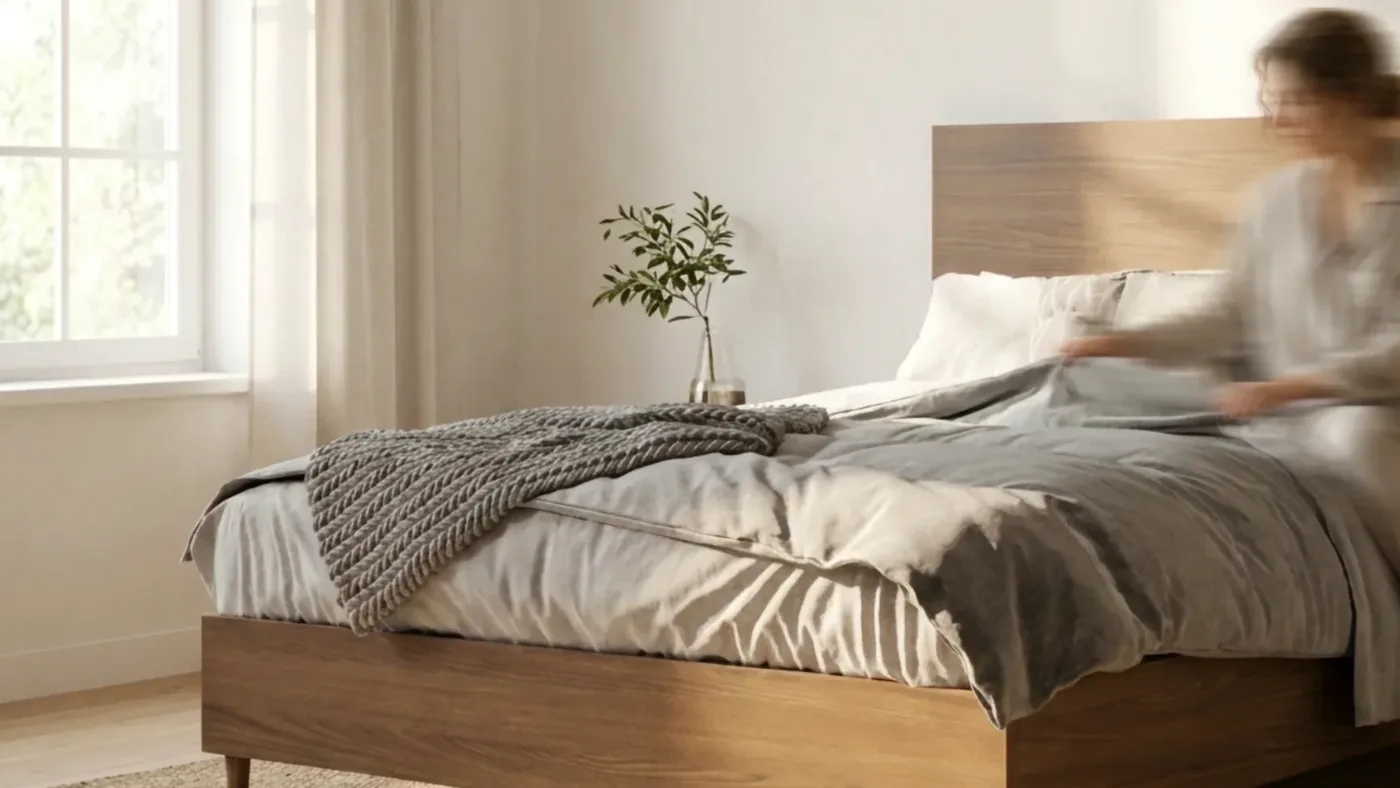
Air Wood in walnut.
An ottoman bed is a bed whose base lifts up on gas struts, so the whole space under the mattress becomes storage. You'll also hear it called a storage bed or a lift-up bed. They're the same thing. A wooden ottoman bed simply has a wooden frame rather than an upholstered one.
Wood brings a warmth to the bedroom that fabric can't. It's easy to wipe clean, it doesn't hold dust, and it suits a calm, uncluttered room.
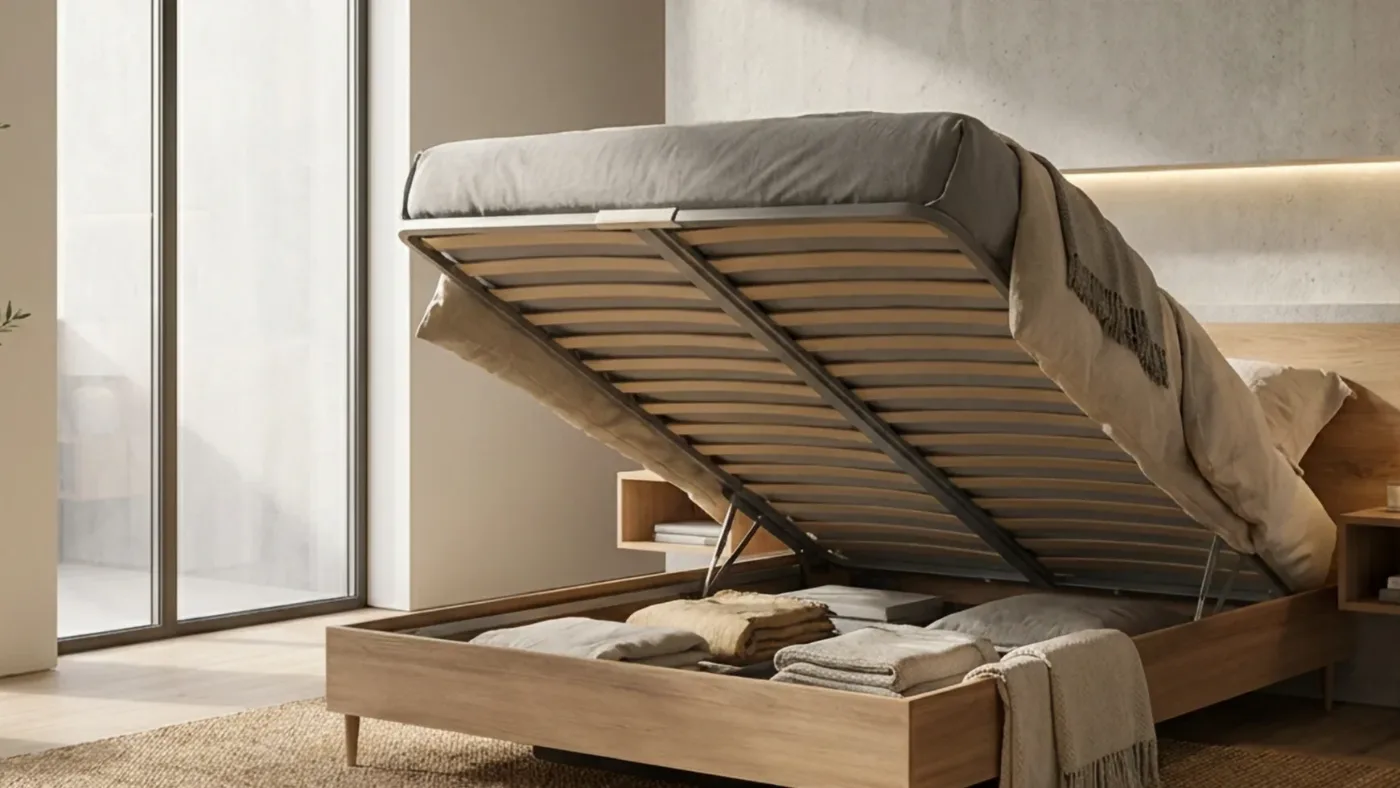
The whole base lifts, so everything under the mattress becomes storage.
This is the number that matters most, and the one most often left vague. Ask for the usable depth: measured from the floor of the base to the top of the slats. That's the space you can actually fill.
Most of the wooden ottoman beds we've looked at that state a depth offer between 22cm and 31cm, and many don't say at all. That's fine for spare bedding, but a suitcase lying flat or a winter duvet in a bag needs more. Our Air Wood has 33cm, or 38cm with Air+. Max Wood has 35cm as standard, or 40cm with Max+, which is the most popular choice.
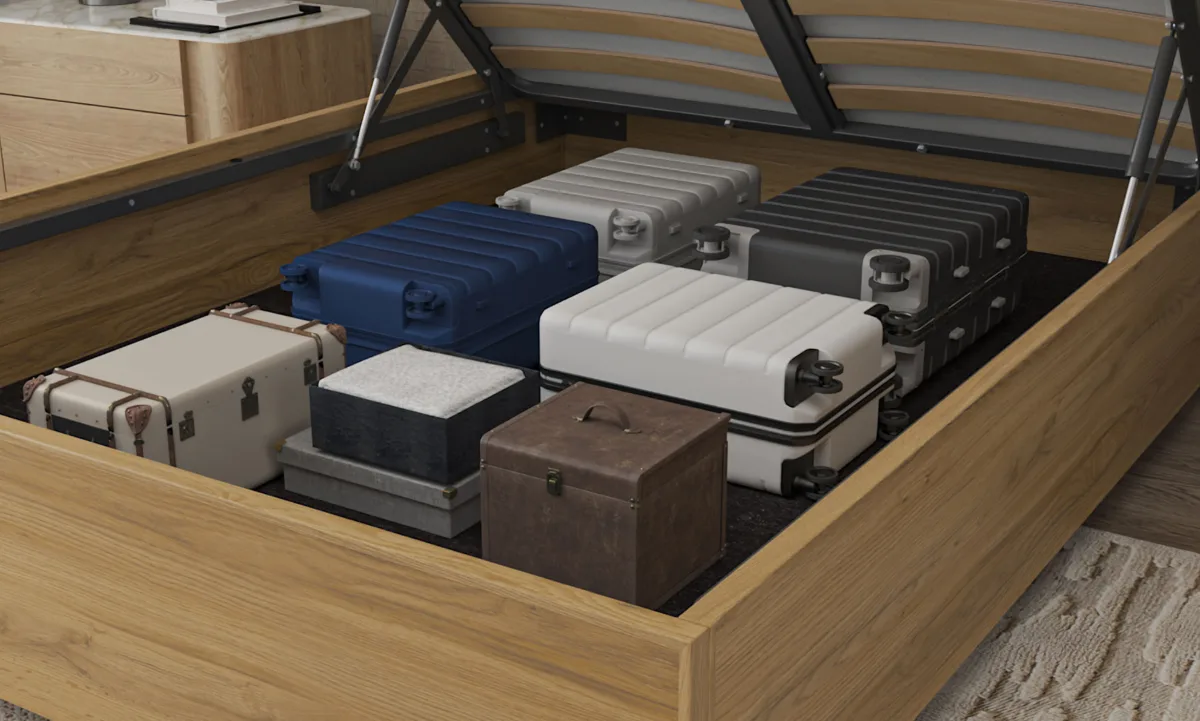
Max Wood in oak. Suitcases lie flat inside.
The gas struts do the lifting, and they need to match the weight of your mattress. Too weak and the base is hard work to open. Too strong and it won't stay closed.
We fit struts by mattress weight: 900N for a mattress of around 30kg, 1,150N for around 50kg, and 1,350N for 65kg and above. Ask any maker which struts they fit and why. If they can't tell you, that tells you something.
For heavier mattresses, there's an electric lift. It's available on every size and opens the base at the touch of a button, however much the mattress weighs. It's made for high-end mattresses from makers like Vispring, Hypnos, Tempur and Savoir, which are often far heavier than a standard mattress. A Vispring Supreme, for example, weighs around 61kg in a king size and 75kg in a super king. See our electric ottoman beds.
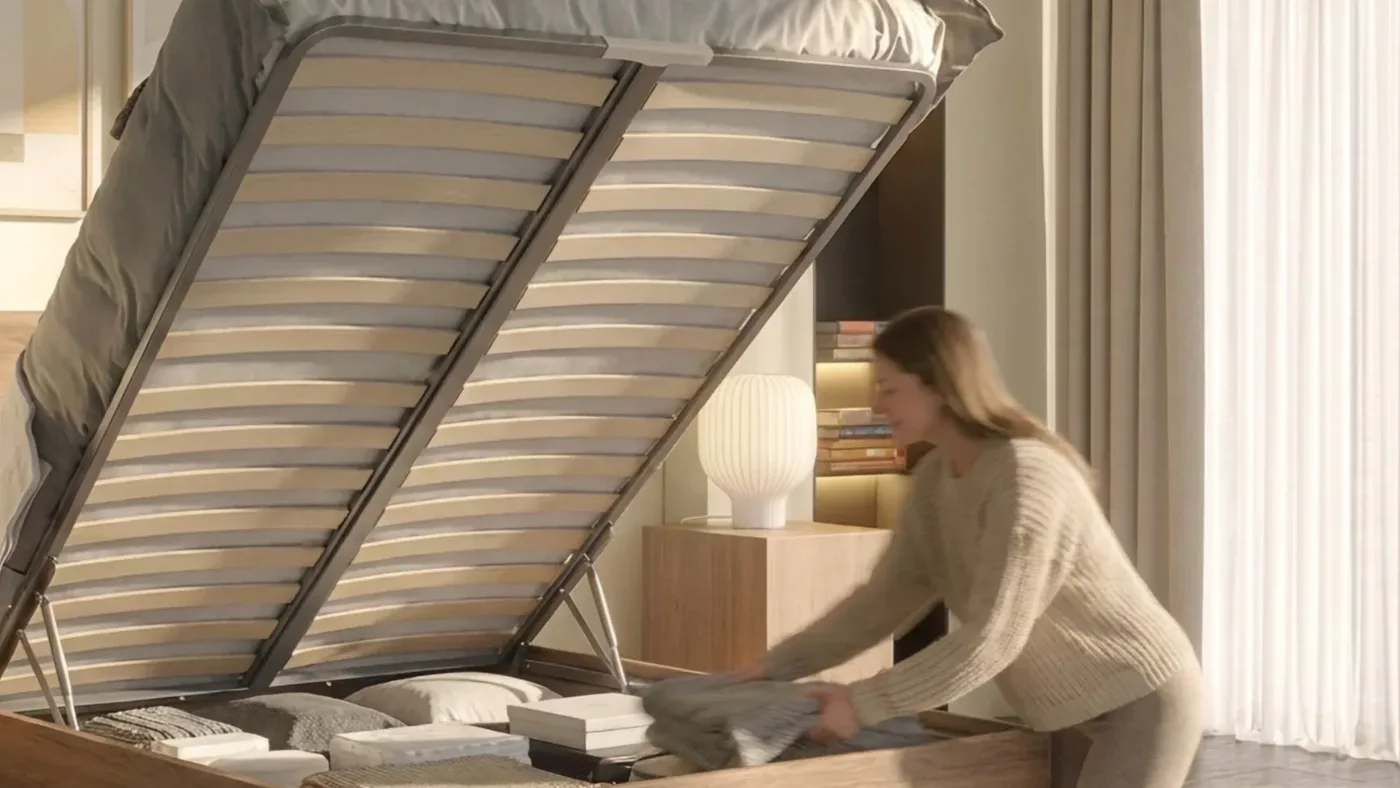
The base lifts on gas struts matched to your mattress.
Both are real wood. Solid wood is cut from the tree in one piece. It's beautiful, but it moves with the seasons as it takes on and loses moisture, and a big panel uses a lot of timber. That makes it a poor fit for a bed built to a technical specification. A base that lifts up and down every day needs its panels to stay exactly where they are, and wood that swells and shrinks with humidity and temperature can make the mechanism stiff or out of line.
A veneer is a thin layer of real wood bonded to a stable core. You see and touch genuine oak or walnut grain, the panel stays flat and true, and each bed uses a fraction of the timber. That's why we use it, and all our wood is FSC-certified. What you want to avoid is a printed "wood effect" finish sold as wood. Always ask what the surface actually is.
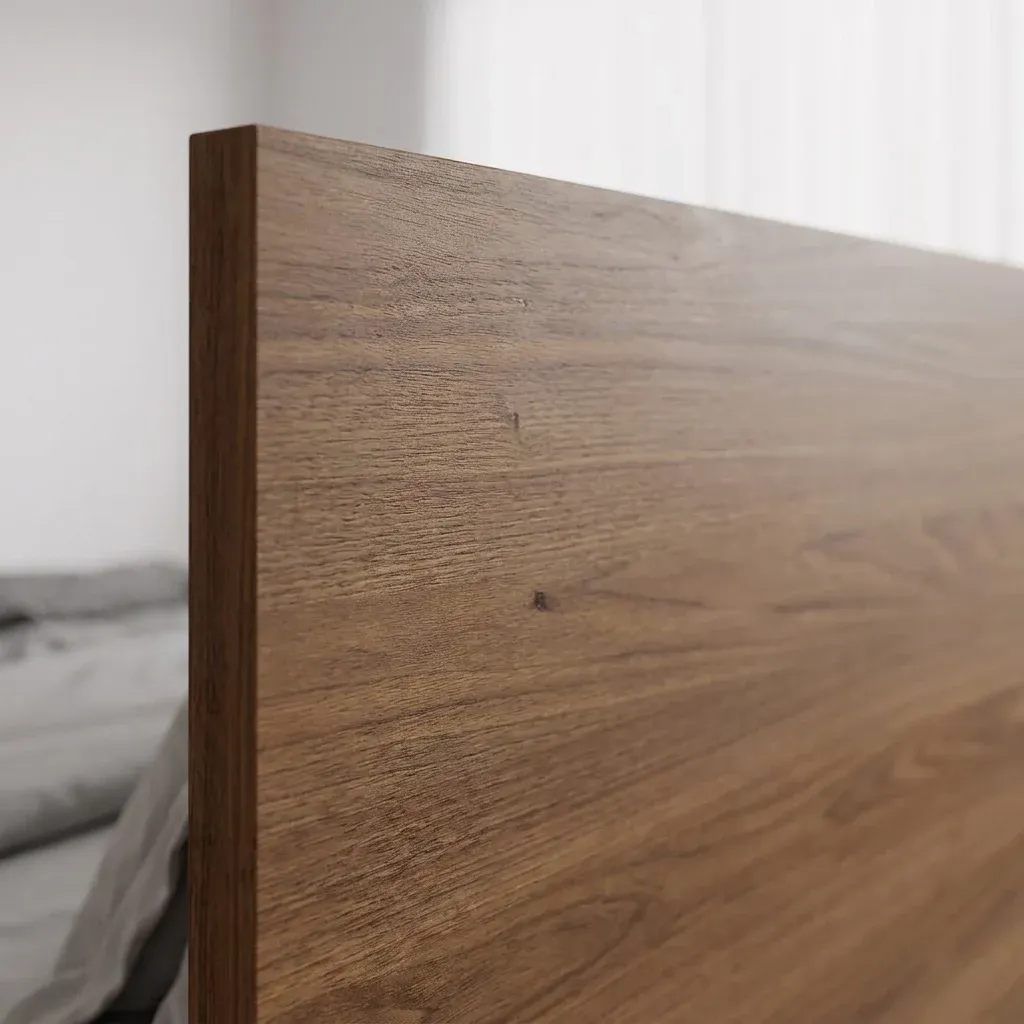
Real wood veneer, edged in the same wood. No plastic edging, no printed grain.
We looked at the wooden ottoman beds on sale in the UK this autumn. Most fall into one of five types, and the name on the listing doesn't always tell you which.
| Material | What it is | Where you'll find it |
|---|---|---|
| Solid pine | A softwood, often stained to look like oak or walnut. Good value, but softer and easier to dent. | The most common "solid wood" option. |
| Rubberwood and MDF | A rubberwood frame with MDF side panels, faced in oak veneer or an "oak effect" finish. | Most wooden ottoman beds under £500. |
| Foil or "effect" | A printed paper or plastic layer that looks like wood. No real wood on the surface. | Look for "foil", "effect" or "finish" in the description. |
| Solid oak | Real oak throughout. Beautiful and heavy, but it moves with humidity and temperature, which can upset a lift mechanism. | A handful of specialist makers, usually £900 or more. |
| Real walnut | Almost never used on ottoman beds. "Walnut" on a listing usually means a walnut-coloured stain. | We found almost none. |
Oak and walnut are premium hardwoods, and it's rare to find them on a storage bed at all. Ours are real oak or real walnut veneer, edged in the same wood, with 33cm to 40cm of storage underneath.
The quick check: ask what the panels are made of, not just what colour they are. "Oak finish", "oak effect" or a plain "walnut" usually means it isn't the real thing.
This one is down to your room. Oak is lighter and brighter, with a soft natural grain that suits pale, airy spaces. Walnut is darker and richer, running from chocolate to honey tones, and suits deeper colour schemes. Both warm slightly with light over the years.
See both: oak ottoman beds and walnut ottoman beds. Better still, come and see them side by side in a showroom. Wood always looks different in person.
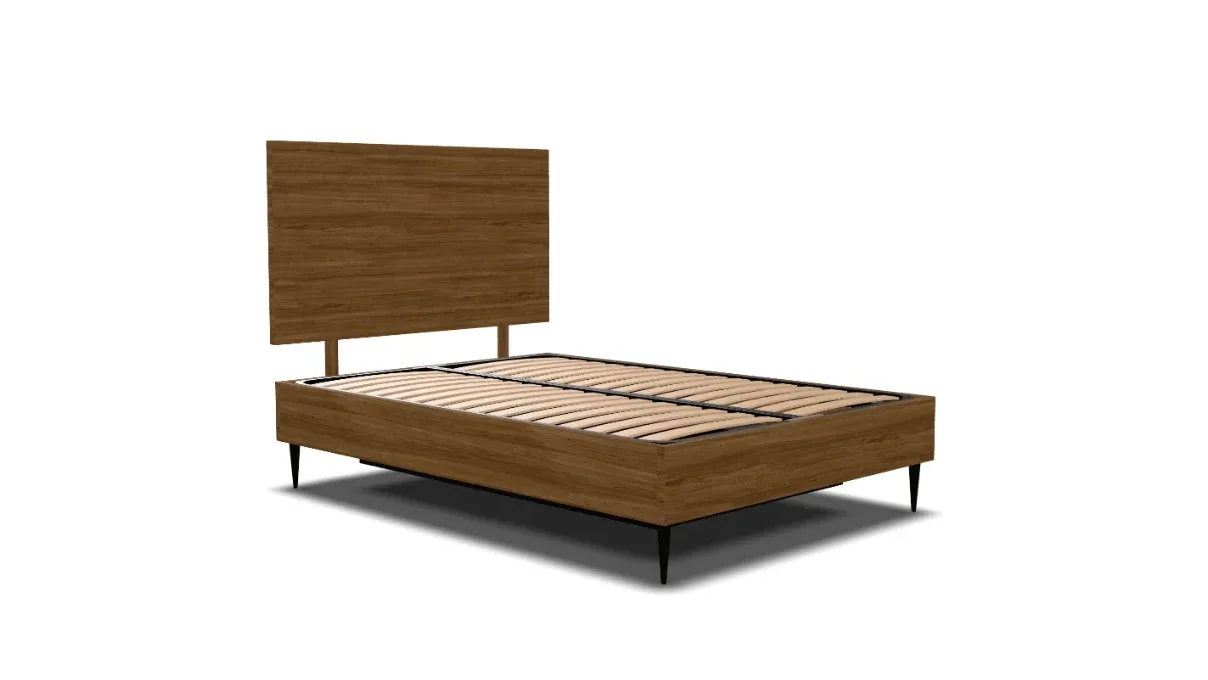
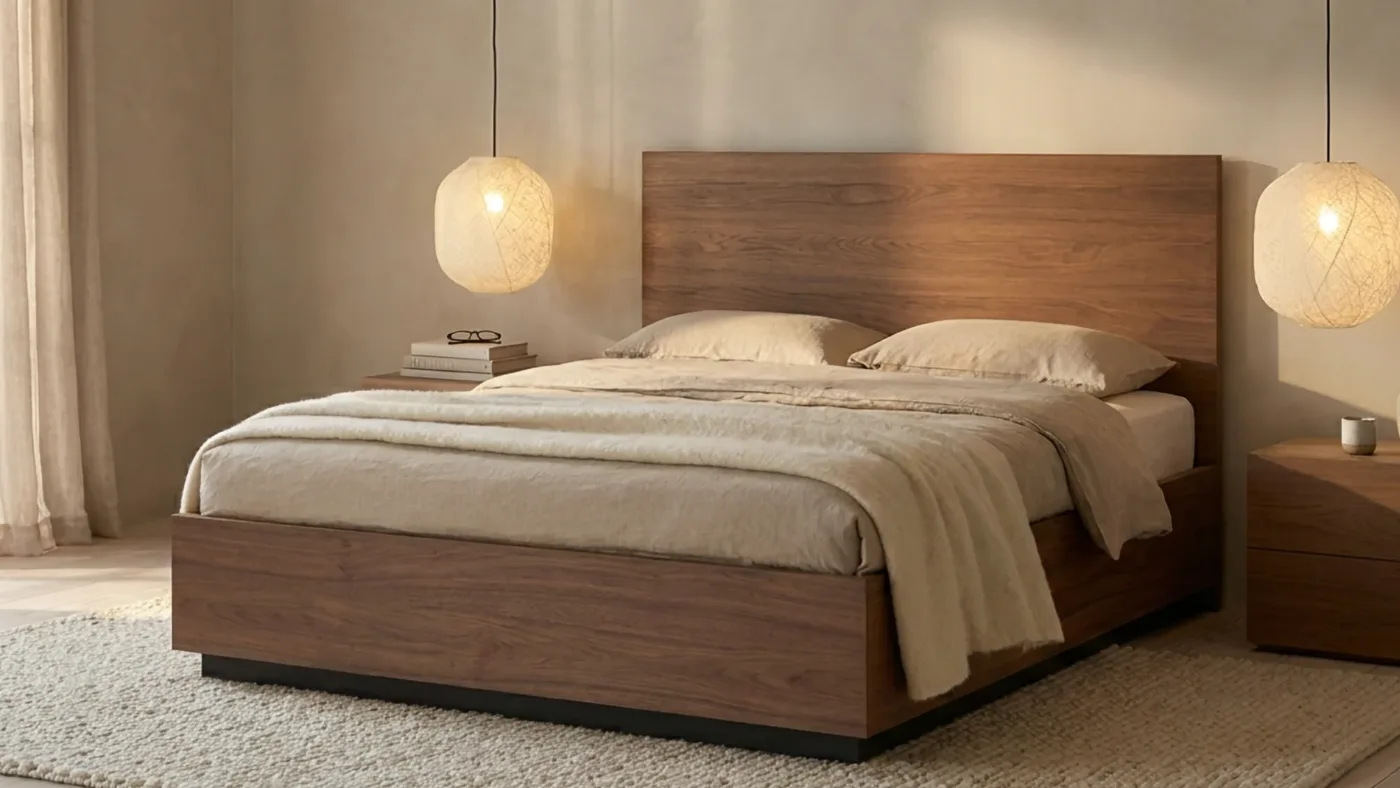
Walnut, with a matching walnut headboard.
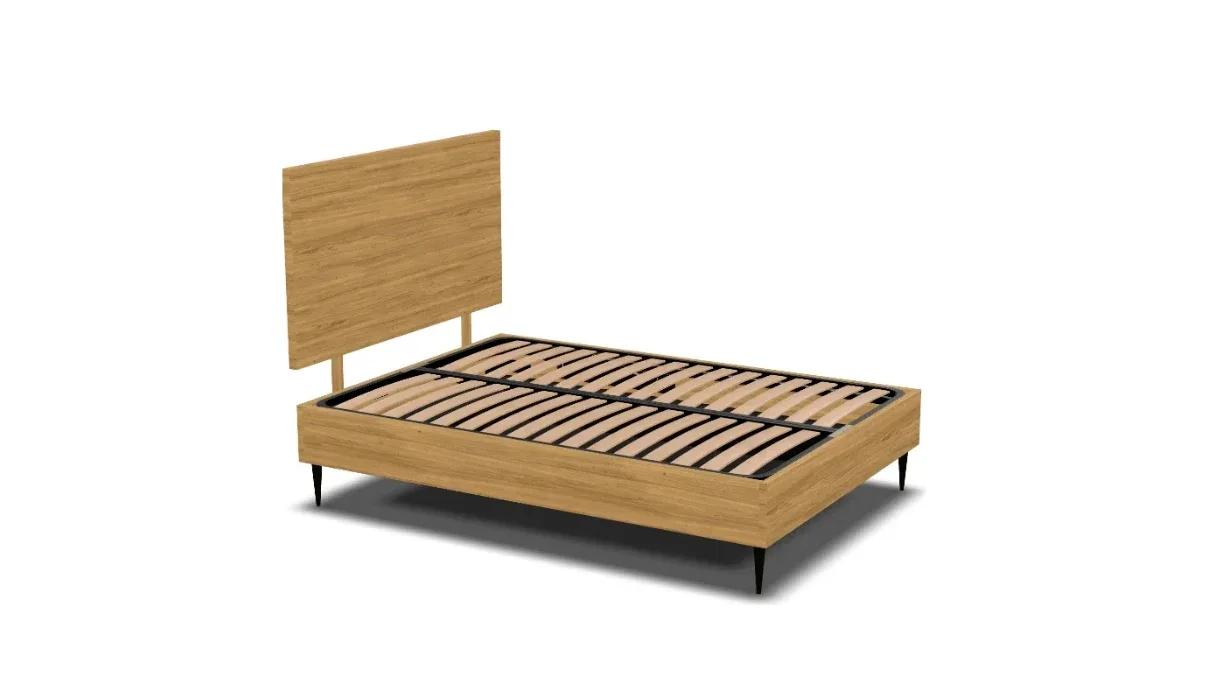
Oak, with a matching oak headboard.
A bulky frame eats floor space, which matters in most UK bedrooms. Our frames are 2cm thick, so the bed takes up barely more room than the mattress itself. Check the slats too: they should be sprung and supportive, so your mattress lasts.
Then decide how you want it to sit. Air Wood stands on slim legs and feels light and open. Max Wood sits low on a plinth and gives you the deepest storage.
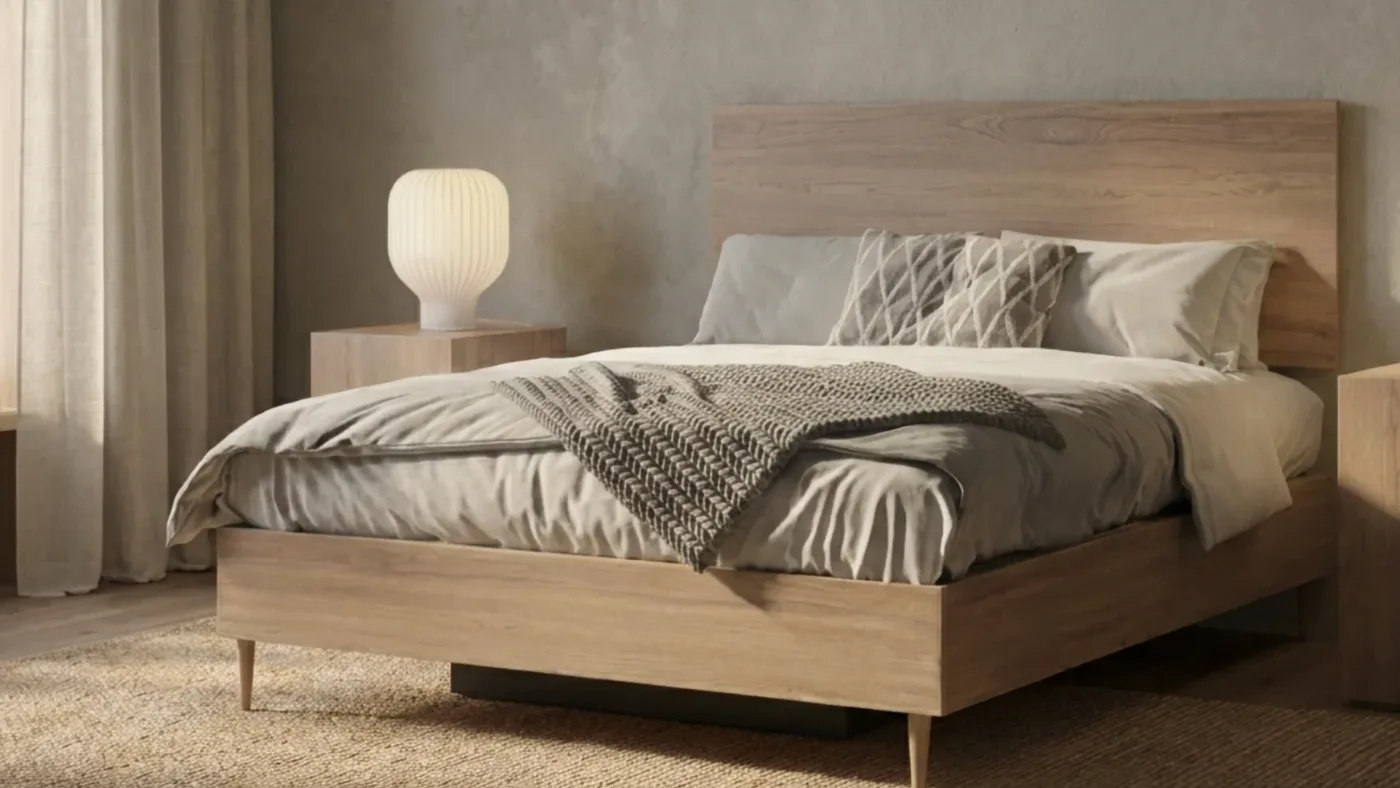
The Air collection in oak and walnut, on slim tapered wooden legs.
You don't have to go all wood. A fabric headboard on a wooden base is one of the most popular ways our customers order. It softens the look and gives you something comfortable to lean on when you're reading in bed. Or match the frame with a wood headboard for a cleaner, more minimal finish. Or go without a headboard at all. It's a popular choice, and one the high street rarely offers. Set the bed against a panelled or painted wall instead: see our wooden ottoman beds without a headboard. You can always add a headboard later, on any of our models.
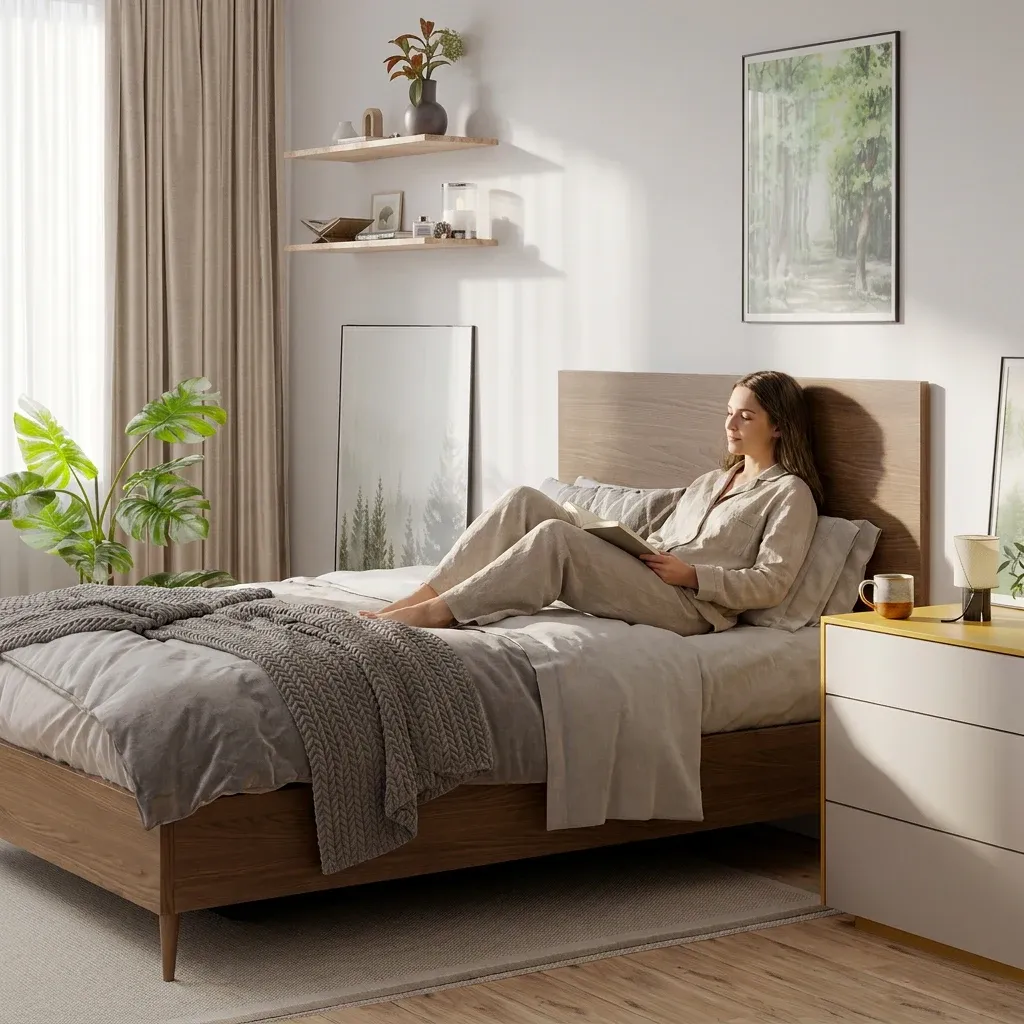
A wood headboard in walnut, matched to the frame.
Check the size range before you fall for a design, as plenty of wooden ottoman beds stop at king. Ours go from single to emperor, including European sizes. If you've got the room for a super king wooden ottoman bed or emperor, the storage underneath is enormous. King is our most popular size: see our king size wooden ottoman beds and double wooden ottoman beds.
A flat-packed ottoman bed means an afternoon with an Allen key and a lot of heavy panels. Our own team delivers in sections, carries everything up, and builds the bed in your room. That's included in the price*. You get 60 days to live with it at home, too.
Underneath, a wooden and an upholstered ottoman bed are the same: the base lifts to reveal one big storage compartment, and every Furl ottoman bed has a 2cm-thick frame. The difference is the look, the feel and how you look after it.
| Wooden | Upholstered | |
|---|---|---|
| Look | Natural, timeless, crisp lines | Soft, tailored, hotel-like |
| Comfort | Firmer to lean against, unless you choose a fabric headboard | Padded and comfortable to lean against |
| Durability | Very hard-wearing, can scratch or dent | Depends on the fabric you choose |
| Cleaning | Wipe with a damp cloth | Vacuum regularly, spot-clean marks |
| Allergies | Nowhere for dust to collect | Fabric can hold dust, so vacuum often |
| Pets and children | Easy to wipe, but harder edges | Softer edges; choose a hard-wearing fabric |
| Finishes | Oak or walnut | Hundreds of fabrics and leathers |
| Furl prices from* | £1,665 (Air Wood) | £1,225 (Air) |
*Prices at the time of writing, October 2026.
Choose wood if you want a natural, Scandi or modern rustic look, something that's easy to wipe clean, or nowhere for dust to settle. Choose upholstered if you read or watch TV in bed and want a padded headboard, or want the widest choice of colours. See our upholstered storage beds, and if you go for fabric, our guide to the most durable fabrics for furniture explains which ones stand up to everyday life.
Wooden beds look best with natural textures: linen bedding, a wool throw and simple ceramic lamps. Oak loves white and warm neutrals; walnut sits well with deep greens, rust and cream. Upholstered beds are made for layering, with cushions in the same colour for a calm look or a contrasting one to make the bed the focal point.
Are wooden ottoman beds good?
Yes, if the wood is real and the storage is deep enough to be useful. Wood is easy to wipe clean, doesn't hold dust the way fabric can, and lasts for years. Check the material and the storage depth before anything else.
What are the disadvantages of ottoman beds?
They're heavier than a plain bed frame, the base needs space to lift, and weak or badly matched struts make it hard work to open. Choose struts matched to your mattress and an opening direction that suits your room, and most of these go away.
What is the best wooden ottoman bed in the UK?
It depends on your room, but look for real hardwood or real wood veneer rather than a foil, at least 30cm of usable storage, struts matched to your mattress, and delivery and assembly included. We make ours in Nottingham in real oak and walnut, with 33cm to 40cm of storage, and build them in your room.
Are wooden ottoman beds strong enough for everyday use?
Yes, if they're built properly. Look for a solid frame, good slats and struts matched to your mattress. Ours are made to be used every day.
Do I need a special mattress?
No. Any mattress works. We just match the struts to its weight.
How much will a wooden ottoman bed hold?
It depends on the storage depth and size. A king size Max Wood at 40cm gives you a huge space, enough for suitcases lying flat as well as bedding.
Is a wooden ottoman bed hard to open?
Not with the right struts. The base should lift easily and close gently. For heavy mattresses or big sizes, choose an electric lift.
Can I see one before I buy?
Yes. Both beds are in our Swiss Cottage and Chelsea showrooms, open seven days a week. You don't need an appointment, although you can book one if you want.
Is a wooden or upholstered bed better for allergies?
Wood is easier, because there’s no fabric for dust to collect in. An upholstered bed is fine too if you vacuum it every week or so.
Are upholstered beds good for homes with pets?
Yes, if you choose the right fabric. Tightly woven fabrics and leather stand up to claws and hair much better than loose weaves or boucle.
Do wooden ottoman beds creak?
A well-made one shouldn’t. Creaks usually come from loose joints or a poor base, not the wood itself.
Which is more expensive, a wooden or upholstered ottoman bed?
In our range, wood costs more. Upholstered ottoman beds start at £1,225 and wooden ones at £1,665, at the time of writing.
Browse the full range of wooden ottoman beds, or go straight to oak or walnut. Or come and try them. That's always the best way.
David Norman, Founder, Furl
*Terms apply.