Basket Summary
There are no more items in your basket
By Type
Real homes get lived in. These are the decorating decisions that still look good on a wet Tuesday with everyone at home.
Most homes don't look like the ones on social media. Those rooms are styled for one photo, then put back. Yours has to work every day: school bags by the door, a dog on the sofa, friends staying over, a desk in the corner of the spare room.
So a lot of decorating advice doesn't survive real life. White linen sofas. Open shelving in a hallway. A coffee table too precious to put a mug on. The homes that feel good for years are the ones where every decision starts with how you actually live.
In this article
I. Decorating tips that work with your lifestyle, not against it
II. Decorating tips for homes with young children or pets
III. Decorating tips for homes with lots of "stuff"
IV. Decorating tips for multipurpose rooms
V. Decorating tips for social and busy households
VI. Our favourite time-tested decorating tips
Before you choose a colour or a sofa, think about who uses the room and what they do in it. The answers change almost every choice that follows.
Even the tidiest children and the best-behaved dogs leave a trail. Muddy paws, felt tips, juice, toys underfoot. If that's your house, choose things that can take it.
Order a few free fabric samples and live with them for a week. Rub them, spill on them, let the dog sit on them. You'll know quickly.
Having things you love isn't a problem. Souvenirs, books, records, the kids' artwork: that's what makes a home yours. It only feels cluttered when everything is out at once and nothing has a place.
Most of us do. The spare room is also the office. The living room is also the dining room, and sometimes the guest room. When a room has two jobs, the furniture has to do both properly.
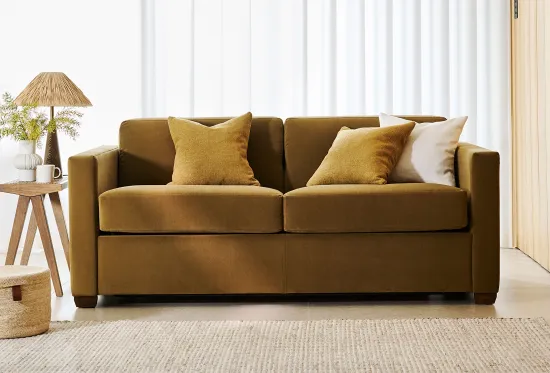
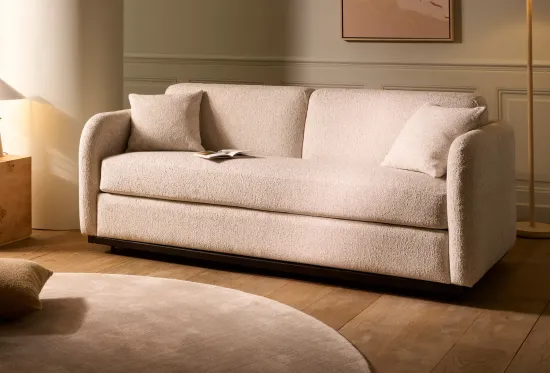
A sofa bed with a proper mattress turns the living room into a real guest room in seconds. A clever table goes from coffee table to dining table when people come round. We've rounded up the multifunctional furniture you need in your home if you want more ideas.
Busy, sociable homes need furniture that shrugs off spilt wine and a lot of sitting. Choose upholstery that's built for wear, table tops you can wipe down, and a paint finish you can sponge clean in hallways and dining areas.
Colour matters here too. Warm, mid-tone walls make a room feel inviting in the evening without showing every scuff. If you're stuck, read what colour should you paint your walls, and our guide to durable fabrics.
Trends change. These don't.
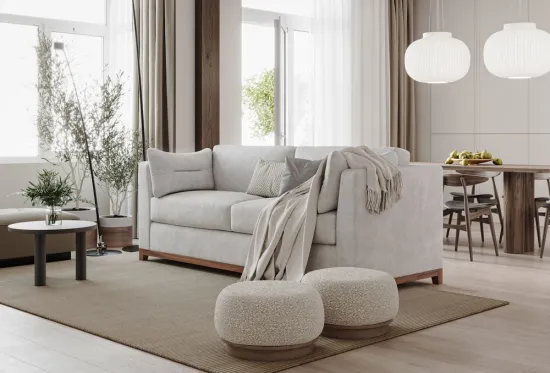
Rooms don't need to match, but they should feel related. Pick two or three colours or materials and carry them through the house: the same wood tone, a repeated accent colour, similar metal finishes. In a small flat especially, it makes the whole place feel bigger and calmer.
Start with one colour you love and build around it with a couple of quieter tones. The sofa is usually the biggest block of colour in a room, so it's worth matching your sofa to your paint colours before you commit to either.
Clutter makes a room feel smaller and busier than it is. Furniture that stores things or changes shape means less on show during the day, and the room can still transform when you need it to: a bed for guests, a dining table for six.
Cushions, throws, rugs and curtains are the easiest way to pull a room together, and the cheapest to change. A rug anchors a seating area. Cushions can bridge the sofa and the walls. Swap them with the seasons and the room feels fresh without a paintbrush.
Not blindly. Buying things because they're everywhere right now tends to give you a home that feels disjointed, with a bit of every year in it. Start with what you want the space to do for you, then look for ideas that fit.
Some trends last. Natural materials, warm neutrals, layered lighting and furniture built to last have been around for decades. Others burn bright and fade: the grey-everything look of the 2010s already feels dated in a lot of homes. Before you buy, ask yourself whether you'll still like it in five years. If not, keep it to cushions and accessories that are easy to change.
Decorating doesn't have to happen all at once, either. A new style can make a room feel like a different space, but the best way to get there is bit by bit, once you know what you want each room to feel like. It costs less, and you make better decisions.
Change the soft furnishings and the lighting. New cushions, a rug and a couple of lamps change how a room feels more than most people expect.
Keep the colours light and consistent, keep as much floor clear as you can, and choose furniture that does more than one job so you need fewer pieces. A mirror opposite a window helps too.
A tightly woven, textured fabric. Avoid loose weaves that catch claws, and add stain protection for the accidents.
It doesn't need to match, but it should sit comfortably with them. Either choose a sofa a few shades away from the wall colour, or pick a contrast on purpose and repeat it somewhere else in the room.
Want to see how our furniture and fabrics look in a real room? Come to one of our showrooms and talk to our team about your project. Swiss Cottage is open daily and Chelsea Tuesday to Sunday, and you don't need an appointment, although you can book one if you'd like.
Visit a showroom Order free fabric samples