
Basket Summary
There are no more items in your basket
By Type
Knowledge Hub — Guides
The right bed size shapes everything — how well you sleep, how easy the room feels to move through, how much you can store underneath. Here's every UK size, side by side.
Updated April 2026
Choosing the right bed size affects everything from how well you sleep to how much storage you can squeeze into your bedroom. This guide breaks down the standard UK bed sizes — from single through to super king — so you can find the perfect fit for your space and needs.
You'll also find links to our single, small double, double, king, and super king storage bed collections.
In this article
Here's a quick reference for the standard UK bed dimensions. These measurements give you a baseline for planning your space.
| Bed Size | Feet & Inches | Inches | Centimetres |
|---|---|---|---|
| Single | 3'0" × 6'3" | 36" × 75" | 90cm × 190cm |
| Small Double | 4'0" × 6'3" | 48" × 75" | 120cm × 190cm |
| Double | 4'6" × 6'3" | 54" × 75" | 135cm × 190cm |
| King Size | 5'0" × 6'6" | 60" × 78" | 150cm × 200cm |
| Super King | 6'0" × 6'6" | 72" × 78" | 180cm × 200cm |
These are the industry standard measurements used by most UK manufacturers. Exact dimensions can vary by a centimetre or two between brands — always check the specific product spec before buying.
This variation matters more than you think. The average UK home now has just 2.95 bedrooms, down from over 3.6 bedrooms in properties built between the 1930s–1980s, according to LABC research. Modern homes built from 2010 onwards are over 4 square metres smaller than those from the previous decade. Every centimetre counts.
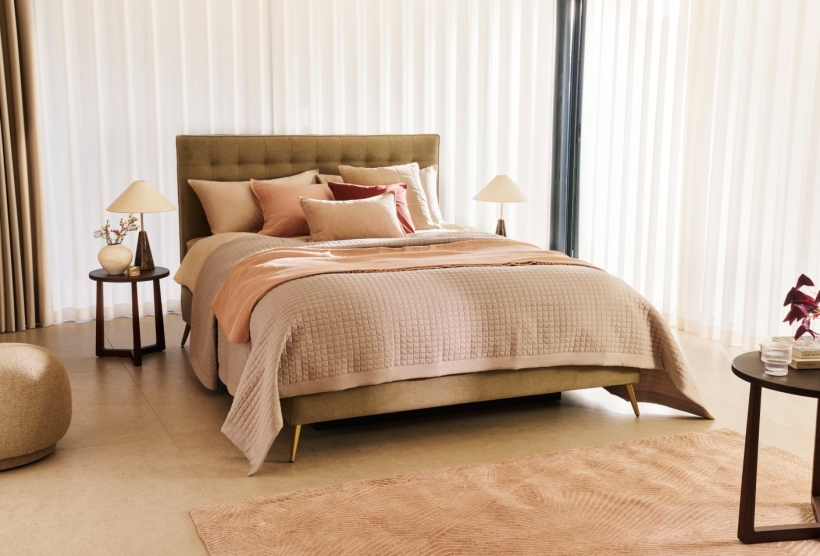
A standard UK single bed measures:
Single beds are designed for one person and work well in smaller rooms, children's bedrooms, and guest rooms where space is at a premium.
Most UK manufacturers stick to the same standard dimensions, but small variations exist:
| Brand | Length (cm) | Width (cm) |
|---|---|---|
| Furl | 190 | 90 |
| IKEA | 200 | 90 |
| And So To Bed | 190 | 90 |
| Bensons for Beds | 190 | 90 |
IKEA adds an extra 10cm to the length, which can matter if you're over six foot. Our single storage beds stick to the UK standard 190cm length and pair it with deep under-bed storage — ideal for maximising space without compromising comfort.
Start by measuring the bed frame itself — length, width, and height. Then add the space you'll need around it.
If you're placing the bed against a wall, which is common for single beds, you only need clearance on one side.
Single beds work best for children, teenagers, and guest rooms in smaller homes. They're the practical choice when you need to fit a bed into a compact space without sacrificing too much floor area for other furniture or movement. In urban properties where bedrooms average just 9–10 square metres, a single bed often makes the difference between a functional room and a cramped one.
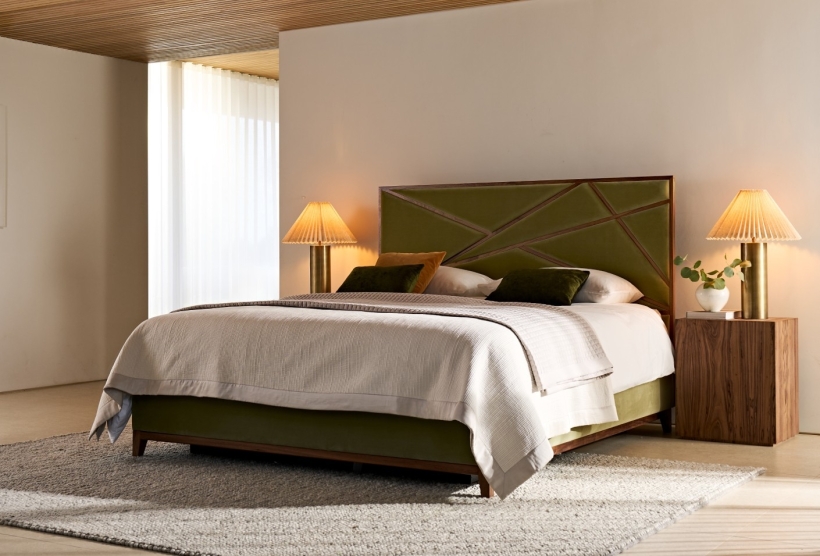
Small double beds go by different names — "three-quarter," "queen" in some countries, or just "small double." A standard UK small double measures:
The extra 30cm width over a single gives a single sleeper more room to move — useful for taller people or anyone who shifts around at night — while still fitting rooms that can't accommodate a full double.
Small doubles show slightly more variation than singles:
| Brand | Length (cm) | Width (cm) |
|---|---|---|
| Furl | 190 | 120 |
| IKEA | 200 | 120 |
| And So To Bed | 190 | 120 |
| Bensons for Beds | 190 | 120 |
Browse our small double storage beds — each designed to make every centimetre count.
Follow the same principles as a single, but allow slightly more clearance:
Small doubles suit single sleepers who want extra room, couples with limited space, and teenage bedrooms where a single feels outgrown. They're often the right answer for second bedrooms in flats or smaller terraced houses where a full double simply won't fit.
"A well-sized bed doesn't just fit the room — it makes the room work."
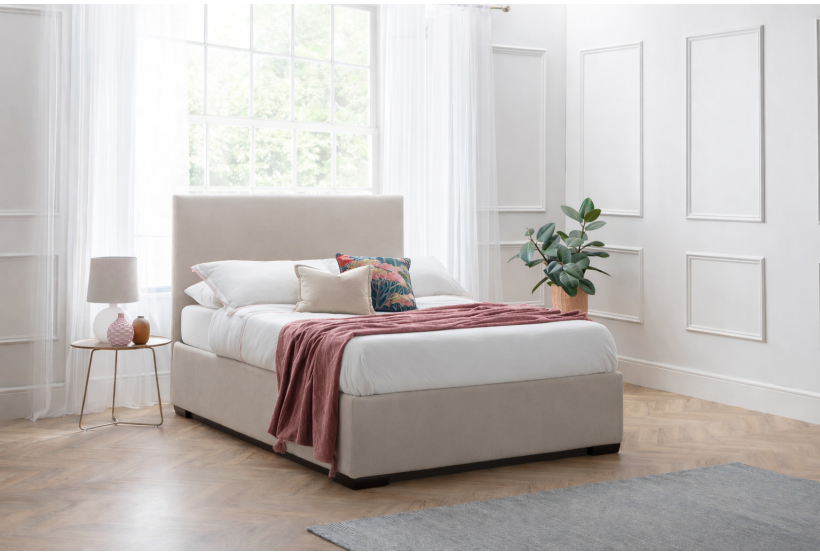
A standard UK double measures:
The double is the most popular choice for couples in the UK. The 135cm width gives each person roughly 67.5cm of sleeping space — more than a single bed but less than you'd get with a king.
Double beds show some variation, particularly in length:
| Brand | Length (cm) | Width (cm) |
|---|---|---|
| Furl | 190 | 135 |
| IKEA | 200 | 140 |
| And So To Bed | 190 | 135 |
| Bensons for Beds | 190 | 135 |
IKEA adds both length and width. Most UK manufacturers stick to 135cm width as the standard. Our double storage beds give you the sleeping space you need plus massive under-bed storage for everything from suitcases to seasonal wardrobes.
Measure your room dimensions and the bed frame, then calculate clearance:
Doubles are the default choice for couples in most UK bedrooms, and they work equally well for a single sleeper who wants generous space. If your bedroom is 12 square metres or larger, you have room for a double with comfortable clearance. Below that, consider a small double instead.
According to UK housing standards, a double bedroom must legally measure at least 10.22 square metres. That's tight for a double bed plus furniture, which is why storage beds make such a difference.
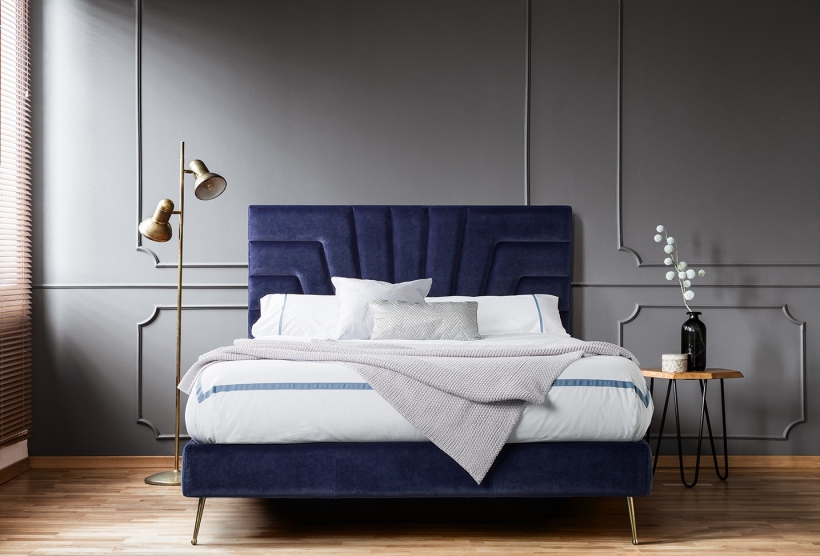
A standard UK king size measures:
The king adds 15cm of width and 10cm of length over a double — a meaningful step up for couples, especially anyone over six foot.
King sizes are fairly standardised across the UK:
| Brand | Length (cm) | Width (cm) |
|---|---|---|
| Furl | 200 | 150 |
| IKEA | 200 | 160 |
| And So To Bed | 200 | 150 |
| Bensons for Beds | 200 | 150 |
Again IKEA goes wider — their "king" is closer to a UK super king. Our king size storage beds match the UK standard and deliver the deepest under-bed storage in their class.
King beds need proper clearance to feel right in a room:
King beds work best for couples who want a more luxurious sleep experience in their main bedroom. The extra width gives each person roughly 75cm of space — more than a single bed. This size is particularly popular with couples who have different sleep schedules or movement patterns. The additional space means you're less likely to disturb your partner when you move during the night.
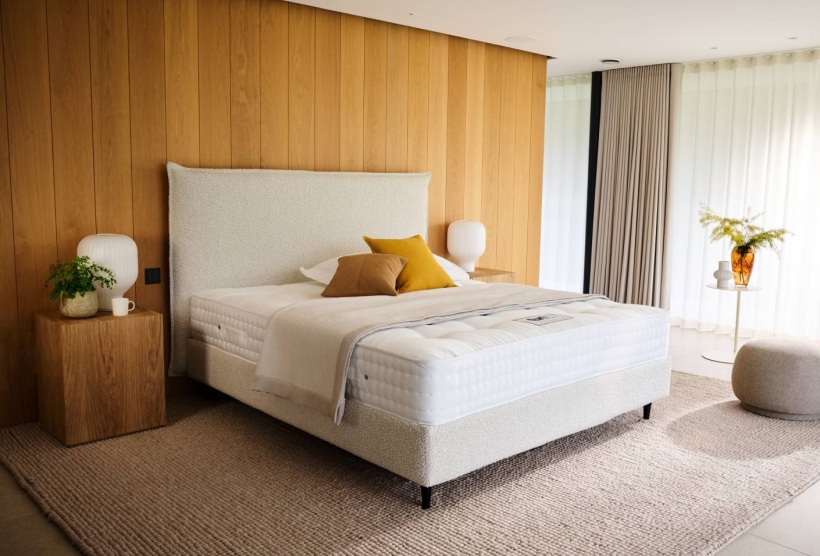
A standard super king measures:
Super kings are the largest standard size available in the UK. The 180cm width gives each person 90cm of sleeping space — the equivalent of a full single bed each.
Super king dimensions are remarkably consistent across UK manufacturers:
| Brand | Length (cm) | Width (cm) |
|---|---|---|
| Furl | 200 | 180 |
| IKEA | 200 | 180 |
| And So To Bed | 200 | 180 |
| Bensons for Beds | 200 | 180 |
Finally, everyone agrees. Discover our super king size storage beds — the largest standard beds we make, with storage to match.
Super kings demand proper space to breathe:
Super kings are for couples who value sleep quality above everything else — and for anyone who shares a bed with children or pets and has run out of room. They're the standard in luxury hotels for a reason: the space genuinely changes how well you sleep.
The super king is also popular with people downsizing from larger homes. Nearly one in five UK homeowners over 50 have already downsized, representing approximately 4 million people. Many want to maintain their sleep quality even as they move to smaller properties — a super king bed with integrated storage helps them do exactly that.
The right size is a balance of four things:
The single most common mistake is buying the biggest bed that fits, leaving nowhere to walk around it. Clearance matters as much as the mattress itself.
The right bed size depends on several factors working together. Start with your available space — measure your room and calculate realistic clearance around the bed. A bed that fits technically but leaves no room to move creates a cramped, uncomfortable bedroom.
Consider who will use the bed and how. A guest bed can be smaller than your main bed. A child's bed should leave room for play space and other furniture. A couple's main bed should prioritise sleep quality, which usually means going as large as your space allows.
Think about how you'll use the room beyond sleeping. Do you need space for a desk, dresser, or seating area? Your bed size affects what else fits in the room. Finally, consider your budget — larger beds cost more, but the investment in sleep quality pays dividends in how you feel every day.
Find your size
Every Furl bed includes a deep storage base that maximises your floor space. If standard sizes don't fit, our craftsmen can build a bespoke bed to your exact measurements.
Also on the Knowledge Hub: The table that changes everything · All guides