



Basket Summary
There are no more items in your basket
By Type
Across the UK, people aren't just paying more for housing. They're getting less space in return. We built an index to find out exactly where the squeeze is worst.

As a brand focused on space-saving furniture and multifunctional living, Furl sees first-hand how people are adapting to smaller homes and tighter layouts. To better understand this shift, we created the Living Space Premium Index — a score from 0 to 100 that measures how much people pay for living space relative to what they earn, combining housing costs, property sizes, incomes and population density.
A higher score means a higher premium on space: residents are paying more and getting less.
Bristol ranks as the UK's most expensive city for space, followed by Brighton & Hove and Manchester. In these cities, high property prices, rising rents and smaller homes combine to create the most punishing ratio of cost to space.
Coastal cities including Southampton and Portsmouth also rank highly, reflecting strong demand and constrained supply. At the other end of the scale, Stoke-on-Trent, Aberdeen and Swansea offer the most room for money.
Living Space Premium Index — UK Cities Ranked
| City | Home Size | Buy Price | Rent | Own. Afford. | Rent Afford. | Density | Index Score |
|---|---|---|---|---|---|---|---|
| Stoke-on-Trent | 40.7 | 8.8 | 0.0 | 25.6 | 0.0 | 48.0 | 15.4 |
| Aberdeen | 60.8 | 8.5 | 15.0 | 0.0 | 21.6 | 12.6 | 18.8 |
| Swansea | 43.5 | 30.9 | 7.5 | 60.8 | 22.8 | 0.0 | 30.9 |
| Kingston upon Hull | 100.0 | 0.0 | 18.6 | 1.4 | 50.2 | 68.6 | 32.5 |
| Edinburgh | 0.0 | 41.7 | 23.1 | 58.7 | 39.4 | 29.1 | 34.1 |
| Derby | 56.1 | 31.4 | 12.3 | 51.0 | 21.5 | 61.4 | 34.7 |
| Sheffield | 64.2 | 31.6 | 20.0 | 60.1 | 48.6 | 19.8 | 42.7 |
| Coventry | 76.3 | 31.2 | 31.6 | 47.5 | 54.2 | 66.3 | 47.6 |
| Plymouth | 63.7 | 33.6 | 23.8 | 63.6 | 56.1 | 59.1 | 47.9 |
| Wolverhampton | 76.9 | 30.6 | 24.9 | 59.5 | 57.2 | 72.9 | 49.6 |
| Newcastle upon Tyne | 68.6 | 24.3 | 38.4 | 51.4 | 73.6 | 46.6 | 50.2 |
| Liverpool | 83.2 | 32.9 | 26.2 | 59.7 | 56.6 | 83.7 | 51.7 |
| Glasgow | 82.1 | 24.4 | 53.0 | 40.6 | 78.6 | 65.9 | 54.9 |
| Leeds | 74.6 | 44.5 | 37.8 | 71.1 | 70.4 | 18.7 | 56.9 |
| Cardiff | 66.6 | 49.9 | 35.4 | 76.0 | 68.3 | 44.4 | 58.1 |
| Portsmouth | 56.4 | 45.1 | 41.6 | 69.2 | 71.8 | 100.0 | 59.0 |
| Birmingham | 83.1 | 44.7 | 40.7 | 69.2 | 71.2 | 80.9 | 61.7 |
| Leicester | 87.8 | 38.8 | 39.2 | 72.5 | 78.0 | 99.7 | 63.9 |
| Nottingham | 94.3 | 35.4 | 42.0 | 70.0 | 81.2 | 81.2 | 63.9 |
| Southampton | 97.7 | 47.7 | 63.3 | 69.7 | 86.8 | 97.7 | 73.0 |
| Manchester | 97.9 | 68.4 | 72.1 | 83.2 | 90.8 | 95.5 | 82.4 |
| Brighton & Hove | 56.2 | 100.0 | 70.3 | 100.0 | 92.8 | 59.5 | 84.0 |
| Bristol | 84.7 | 65.4 | 100.0 | 77.8 | 100.0 | 82.8 | 85.5 |
While the UK ranking shows broad trends, London reveals something more extreme. The capital is not just expensive — it is deeply uneven. Tower Hamlets ranks as the most expensive borough for space, followed by Islington and Westminster. Meanwhile Enfield, Bromley and Havering offer relatively more room for money.
Living Space Premium Index — London Boroughs Ranked
| Borough | Home Size | Price | Rent | Own. Afford. | Rent Afford. | Density | Index Score |
|---|---|---|---|---|---|---|---|
| Enfield | 0.0 | 0.0 | 0.0 | 0.0 | 0.0 | 12.5 | 0.6 |
| Bromley | 46.1 | 6.7 | 20.6 | 18.9 | 46.1 | 0.0 | 25.4 |
| Havering | 48.8 | 4.5 | 17.0 | 20.2 | 48.8 | 1.5 | 25.5 |
| Kingston upon Thames | 29.3 | 20.7 | 12.3 | 50.3 | 29.3 | 16.5 | 27.7 |
| Croydon | 59.4 | 3.3 | 23.4 | 15.6 | 59.4 | 17.2 | 30.1 |
| Richmond upon Thames | 24.9 | 31.3 | 6.4 | 69.0 | 24.9 | 8.2 | 30.5 |
| Redbridge | 48.4 | 9.7 | 9.2 | 45.3 | 48.4 | 23.8 | 31.0 |
| Bexley | 68.8 | 2.3 | 20.9 | 24.6 | 68.8 | 13.7 | 34.3 |
| Harrow | 54.5 | 11.4 | 16.3 | 43.3 | 54.5 | 21.5 | 34.3 |
| Barnet | 51.9 | 16.9 | 15.3 | 53.4 | 51.9 | 16.7 | 36.1 |
| Sutton | 69.5 | 6.8 | 26.0 | 31.6 | 69.5 | 18.3 | 38.1 |
| Haringey | 48.9 | 26.1 | 19.1 | 60.8 | 48.9 | 45.9 | 40.6 |
| Hounslow | 65.4 | 15.7 | 33.0 | 40.4 | 65.4 | 21.4 | 41.8 |
| Lewisham | 68.1 | 15.2 | 35.8 | 38.5 | 68.1 | 43.6 | 43.9 |
| Brent | 70.9 | 14.2 | 27.3 | 47.9 | 70.9 | 40.7 | 44.7 |
| Hillingdon | 81.9 | 9.5 | 38.4 | 35.2 | 81.9 | 4.2 | 45.5 |
| Ealing | 72.2 | 17.0 | 31.2 | 49.9 | 72.2 | 32.4 | 46.5 |
| Merton | 63.4 | 28.0 | 20.4 | 69.5 | 63.4 | 24.6 | 47.0 |
| Waltham Forest | 81.6 | 14.1 | 39.2 | 44.2 | 81.6 | 34.2 | 49.8 |
| Greenwich | 79.7 | 17.2 | 36.2 | 51.2 | 79.7 | 28.2 | 50.2 |
| Barking and Dagenham | 100.0 | 2.7 | 57.9 | 15.6 | 100.0 | 28.9 | 51.7 |
| Newham | 88.3 | 13.9 | 53.8 | 36.2 | 88.3 | 55.7 | 54.5 |
| Kensington and Chelsea | 27.3 | 97.5 | 11.7 | 100.0 | 27.3 | 66.5 | 54.7 |
| Wandsworth | 63.1 | 43.9 | 30.1 | 76.3 | 63.1 | 52.4 | 54.8 |
| Hammersmith and Fulham | 59.8 | 49.9 | 39.6 | 72.9 | 59.8 | 63.7 | 56.6 |
| Lambeth | 69.7 | 41.0 | 42.4 | 68.8 | 69.7 | 65.9 | 58.1 |
| Camden | 54.2 | 65.6 | 41.8 | 79.2 | 54.2 | 53.1 | 58.9 |
| Southwark | 75.0 | 40.0 | 54.0 | 63.4 | 75.0 | 59.6 | 60.7 |
| Hackney | 81.6 | 42.4 | 38.8 | 78.8 | 81.6 | 80.9 | 64.6 |
| Westminster | 47.5 | 100.0 | 36.3 | 93.9 | 47.5 | 51.8 | 65.3 |
| Islington | 77.5 | 48.3 | 58.9 | 69.3 | 77.5 | 87.8 | 66.8 |
| Tower Hamlets | 87.3 | 36.7 | 100.0 | 40.0 | 87.3 | 100.0 | 70.9 |
As living space becomes more expensive and harder to access, how we use our homes is becoming just as important as where we live.
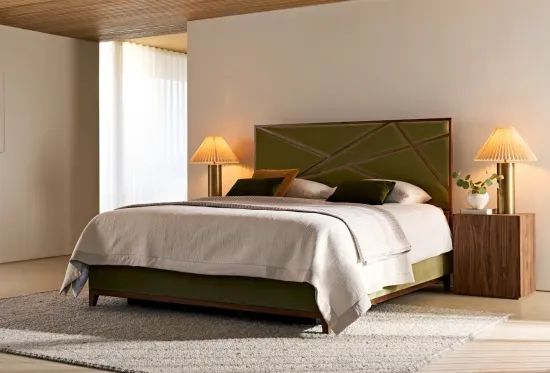
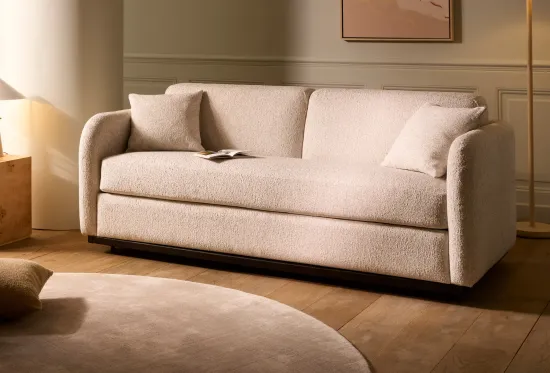
At Furl, we design space-saving furniture built for modern living — from storage beds that maximise hidden space to sofa beds that create flexible, multi-use rooms. As the Living Space Premium Index shows, many people are having to do more with less — making smart, adaptable interiors not a luxury, but a necessity.
Make the most of your space.
If you're in a city where space costs a premium, the right furniture makes all the difference.
To determine the best and worst areas for space value across the UK, Furl created the Living Space Premium Index (0–100), which ranks cities based on how expensive living space is relative to what people earn. The index combines housing costs (to buy and rent), property sizes, incomes and population density using data from Zoopla listings (March 2026) and the Office for National Statistics (ONS).
The main ranking covers the 23 largest UK cities by population (excluding London). London is analysed separately at borough level, excluding the City of London.
All factors are standardised on a 0–100 scale and combined using weighted averages: price per sq ft (20%), rent per sq ft (20%), ownership affordability (20%), rental affordability (20%), average home size (15%) and population density (5%). A higher score indicates a greater premium on space.