Basket Summary
There are no more items in your basket
By Type
GUIDES · SMALL SPACE LIVING
Why every piece of furniture in a small home should earn its footprint twice, from the bed you sleep in to the desk you close at the end of the day.
I have spent 19 years watching people walk into our showrooms with the same look on their faces. It is a mix of frustration and hope. They live in a flat that felt fine when they moved in. Then life arrived. Suitcases, a Christmas tree, an ironing board, a desk that appeared during lockdown and never left.
The flat did not shrink. The demands on it grew.
I founded Furl in 2007 because I could not buy a sofa bed in the UK that matched what I could buy for my holiday home in Spain. One that a guest could actually sleep on. So I built it myself. That was the whole plan, honestly. Solve one problem properly.
What I've figured out since then is less tidy than I expected. Every piece of furniture in a small home needs to earn its footprint twice. Once for what it does during the day. Once for what it hides, holds, or becomes at night. That's what multifunctional furniture really means to me, not a buzzword, just furniture engineered to do two jobs instead of one.
In this article
I. The Numbers Behind the Squeeze
II. Start With the Bed. It Is the Biggest Wasted Space in Your Home
IV. Tables That Grow, Desks That Vanish
V. The Downsizing Generation Taught Me the Most
VI. Quality Is the Whole Argument
VII. Your Home Is Underemployed
The pressure on homes is measurable, so it's worth looking at the actual data.
Research shows that between 21% and 55% of UK dwellings fail to meet modern internal space standards, with flats and small terraced houses falling below acceptable levels most often.
Up to half of UK homes are officially too small for the lives inside them.
At the same time, space per person for private renters in England has dropped substantially, vacancy rates sit below 1%, and the average house now costs more than ten times the average salary.
The market has noticed. The global multifunctional furniture sector is projected to grow from $9.12 billion in 2026 to $15.78 billion by 2034. People are voting with their wallets for furniture that does more than one job.
My takeaway after two decades in this trade: buying a bigger home stopped being a realistic option for most London renters a long time ago. Buying smarter furniture became the answer instead.
Walk into your bedroom and look at your bed. Underneath it sits several cubic meters of dead air, or a graveyard of dusty boxes you cannot reach.
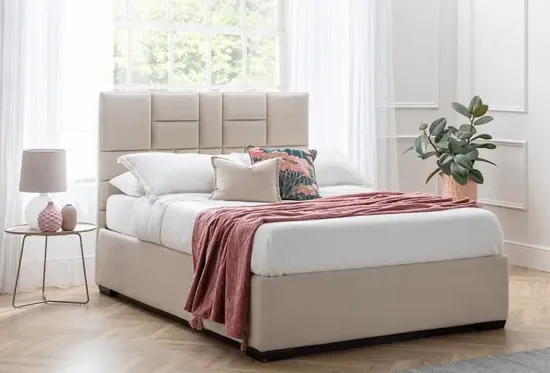
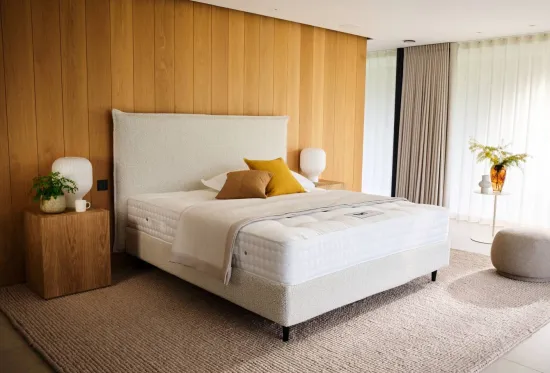
A properly engineered storage bed changes that completely, it's the hardest-working piece of multifunctional bedroom furniture you can buy. The mattress platform lifts on gas struts. Underneath, you get a clean, dry, fully accessible space the size of a small loft.
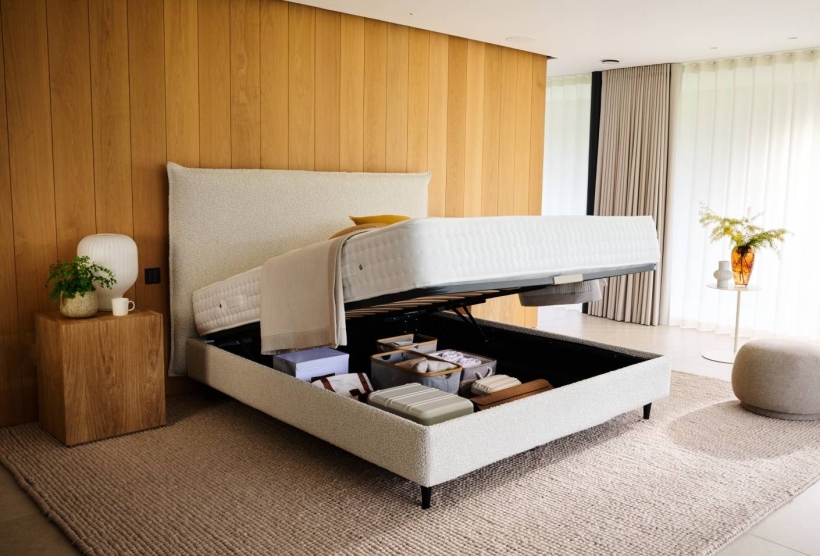
I tell customers to bring their own suitcase to our showrooms and test it. Full suitcases fit under our beds open or closed, which means you store even more inside the suitcase itself. Ironing boards, vacuum cleaners, Christmas trees, entire seasonal wardrobes. All of it disappears.
My advice to customers has always been simple: keep your clutter, get better storage. Minimalism gets a lot of attention right now, and there is real evidence that intentional living makes people happier. But plenty of us hold onto things because they matter. Photo albums, the grandkids' toys, the winter coats. A storage bed lets you keep them without living around them.
Plenty of storage beds don't deserve the name. Check these things before you buy:
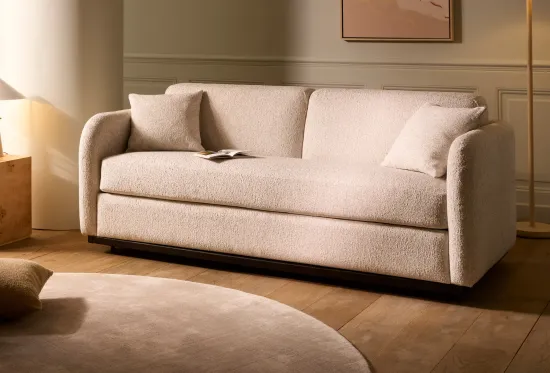
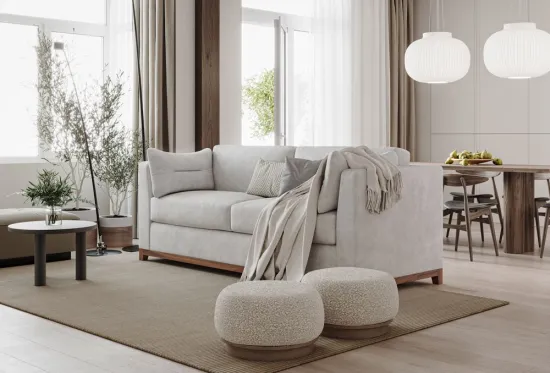
Most sofa beds give guests a terrible night's sleep. A thin mattress folded over a metal bar, in a frame designed as a sofa first and a bed as an afterthought. That reputation is the main reason people dismiss the whole category.
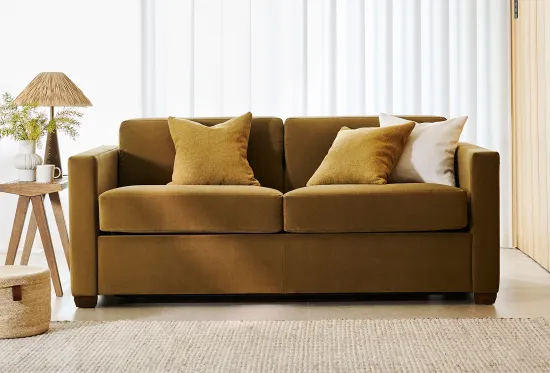
It's also what pulled me into this industry. A sofa bed engineered for everyday use, with a real mattress and no bar under your back, turns your living room into a genuine second bedroom.
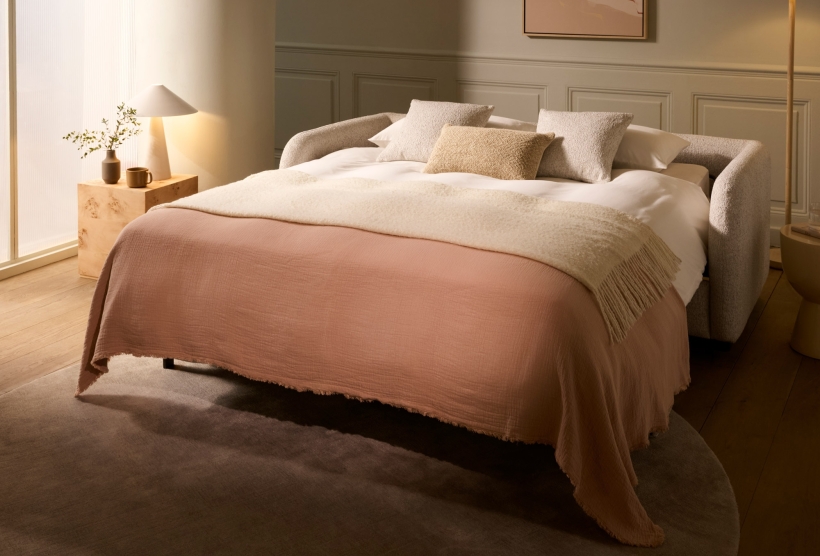
Think about what that means in a two-room flat. Your home office becomes a guest room. Your living room hosts family for a week without anyone waking up sore. You gained a room without paying for one.
The timing matters too. Remote and hybrid work has increased demand for flexible interiors by over 35%, as people invest in furniture that bridges the home office and the living room. The room you work in from Monday to Friday needs to become something else on Saturday. Furniture is the mechanism that makes that switch happen.
The dining table is the third piece I want you to reconsider.
The honest math: you eat alone or as a couple 350 days a year. You host eight people maybe a dozen times. A permanent eight-seat table charges you rent in floor space every single day for those dozen dinners.

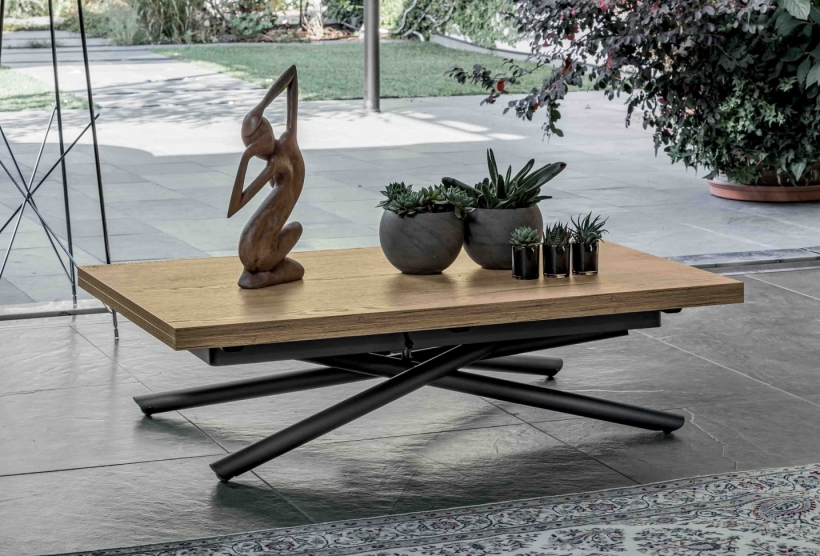
An extending table flips that equation. Compact for daily life, expanded when the family descends. A coffee table that rises and extends into a dining table does the same trick in homes where a separate dining room simply does not exist.
The same logic applies to desks. A desk that folds away or converts gives you back your evening. Closing it becomes the ritual that ends the workday, which matters more than people admit when the office and the living room share four walls.
Our customers split into two broad groups. Young city dwellers buying their first flat, and retirees downsizing from a family house to a smaller property with no attic and no loft.
The downsizers showed me something I hadn't thought about before starting this company. They're told to throw things away. Decades of memories, reduced to what fits in a smaller footprint. A lot of them find that genuinely painful.
Multifunctional furniture offers them a third path. Hold onto the memories, store them under the bed, and still make space for the grandkids coming to stay. The storage bed keeps the past accessible. The sofa bed handles the guests. One home, doing both.
Smaller household sizes are growing across the UK, the US, Germany, Canada, and Australia, and it's easy to see why a piece of furniture that does two jobs makes more sense to them than two pieces that each do one.
A word of caution before you buy anything.
Good multifunctional furniture design has to work harder than an ordinary armchair or table. A sofa bed gets sat on all day and slept on all night. A storage bed platform gets lifted thousands of times. A cheaply made version of any of these will fail, and it will fail at the worst moment.
This is why we hand-craft everything in our Nottingham workshop, and why many of our craftsmen have been with us for over a decade. When a piece of furniture does two jobs, the engineering has to hold up to twice the use. There's no way around that.
Consumers are starting to reflect that. Fast furniture is declining as people trade quantity for longevity, preferring pieces that last and can be serviced rather than chucked out. Buy fewer things. Buy things that work harder, and survive the working.
After 19 years of building this company, my core belief hasn't shifted. Furniture should be as beautiful as it is practical. Neither quality excuses the absence of the other.
Walk through your home this week and be honest about it. Where does your ironing board live?
Dead air under the bed. A dining table sized for parties you host twelve times a year. The spare room sitting empty 340 nights out of 365.
Every one of those is an unfilled job. Multifunctional furniture fills it.
You do not need more space. You need the space you already have to start working two jobs. That is what we build at Furl, and if you are ever near Swiss Cottage, Chelsea, or the Barbican in London, bring a suitcase and test the claim yourself.