
Basket Summary
There are no more items in your basket
By Type
From the Founder

David · Founder, Furl · April 2026
There was a piece in The Sunday Times recently that I think every sofa owner in Britain should read. It reported that UK sofas contain unusually high levels of flame retardant chemicals — and that studies have linked long-term exposure to serious health concerns, including hormone disruption, fertility issues, and increased cancer risk.
I read it, and I felt two things. The first was that familiar discomfort of recognising something you already knew, but had not yet done enough about. The second was a clear sense that it was time to say something — plainly, without spin.
The Background
Why these chemicals are in your furniture in the first place
UK furniture fire safety regulations — specifically British Standard BS 5852 — have required upholstered furniture to meet strict ignition resistance tests since 1988. The practical result, across the entire industry, has been the widespread use of flame retardant chemicals applied directly to foam and internal fabrics. The regulations were introduced with genuinely good intentions. House fires were killing people. The chemicals helped.
But the science has moved on considerably since then. What was considered an acceptable trade-off in 1988 looks rather different in 2026. Much of Europe moved away from chemical flame retardants years ago, achieving fire safety through construction methods — barrier materials, natural fibres, product design — rather than saturating foam with chemicals. The UK, largely, did not follow.
There is a quiet irony in our own supply chain. One of our cushion suppliers is an Italian manufacturer — operating under EU standards at home — who produces a specifically modified, FR-treated version of their cushions solely for the British market. The rest of Europe does not require it. We do. That tells you something about where the UK has sat on this issue.
The good news is that this is finally changing. The UK government has recently confirmed it will abandon the controversial open flame test — a shift that campaigner Delyth Fetherston-Dilke spent years fighting for. But regulation moving in the right direction is not the same as the problem being solved. We are not waiting.
of a UK sofa's foam can be flame retardant chemicals
typical weight of FR chemicals in a British sofa (industry average)
when UK fire regulations were last meaningfully updated
* Industry-wide figures for UK upholstered furniture broadly — not specific measurements of any Furl product. Furl product composition varies by model and fabric. See our full materials guide for details specific to our range.
Full Transparency
What's actually in a Furl product
I want to be specific here, because vagueness on this subject helps no one.
|
Currently — working to change Structural foam Supplied by Vita, one of the UK's largest foam manufacturers. Currently FR-treated with chemical flame retardants to meet BS 5852. We are currently testing a non-FR version of their foam with a view to transitioning our full range. |
Currently — working to change Seat & back cushions Supplied by Polierre in Italy, manufactured to BS 5852 — which requires chemical FR treatment for the British market that their European equivalents simply do not carry. We asked Polierre directly about what goes into our cushions. Their response confirmed that FR chemicals are applied to both the polyurethane foam and the cover fabrics. They also told us that a barrier cloth interliner capable of meeting Crib 5 was previously used — but was phased out because it was too rigid and compromised comfort. The foam itself carries OEKO-TEX and CertiPUR certification, which limits the most harmful chemicals — though this does not mean FR-free. These certifications are noted on every cushion label. |
|
✓ Already good Fabrics We work with fabric houses including Warwick, Linwood and Romo — manufacturers who carry OEKO-TEX Standard 100 certification across many of their collections. Several of the fabrics we offer are inherently flame resistant by nature of their fibre composition — no chemical treatment required. |
✓ Already good Timber frames 100% FSC certified wood across the entire range, every product. No flame retardants, no chemical treatment. Sustainably sourced and traceable. |
|
✓ Already good Steel & metal components All steel and metal mechanisms throughout our range are inherently recyclable at end of life. Products are designed to be repaired, not replaced. |
✓ Already good Wooden bed frames Our wooden bed frames contain no flame retardant chemicals. No foam, no upholstered filling within scope of the regulations. Entirely FR-free by design. |
Inherently FR — choose these to avoid chemical treatment
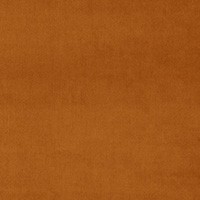
Omega Velvet Linwood · FR woven in · 60% recycled polyester



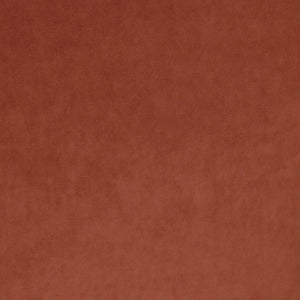


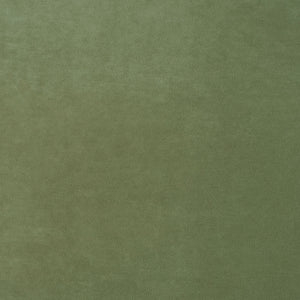






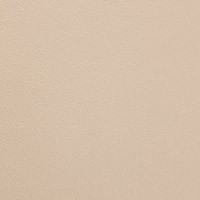
Natural Leather Naturally FR · no chemical treatment

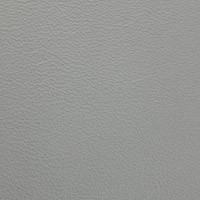
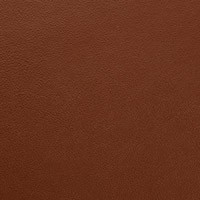



Saddle Recycled Leather Linwood · 70% recycled leather · naturally FR


Full guide to all our fabrics and materials → Our Materials Guide
We hold no OEKO-TEX or equivalent certification on our foam components at present. In this respect we are not different from virtually every other upholstered furniture brand in Britain. That is context, not an excuse.
Why It Matters
The cumulative concern
The concern with flame retardant chemicals is not acute — it is cumulative. These are not substances that cause immediate harm from a single exposure. The worry is the slow, ambient kind: chemicals that migrate out of foam over time, settle in household dust, and are absorbed — particularly by young children who spend time on and around sofas and beds.
"Among the most concerning is TCPP — one of the most common flame retardants in UK furniture foam. The World Health Organisation recently classified it as probably carcinogenic to humans. That is not a fringe concern. It is mainstream science."
WHO & Lancet Oncology — March 2026
Furl's whole reason for existing is rooted in the belief that your home should bring you peace — that the spaces you inhabit every day should actively support your wellbeing. We talk about creating calm. We talk about furniture that is as good for you as it is beautiful. There is an obvious tension, then, in knowing that the foam inside some of our products carries a chemical burden that growing evidence tells us we should be reducing.
That tension is not comfortable to sit with. But it is important to name it.
Manufacturing
How we already think about responsible production
This is not a new conversation for us. Across our manufacturing, we have been making considered decisions for years — even when they cost more or take longer.
What we already do
All wood FSC certified — across every product, without exception
Majority of fabrics OEKO-TEX Standard 100 certified
Several fabrics inherently FR — no chemical treatment at all
CNC cutting of both wood and fabric to minimise material waste
All steel and metal components recyclable at end of life
Products assembled in the UK
Designed to be repaired, not replaced
FR-free foam — actively investigating alternatives
The Path Forward
Where we're heading
We are actively working with both our foam suppliers to understand what alternatives exist — FR-free foam grades, barrier cloth construction methods, certified low-chemical materials — and what it would take to transition our current range.
We are also looking more broadly at how a small number of pioneering UK furniture makers have approached this problem from a completely different angle — eliminating foam entirely, and building instead with traditional natural materials: solid hardwood frames, natural latex, wool, cotton, rubberised plant fibres. That philosophy resonates deeply with us. And we are actively investigating whether and how those materials and methods could be brought into Furl's way of working.
FR-free design is now a stated criteria for all new Furl product development.
Every product we design from this point forward will be developed with the explicit goal of avoiding flame retardant chemicals.
Our first product to be built entirely to this standard is currently in development: a new bed and storage piece, designed from the ground up with no FR foam. We will share more when the time is right.
For our existing range, the transition is more complex. Changing materials across a live product line — while maintaining compliance, structural performance, and the quality our customers expect — takes time to do properly. We will not rush it in a way that creates new problems. But we will not use complexity as a reason to delay.
A final thought
There are brands in the UK already proving that furniture can be made without chemical flame retardants, without compromising on safety, comfort or quality. The methods exist. The materials exist. The direction of both science and regulation is clear. What has been missing, for most of the industry, is the will to move.
We have that will. And we are moving.
"Your home should be a sanctuary in every sense — including what's inside the furniture, not just what it looks like from across the room. That is the standard we are holding ourselves to, and we will keep you informed as we get there."
Go Deeper
Our fabric transparency guide
A full breakdown of every fabric range we offer — what each contains, how it achieves fire safety, and which fabrics are inherently flame resistant with no chemical treatment required.
Read our materials guide →