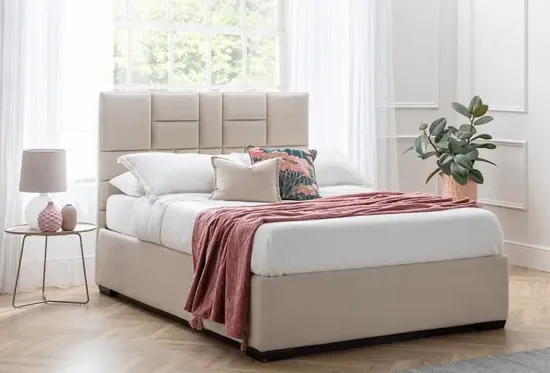
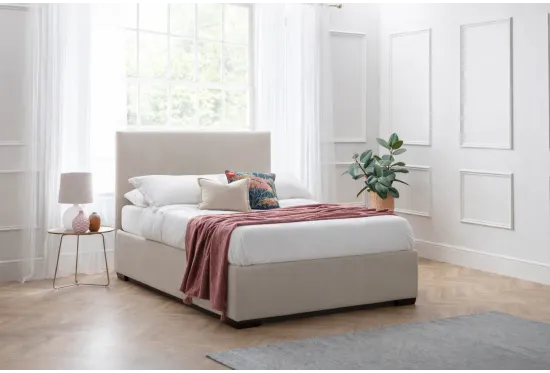
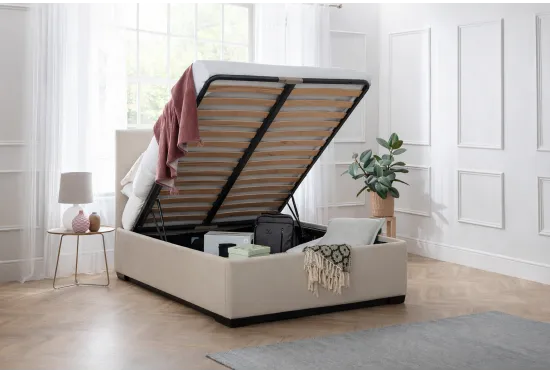
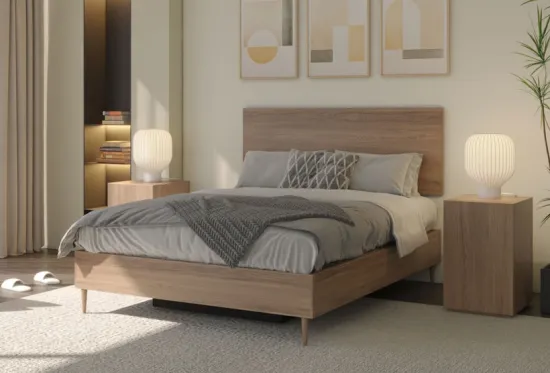
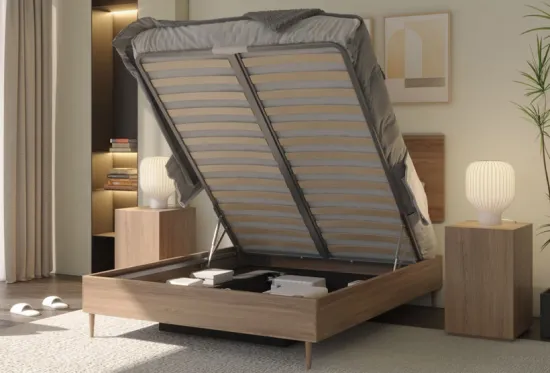
- Small Double Storage Beds
- Double Beds with Storage
- Small Double Ottoman Beds
- King Size Ottoman Beds
- Super King Size Ottoman Beds
Call us or Visit a showroom for expert personal advise and attention.
5 Reasons You Should Rearrange Your Bedroom This Weekend
- Updated :
- Published :
- Author David Norman
- label Guides
1. You'll Sleep Better (Actually)
The relationship between bedroom layout and sleep quality isn't purely psychological, though there's certainly a mental component. When you rearrange your bedroom, you're forced to reconsider the relationship between your bed and various environmental factors: natural light, airflow, noise sources, and temperature regulation.
Moving your bed away from a radiator you've grown accustomed to might reveal you've been sleeping in a microclimate several degrees warmer than ideal. Repositioning it relative to windows could reduce early morning light exposure that's been fragmenting your sleep without you realising. Even small adjustments to how air circulates around your sleeping space can meaningfully impact sleep quality.
There's also the novelty factor. A rearranged bedroom creates a subtle sense of newness that can help break negative sleep associations. If you've spent months staring at the same view whilst struggling with insomnia, changing your perspective quite literally shifts your psychological relationship to the space.
2. You'll Discover Space You Didn't Know You Had
This sounds improbable until you actually do it. Bedrooms accumulate furniture arrangements over time, often dictated by where things fit when you first moved in rather than where they function best. That chest of drawers positioned against the wall opposite your bed might work better perpendicular to it, opening up floor space and improving circulation.
Understanding how to rearrange your bedroom involves questioning assumptions about what goes where. The bedside table doesn't have to flank the bed, and the wardrobe doesn't need to hug the wall. Sometimes, pulling furniture slightly away from walls creates breathing room that makes the entire space feel larger.
You might also identify opportunities for better storage solutions. That awkward corner you've been working around could actually accommodate under-bed storage furniture for modern living, transforming dead space into functional storage whilst maintaining clean sightlines.
3. Your Morning Routine Will Flow Better
We rarely consider bedroom layout in terms of movement patterns, but the way you navigate your bedroom impacts your daily rhythm. If you're constantly manoeuvring around furniture to access your wardrobe, or if your mirror is positioned in a spot with terrible lighting, you're adding friction to your morning routine.
Rearranging allows you to optimise for flow. Position your mirror where natural light is strongest. Create a clear path from bed to bathroom. Ensure your clothing storage is accessible without obstacle courses. These small improvements compound over time, making mornings marginally less chaotic.
Think about your actual patterns rather than theoretical ideals. Where do you actually get dressed? Where do you drop your clothes at the end of the day? Design your layout around reality, not aspiration, and you'll create a space that works with your habits rather than against them.
4. You'll Reset Your Relationship With the Space
Bedrooms are peculiar rooms. We spend enormous amounts of time in them, yet they're often the last spaces we refresh or reconsider. They accumulate layers of habit and familiarity that can slide into staleness without us noticing. The room that once felt like a sanctuary can gradually become just the place where you sleep.
Rearranging interrupts this drift. It forces you to actually see the space again rather than moving through it on autopilot. You'll notice things you'd stopped registering: that scuff mark on the wall, the dust accumulation behind furniture, the lamp you haven't used in months. This awareness creates an opportunity to address lingering issues and restore intentionality to the space.
There's also something psychologically restorative about change, particularly change you control. Rearranging your bedroom is a tangible way to create newness in your daily environment without requiring significant resources. It's transformation on a manageable scale.
5. You'll Actually Use Your Bedroom for More Than Sleep
The pandemic shifted how we use bedrooms, often transforming them into multi-functional spaces out of necessity. But even post-pandemic, many of us still treat bedrooms as single-purpose rooms: places to sleep and store clothes, nothing more.
A thoughtful rearrangement can carve out space for other activities. A reading corner that actually gets natural light. A small desk positioned to face the window rather than the wall. A clear area for morning stretching or yoga. These additions don't require more square footage, just more considered use of existing space.
The key is identifying what you'd actually use. If you've never been someone who reads in bed, don't create an elaborate reading nook. But if you do yoga every morning in your living room because your bedroom feels too cramped, rearranging to accommodate that practice might be genuinely life-improving.
The Weekend Project That Keeps Giving
The beauty of rearranging your bedroom is that it costs nothing but time and effort. No waiting for deliveries, no commitment beyond moving furniture. If you hate it, you can always move everything back. But chances are, you'll discover something about your space and your habits that makes the disruption worthwhile.
This weekend could be the one where you finally stop thinking about it and actually do it. Your future self, sleeping better in a more functional space, will appreciate the effort.
Frequently Asked Questions
How often should you rearrange your bedroom?
There's no fixed schedule, but many people benefit from rearranging every 12 to 18 months. The ideal frequency depends on lifestyle changes, seasonal shifts, or simply when the space starts feeling stale. If you're consistently frustrated with your morning routine or struggling with sleep quality, these are signs a rearrangement might help.
What's the best bedroom layout for sleep quality?
Position your bed away from direct heat sources and ensure good airflow around it. Most people sleep better with their bed against a solid wall rather than under a window, as this reduces temperature fluctuations and noise. Minimise light exposure from windows and electronic devices, and ensure the path from bed to bathroom is clear and safe for night-time navigation.
Should you move heavy furniture by yourself when rearranging?
Absolutely not if there's any risk of injury. Use furniture sliders to protect floors and reduce strain, and enlist help for anything genuinely heavy. Many pieces can be emptied first to reduce weight. If something feels too heavy or awkward to move safely, it probably is. The rearrangement isn't worth a back injury.
How do you know if a new bedroom layout works?
Live with it for at least a week before making judgements. Initial unfamiliarity often reads as "wrong" when it's simply different. Pay attention to practical factors: Is your morning routine smoother? Are you sleeping better? Does the space feel more comfortable? These functional measures matter more than whether the layout matches some aesthetic ideal.
What should you do with the space under your bed?
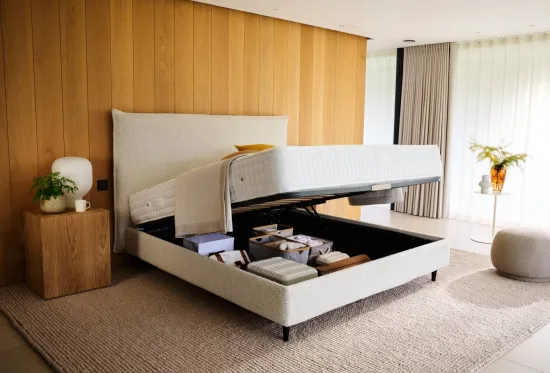
Under-bed space offers valuable storage potential, particularly in smaller bedrooms. Storage beds with integrated drawers or lift-up mechanisms make the most efficient use of this area whilst maintaining a clean aesthetic. Alternatively, low-profile storage boxes can work, though these require more effort to access. The key is keeping this space organised rather than letting it become a cluttered void.
Related Products
David Norman
David Norman is the founder of Furl, a UK-based furniture brand known for redefining how people live with space-saving, design-led storage beds and sofa beds.
With almost two decades of hands-on experience in product design, manufacturing, and brand strategy, David has built Furl into a trusted name among urban professionals seeking calm, clutter-free homes. His work has been recognised for its innovation and craftsmanship, with features in publications such as Yahoo Finance and The Telegraph.
David continues to lead Furl’s creative direction, developing furniture that solves real-world problems without compromise.