Basket Summary
There are no more items in your basket
By Type
Knowledge Hub / Guides
A practical guide for low ceilings, tight rooms, considered design — and the bedrooms that simply don't need one.
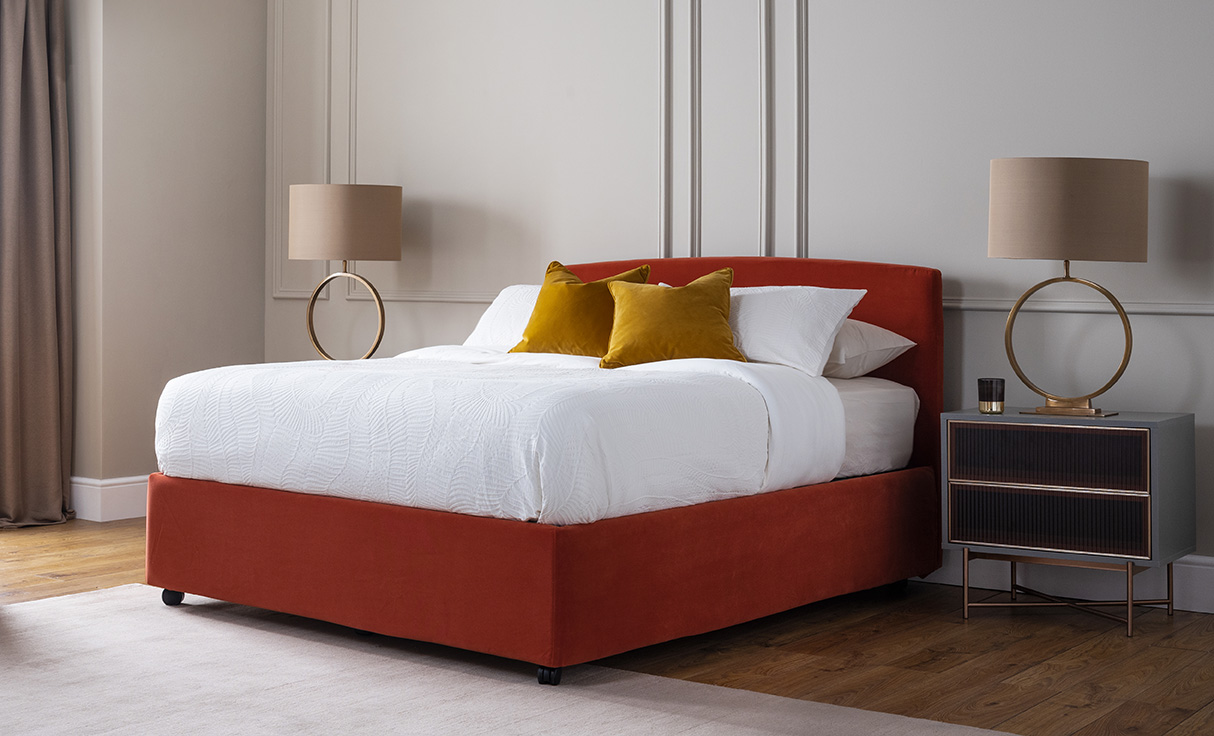
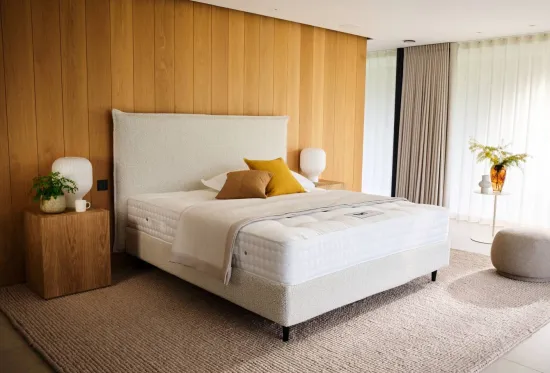
The Simplicity storage bed, photographed without a headboard. The panelled wall, the cushions and the considered styling do the work the headboard would otherwise do.
There are good reasons to choose a bed without a headboard, and most of them are not the ones the magazines suggest.
The shelter press tends to treat the headboard-free bed as a design statement — a minimalist gesture, a Scandi affectation. In our showrooms, it isn't. Most people who arrive asking for a storage bed without a headboard are solving a specific, practical problem: the room is small, the ceiling is low, the budget is tight, the headboard is already there, or they simply don't like the look of one. The minimalist aesthetic is, more often than not, a happy accident on the way to solving something else.
This is a guide for those rooms — and for anyone weighing whether the headboard, on a piece of furniture used roughly eight hours a day in the dark, is doing as much work as it costs.
(If you'd rather skip ahead to the products themselves, our storage beds without headboards are here.)
In our showrooms, almost everybody asking about a headboard-free bed has one of five reasons. Worth naming them honestly, because the right bed for each is slightly different.
Straight up: a headboard adds to the price. An upholstered headboard adds material, labour, and time. A timber-panelled or carved headboard adds more. For anyone watching the budget — first home, rental, second bedroom — the no-headboard option is genuinely cheaper, and the saving is enough to make a difference. Worth being honest about that, because nobody else seems to be.
A headboard adds length to the bed — typically 8 to 15cm at the head end, sometimes more. In a small bedroom, an alcove, or a room where the bed has to fit between two walls or up against a window, that 8–15cm is the difference between a bed that fits and a bed that doesn't. The headboard, in other words, isn't free even before you've paid for it; it costs you floor space.
Loft conversions. Victorian top-floor rooms with sloped ceilings. Basement flats. Modern flats with the eight-foot ceiling that newbuilds settle for. A standard bed with a headboard is typically 110–130cm tall at the head end, and in a low-ceilinged room that headboard fills the upper third of the wall — visually if not literally. A floor-level or low bed without a headboard makes the room feel taller, calmer, and (in the case of a sloped ceiling) often physically possible where a headboarded bed wouldn't fit at all.
A more common reason than you'd expect. A wall-mounted upholstered panel that's already in place. A timber headboard a joiner built into the wall. A vintage piece inherited or chosen carefully and lived with for years. The bed is being upgraded; the headboard isn't.
Not every storage bed accepts a third-party headboard. Ours do — they're prepared to take most aftermarket headboards, which means the bed you replace doesn't have to bring its old headboard with it, and the headboard you love doesn't have to be retired with the old bed.
This is fine. Worth saying out loud: a bed without a headboard runs the risk of looking like a student dormitory if it isn't properly dressed — that's the standing joke around our workshop. But a bed dressed thoughtfully, with two large square cushions instead of pillows propped at the wrong angle, and a bolster or two doing the work a headboard would otherwise do, looks beautiful. More than beautiful — it looks deliberate, hotel-grade, considered. The "dormitory" trap is only a trap if you treat the bed as unfinished. Treat it as a specific styling choice, and it reads as one.
The first three reasons are practical. The fourth is about furniture you already own. The fifth is preference. The piece below applies to all five.
The honest answer: more than you might think, and most of it is good.
The bed reads more horizontally. With a headboard, your eye is drawn upward; the bed makes the room feel taller and narrower. Without one, the bed reads as a long horizontal line and the room feels wider, lower, calmer. In small bedrooms, this is almost always an improvement. In rooms with low ceilings, it's transformative.
The base becomes the dominant decision. A bed with a headboard has two visual elements competing for attention — the headboard at the top, the base at the bottom. Take the headboard away and the base is the only structural element left, and it becomes the dominant design choice by default. Whether the bed is on slim legs, tall legs, or castors matters far more than it would otherwise. We come back to this in the next section.
The bed needs to be dressed properly. Bed dressing is doing more work without a headboard than with one. Standard pillows propped against a bare mattress edge can read as unfinished; two large square cushions (60×60 or 65×65cm) or a long bolster pillow, layered behind the everyday pillows, gives the bed a finished top edge and is the difference between minimalist and unmade. This isn't expensive — a pair of considered cushions is significantly cheaper than a headboard — but it does need to be planned, not improvised after delivery.
Mattress depth becomes more visible. With a tall padded headboard towering above it, a 22cm mattress and a 30cm mattress look about the same. Without one, the mattress is the upper visual element of the bed, and a deeper mattress reads more substantial. Worth thinking about in the spec stage rather than on delivery.
The room feels less like a hotel. Harder to put a finger on, but worth saying. A traditional bed with a tall padded headboard is a recognisable visual language — it says "guest bedroom" or "hotel suite." A headboard-free bed, dressed well, reads more domestic, more lived-in, more like furniture than installation. Whether that's good or bad depends on what you want from the room.
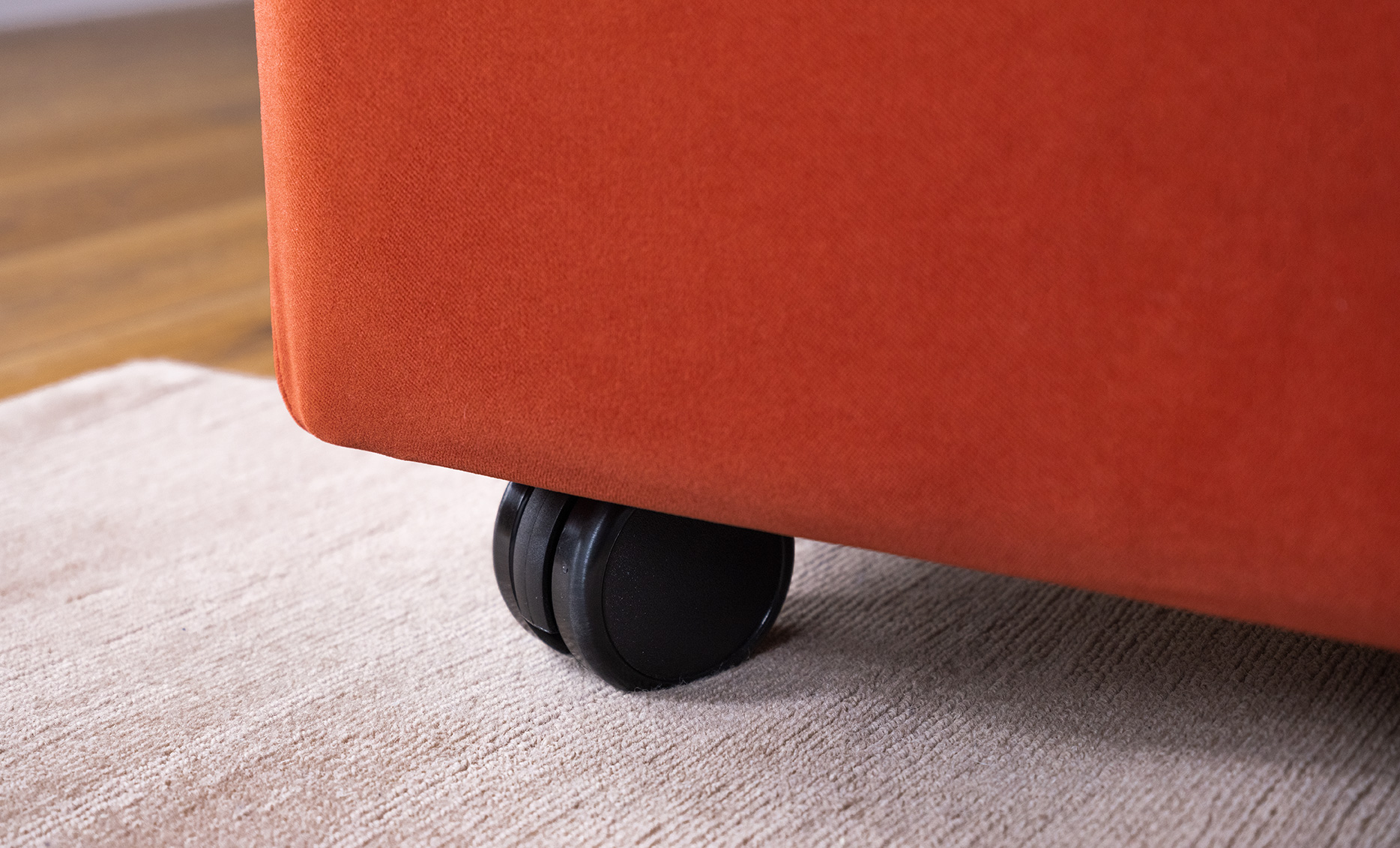
A bed with a headboard has two visual elements competing for attention. Without a headboard, the base is the only structural element left — and how the bed sits on the floor becomes the single biggest visual decision. It's the choice most often skipped over, and the one that matters most.
Each of our four beds offers a slightly different answer.
Air sits on slim, elevated legs that lift the bed off the floor and let the eye travel under it. The room reads lighter, more open, easier to move around in. Air is the most contemporary of the four — and the easiest to vacuum under, which sounds trivial until you live with the alternative.
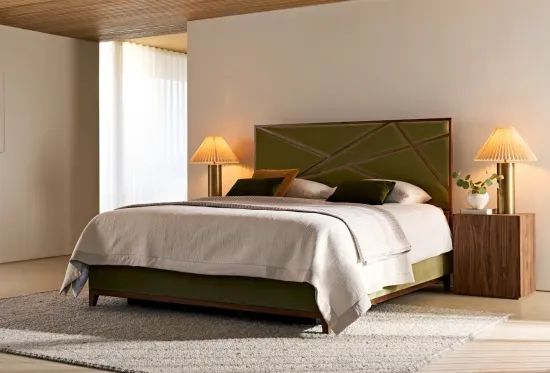
Illusion is the bed that, true to its name, feels light and uncluttered while still housing a generous storage compartment. Wood detailing — in natural oak or rich walnut — supports a base whose proportions are tuned to feel compact and visually quiet. The wood adds warmth where Air keeps things abstract; Illusion is the answer when the materials in the room (timber floors, mid-century chairs, oak panelling) want to be echoed.
Simplicity is the storage bed on castors. Wheels at all four corners — easy to roll out from a wall for cleaning behind, easy to reposition seasonally, easy to slide aside if the bedroom briefly becomes a yoga room. Simpler than a fixed bed, more flexible than legs, and quietly the most practical option for anyone who likes the idea of moving furniture around without three friends and an afternoon. The castors are unobtrusive — they read more as detail than as feature — but they change the relationship between the bed and the room in a way nothing else does.
Max is the most flexible of the four. Feet, plinth, and other configurations can all be specified separately to fit the room — the foot, the height, the colour, the finish, all chosen rather than fixed. Max is the right answer when the room itself has specific requirements: a tight clearance under a sloped ceiling, a need for the bed to sit at a particular height, a desire to match an existing piece of furniture in the room. It also has the deepest storage of the four, up to 40cm — worth knowing if storage is the reason you're buying a storage bed in the first place.
The simplest way to choose: think about how you want the bed to relate to the floor. Open and airy → Air. Warm and material-led → Illusion. Practical and movable → Simplicity. Specific and configurable → Max.
Choosing a Furl bed without a headboard now doesn't close the door on adding one later. Plenty of customers do, and there are three sensible ways to go about it.
A wall-mounted upholstered panel — a long panel of fabric attached to the wall behind the bed, often wider than the bed, sometimes running the full width of the wall. Fashionable in hotels for ten years, slowly migrating into homes. Looks deliberate; works particularly well above a low or floor-level bed where the panel does the vertical work the bed isn't doing.
Timber slat-wall or panelled detailing — V-groove panelling, oak boarding, or contemporary slatted timber running floor-to-ceiling behind the bed. Typically painted or stained, full-height to the ceiling. Works in period homes and contemporary rooms equally; gives the appearance of a built-in bed without the joinery cost.
Or simply a strong wallpaper or paint colour — the wall behind the bed becomes a feature, the bed sits cleanly against it without competing. The cheapest of the three, and the option that does most of the visual work for free.
A small note worth flagging: all of our storage beds are made to order in our Nottingham workshop, and that means we can also adjust the size of the base. If your space is 1,420mm wide, we can build the bed to fit it precisely. The headboard question and the awkward-room question are often the same question — and a made-to-measure base is sometimes the simpler answer than trying to find a stock bed that nearly fits.
Four of our storage beds work well without a headboard, and they're slightly different answers to slightly different rooms.
Air — slim legs, the lightest and most contemporary look. Best for rooms with reasonable height and where you want to see the floor under the bed.
Illusion — the bed designed to feel light and uncluttered, with oak or walnut detailing that adds warmth without weight. Suits rooms where the bed is the main piece of furniture and where the materials in the room want a partner.
Simplicity — on castors. Movable, practical, easy to clean around. The choice for anyone who wants flexibility, or who hates the idea of dragging a heavy bed across a floor every time they hoover.
Max — the most configurable of the four, with feet, plinth, and finish all specifiable separately, and the deepest storage. The right answer for awkward rooms or anyone who wants to specify the bed to fit exactly what they need.
All four offer the same generous storage compartment, the same range of fabrics (we send free fabric samples — easier to commit to a colour you've held in your hand than one judged on a screen), and all are prepared to take most aftermarket headboards if you have one already, or to add one later if your mind changes. Choosing the no-headboard configuration also brings the price down compared with the same bed with an integrated headboard — worth knowing if budget is part of the decision.
If you're not sure which is the right answer for your room, bring photographs and rough measurements to one of our London showrooms. The choice is much easier in person than on a screen.
Written by David Norman, founder of Furl. Furl makes sofa beds and storage beds in our Nottingham workshop, and runs showrooms in Swiss Cottage and on Kings Road.