Basket Summary
There are no more items in your basket
By Type
The room you furnished as a guest bedroom is being used as a guest bedroom less than ten nights out of every thousand.
This is the single most important thing to internalise before buying any furniture for the room. The room is not, in any meaningful sense, a guest bedroom. It is something else with a guest bed in it.
When we ask people in our showrooms what they wish their spare room could do, the answers fall into four reasonably consistent categories. Most rooms are trying to be one of these, and the ones that work well have committed to one of these. The ones that don't work are usually trying, half-heartedly, to be three of them at once.

By far the most common, particularly since 2020. The ONS reported in 2023 that 28% of UK workers have a dedicated study at home — and a further 17% are working from a bedroom because they don't. As of December 2024, 14% of British workers were fully remote and another 26% were hybrid; in net, that's a substantial share of the country needing somewhere to sit with a laptop most days of the week. The room has a desk in it, a chair, a bookcase, and the laptop that didn't fit in the kitchen. It is used five days a week. The bed is needed for ten nights a year and would otherwise be a piece of large, uncomfortable furniture pushed against a wall — taking up floor space, making the desk feel cramped, and forming a low-level visual reminder that you're working in a bedroom.
A bed that disappears into a sofa for 355 days of the year is, mathematically, the right answer here. A traditional bed is the wrong one.
Less common but more honest. The clothes have outgrown the main bedroom. There are wardrobes along one wall, a full-length mirror, and a chair where things land at the end of the day. This room is used twice a day, every day, by the people who live in the home. Guests visit a handful of times a year.
A sofa, ideally one with storage in the arms, makes more sense in here than a permanent bed. The room can stay calm and uncluttered most of the year and convert when needed.
A genuine second sitting room — the room you go to when somebody else has commandeered the main living room for football, or when you want to read without television. Often has a smaller TV in it, a comfortable chair, sometimes a piano. Doubles as the room the children do homework in, or the room that gets booked when grandparents come for a weekend.
Here a sofa bed earns its keep daily as a sofa, and once or twice a quarter as a bed. The mattress matters more in this scenario because the sofa side of it is being sat on every evening.
The room held in reserve for a child who hasn't arrived yet, or for one who has just left for university and might come back. Furniture in this room is bought twice — once now, once later — unless the first round is genuinely flexible. A sofa bed plus storage is the version of this room that survives a change of plans.
There are, of course, hybrids. A study-with-dressing-room. A second-living-room-that-becomes-a-nursery. The point isn't to fit your life into one of four boxes. The point is that none of these boxes is "guest bedroom" — and yet the spare room is almost always furnished as if it were.

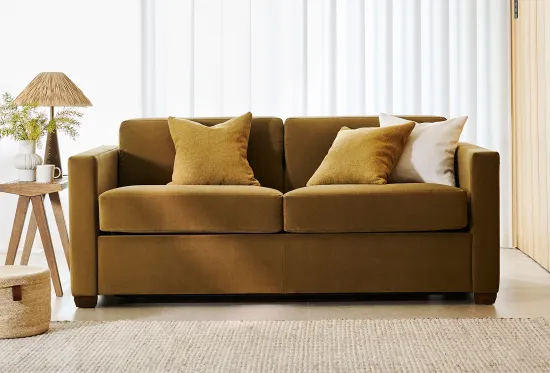
The Nuvo in dark leather — a sofa first, a bed for the nights it's needed.
Worth pausing on this one separately, because the numbers behind it are striking — and most homeowners we speak to are unaware of them.
A spare room can earn a homeowner up to £7,500 a year tax-free under HMRC's Rent-a-Room scheme — the equivalent of £625 a month. Above that threshold, lodger income becomes taxable, but for most households the £7,500 ceiling is high enough that it's never reached. According to flatshare site SpareRoom, the number of homeowners taking in lodgers rose 89% between January 2021 and January 2024, driven by rising mortgage rates and the cost-of-living squeeze. Lodgers now account for around a quarter of all rooms available in shared accommodation across the UK. The average household renting out a single furnished room could earn around £9,036 a year in 2025, on SpareRoom's figures, with London rents averaging close to £1,000 a month for a room.
Not everybody wants a stranger in the house, of course, and lodging isn't for every life stage. But the option is worth being honest about — and it's worth knowing that the financial arithmetic has shifted considerably in the last five years. A spare room sitting empty most of the year now represents a meaningful annual sum of foregone income, and a sofa bed lets the same room serve double duty: family at Christmas, lodger the rest of the time, with the room reverting to a sofa whenever the lodger moves on or you want it back.
For this scenario, the bed matters more than for any of the others. A lodger paying £625 a month for somewhere to sleep has, by definition, every right to a sleeping surface that doesn't compromise — closer to a real bed that happens to fold into a sofa than the other way around. Folding mattresses on top of sprung sofa frames don't survive long-term occupancy — and a bad bed in a long-let arrangement is the kind of thing a lodger leaves over. The bed in this scenario needs to be one your lodger would happily sleep on for months, not weeks; it's the difference between a tenant who renews and one who quietly looks elsewhere.
The case for a normal bed is comfort. It's a real bed. It looks like a bed. Nobody arrives and feels they're sleeping on a sofa.
The case against is harder to see at the time of buying and impossible to ignore six months later. A double bed takes up roughly 2.5 square metres of floor before you walk around it — closer to four if you allow for getting in and out. In a typical UK spare room of around eight to ten square metres, that's between a quarter and half the room, occupied by a piece of furniture that earns its space ten nights a year. The desk, the wardrobe, the comfortable chair — all of these have to negotiate around it.
Worth putting a number on that floor space. According to Zoopla, the average UK home costs around £300 per square foot — meaning the floor area of a standard double bed represents about £8,280 of property value. In London, where the average is £585 per square foot, the same patch of carpet is worth £37,895; in Kensington and Chelsea, £1,373 per square foot brings it closer to £90,000. None of which is to argue against having beds — only to point out that the floor space a permanent bed occupies is, in pounds-per-night-of-actual-use, the most expensive piece of property in the house.
A bed also signals "bedroom" to anybody who walks in, including you. Working in a room with a bed in it does something subtle and unhelpful to the brain. It's harder to focus. It's harder to leave at the end of the day. The room never quite becomes the room you wanted it to be, because there's always a bed in the corner of it, taking up space and visual weight.
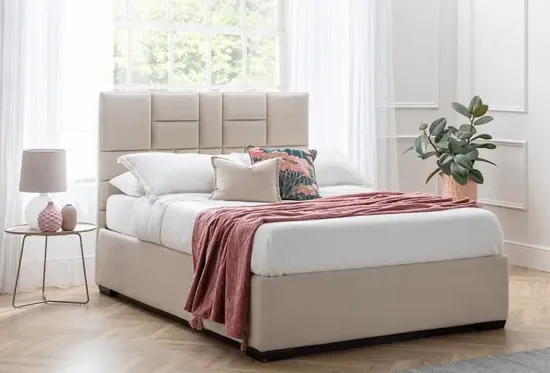
There is one exception worth naming. If the room is genuinely going to be used as a bedroom — a child's room, a long-term lodger, a second bedroom in a household where partners sleep separately — and if the floor space matters because the room is small, a storage bed earns its place. The clever trick of a storage bed is that the floor underneath it stops being dead space and becomes the largest cupboard in the house. Suitcases, off-season clothes, the spare duvet, the Christmas tree — all of it lives where a bed used to merely sit.
For everybody else — the study people, the dressing-room people, the second-sitting-room people, the lodger-landlord people — the answer is a sofa bed. Worth noting, too, that this is a generational shift in motion. A 2022 Bensons for Beds survey found 73% of over-55s give overnight guests a regular bed, but the picture flips sharply for younger adults, who are far more likely to put a guest on a sofa bed. Households who are setting up homes today simply don't furnish in the same way their parents did — and the spare-room-as-permanent-guest-bedroom is, quietly, becoming a generational artefact.
If the spare room is a study, dressing room, second sitting room, or anything else for 355 days of the year, the furniture that holds together this whole arrangement is a sofa bed that doesn't compromise on either side. Most do.
Five things to weigh, in roughly this order:
Most sofa beds compete on how cleverly they fold. The thing your guest will remember is whether they slept. A 2024 study published in Nature's Scientific Reports analysed 59,766 short-let reviews and found that bed comfort, alongside cleanliness, was the strongest single predictor of whether a stay rated highly — significantly more important than décor, location, or even host responsiveness. The same is true, in less formal data, of households reporting whether they'll come back next Christmas. Sleep quality is the difference between a guest who returns and one who finds another arrangement.
For a sofa bed that's standing in for a real bed — guests staying for a week, a teenager home from university, a long-term lodger — 18cm is the depth that genuinely replaces a mattress. We also make a 12cm option, which works very well in models designed for a lower seat and a more compact look, where the brief is closer to "a sofa that happens to fold out" than "a bed that happens to be a sofa". Both are a long way from the 8cm-or-thinner foam most sofa beds rely on, which is the depth at which guests start to feel the frame underneath them.
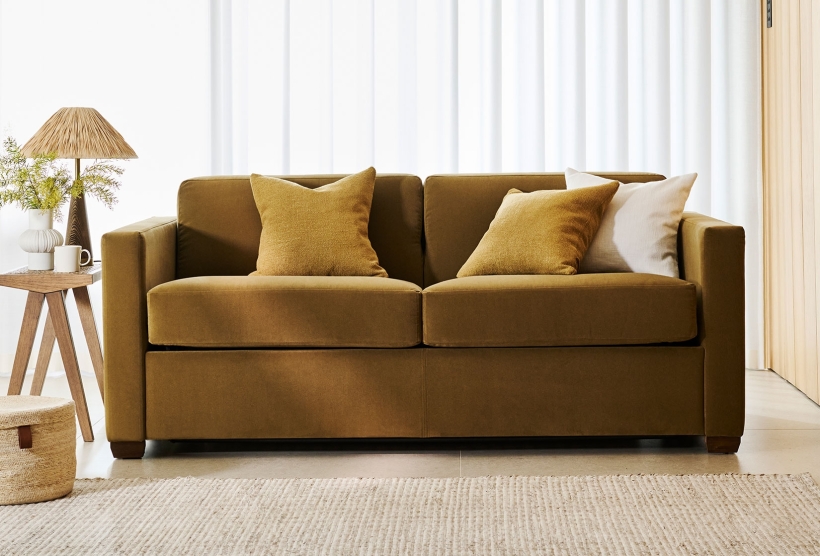
Go as big as the room allows. The instinct in a small spare room is to choose the smallest sofa bed that fits — a single, or a small double — on the assumption that bigger furniture will dominate the space. In practice the opposite is usually true: the bed gets used so rarely that the size of the sofa is what really matters, and a generous sofa makes a room feel considered, not cramped. A king-size sofa bed in a room that can take it gives guests a real bed for the night and gives you a real sofa to sit on the rest of the year. Single sofa beds are usually a false economy — you save twenty centimetres of width and lose the option of a couple staying.
If converting the bed requires a printed instruction sheet, it's wrong. Your guest is unlikely to ask for help and likely to give up halfway through, ending the evening on a half-folded sofa. The right mechanism is one motion — pull, lift, or push — and takes a few seconds. Test this in a showroom yourself before deciding.
A spare-room sofa bed with arm storage is a quiet design coup. Guest bedding has to live somewhere, and the airing cupboard is rarely big enough — but the arms of a sofa are roughly the right size and shape for a folded duvet, two pillows, and a set of sheets. It means the room itself doesn't need a separate ottoman or trunk taking up floor space, and the bedding for the bed is stored, neatly and out of sight, inside the bed itself. Not every model offers it; on our range it's an option worth taking.
If the sofa side is being sat on every day for the room's other purpose — desk chair to take a break in, evening reading spot, kids' game-day base — the upholstery has to look and feel like a sofa, not like a guest-room compromise. The trick is to choose a fabric and colour you'd happily live with daily, not one chosen with guests in mind. We send free fabric samples for exactly this — easier to commit to a colour you've held in your hand than one judged on a screen.
The piece of furniture is half the answer. The other half is committing to what the room is for the rest of the time.
A study should have a proper desk in it, not a folding one — folding desks become invisible to use and the room reverts to being a guest bedroom by default. A dressing room should have actual hanging storage along one wall and a mirror, not a freestanding rail and a chest of drawers from a previous flat. A second living room should have decent lighting and somewhere to put a drink, the way a main living room does. The room earns its keep by being a real version of the thing it is, not a half-version of two things.
One small piece of advice that has nothing to do with furniture choice and everything to do with how the room actually works: choose a sofa bed on wheels. The position you want the sofa in for sitting is rarely the position you want it in for sleeping — a sofa pushed against a wall makes a calm corner of a study; a bed pulled out into the middle of the room is easier to make up and easier to get in and out of. Wheels mean the same piece of furniture can do both without becoming a two-person job. They also make cleaning underneath a five-second exercise rather than the kind of task that gets postponed indefinitely.
When the guest does come, the room being its everyday self is the thing that makes them comfortable, not a bed-shaped shrine to their occasional arrival. They get a real bed for the night. The rest of the time, you get a real room.
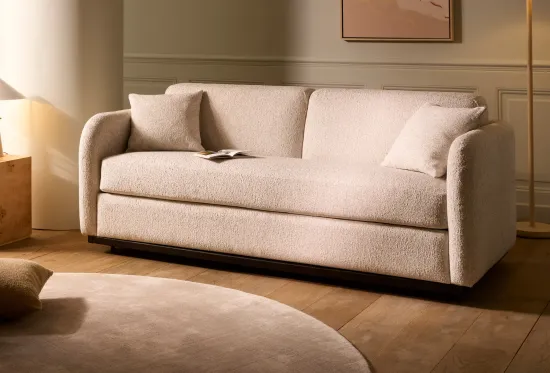
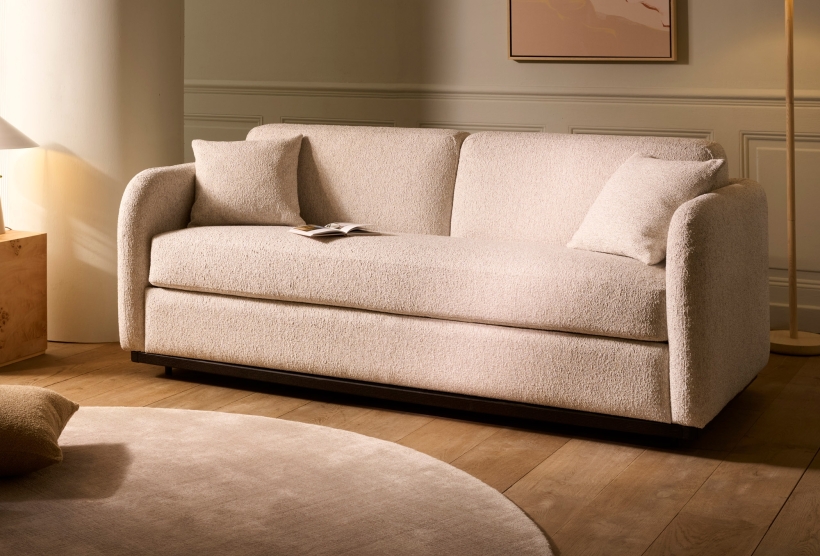
Our sofa beds are designed for exactly this scenario: a sofa that lives in a room with another job, and converts into a proper bed when needed. The Vasca sits lower and reads more as a sofa first, with a 12cm mattress for a sleeker, more compact look — well-suited to a study or second living room where the sofa side does most of the daily work. The Nuvo takes a similar low-seat, sofa-first approach with a more retro line. The Cocoon goes the other way: an 18cm sprung mattress designed to genuinely replace a permanent bed, for households hosting longer stays, lodgers, or anyone who wants a guest bed indistinguishable from the real thing. The Metro and Cambio sit alongside as more compact options, designed for tighter spare rooms where every centimetre is being asked to earn its keep. All have a one-motion mechanism, optional arm storage for guest bedding, and wheels on the base.
Each is made to order in our Nottingham workshop and available in any of the fabrics in our range. We'd encourage anyone weighing a sofa bed for a spare room to come and lie on one in person at one of our London showrooms — comfort is the thing photographs can't show you, and the only way to know if the bed is the bed your guests will actually want to sleep on is to spend ten minutes on it yourself.
Sources cited: ONS 2021 Census; English Housing Survey 2021 (Department for Levelling Up, Housing and Communities); ONS Working from Home survey 2023 and Labour Force Survey, December 2024; DFS UK Hosting Report 2024; Bensons for Beds Guest Bed Survey 2022; Swyft Home Hosting Report 2021; Zoopla Price-per-Square-Foot Report October 2024; HMRC Rent-a-Room Scheme; SpareRoom statistical releases 2024–2025; Scientific Reports (Nature) 2024 short-let reviews study.
Written by David Norman, founder of Furl. Furl makes sofa beds and storage beds in our Nottingham workshop, and runs showrooms in Swiss Cottage and on Kings Road.