Basket Summary
There are no more items in your basket
By Type
There's a reason the living room is the heart of most homes — it's where the day unwinds, where conversation happens, and where the outside world is finally allowed to fall away. And whether you have sprawling square footage or a modest city flat, the feeling that matters most in a living room isn't size. It's calm.
A well-planned layout can transform even the smallest lounge into a room that feels open, airy and effortless to be in. From the scale of your sofa and the placement of your coffee table, to the paint you choose and the soft furnishings you layer on top, every decision adds up. Get the balance right and the room starts to breathe — and so do you. If you're working with a particularly compact space, you might also enjoy our guide to the best furniture choices for urban living and small spaces.
In this article
A smaller room doesn't mean compromising on style or comfort. In fact, the most serene living rooms are often the most considered ones — spaces where every piece has been chosen with intention. The trick is in knowing which decisions genuinely open up a space, and which quietly close it in.
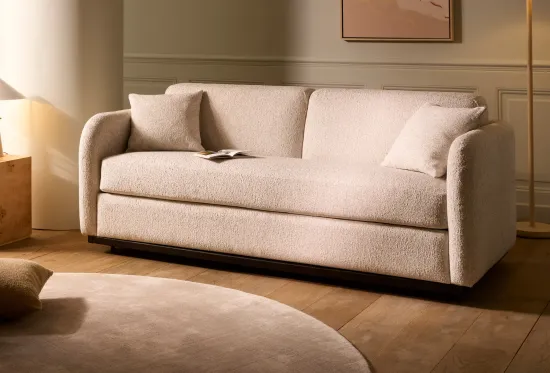
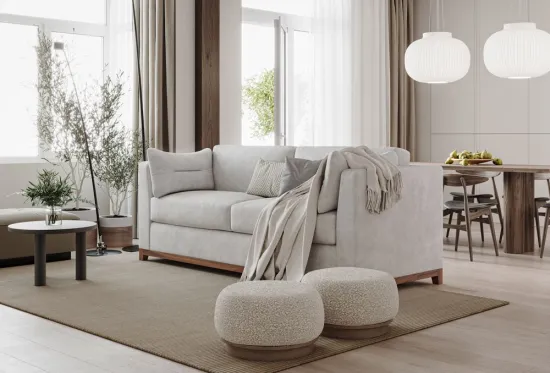
Bulky, deep-framed furniture swallows a small room whole. Look instead for pieces with clean lines, slim arms and raised legs — the kind that let light and floor space travel beneath and around them. A sofa on exposed legs, for example, will always feel lighter in a room than one that sits flush to the floor, because more of your carpet or flooring stays visible. More visible floor means a more spacious-feeling room.
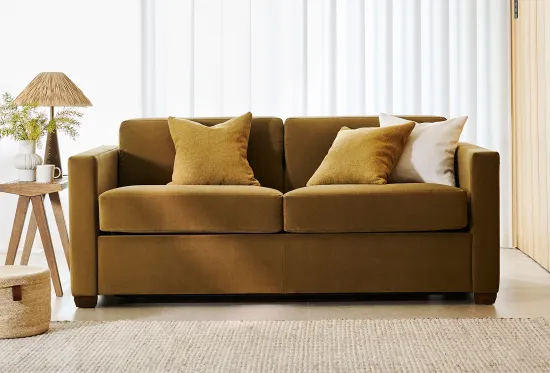
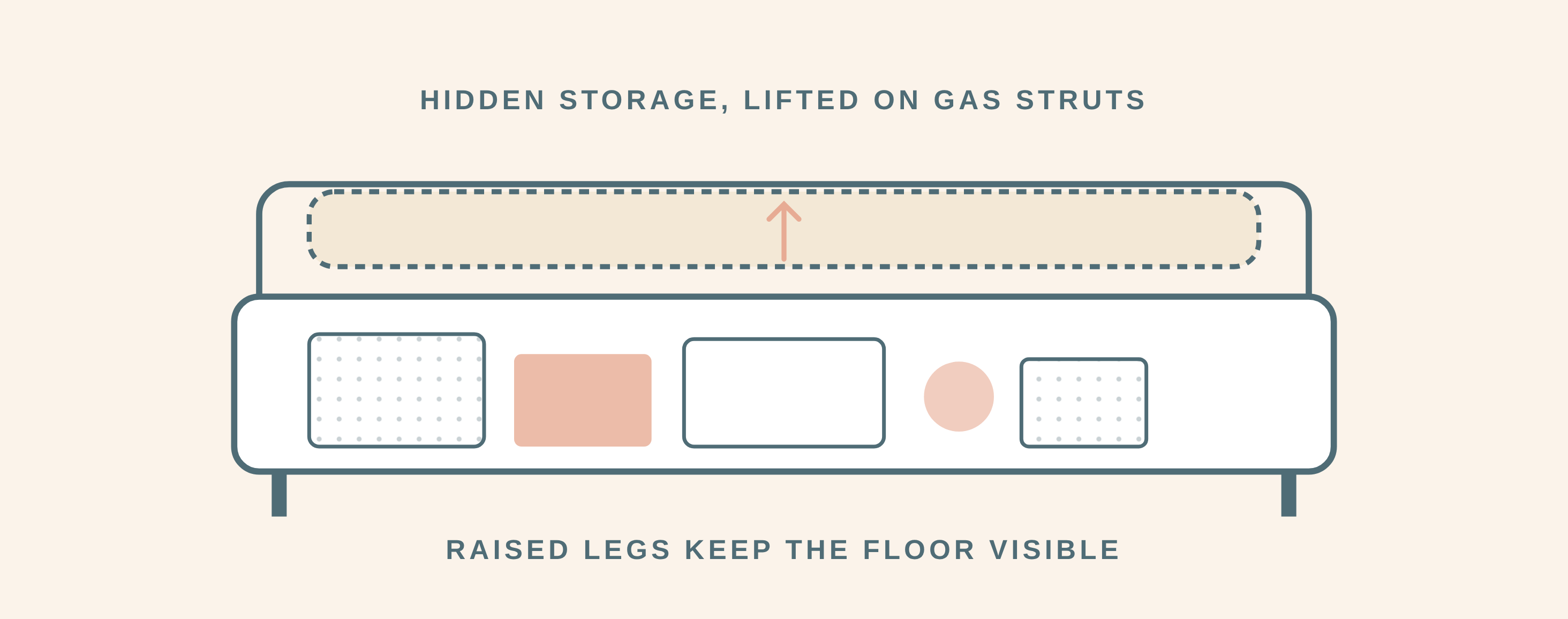
When space is limited, every piece has to earn its place twice over. This is where sofa beds and storage sofas come into their own. A storage sofa swallows the toys, throws, remotes and magazines that usually pile up through the day, leaving the room ready to reset in seconds — we've written more about how storage sofas can transform a lounge if you want to go deeper. A sofa bed, meanwhile, quietly turns the living room into a guest room whenever you need it — without a spare bedroom sitting empty the rest of the year.
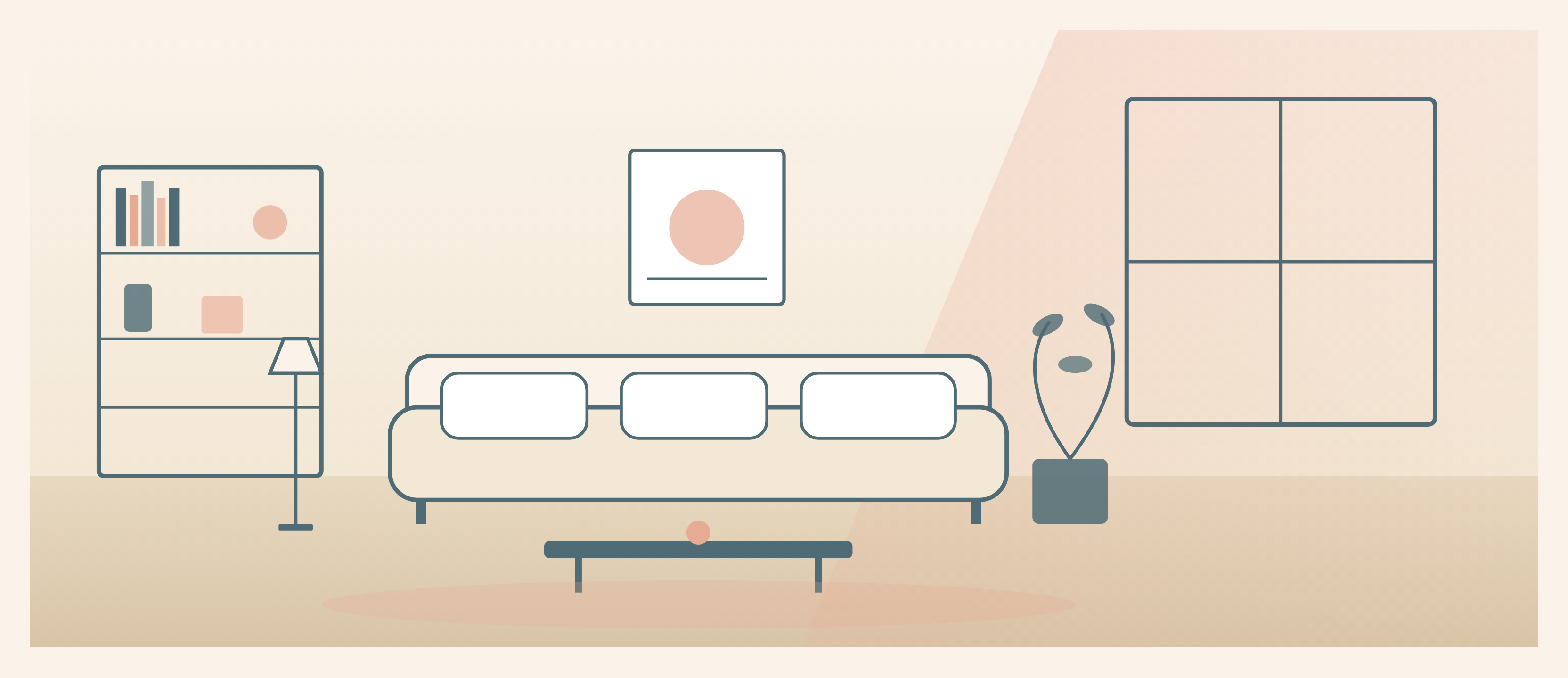
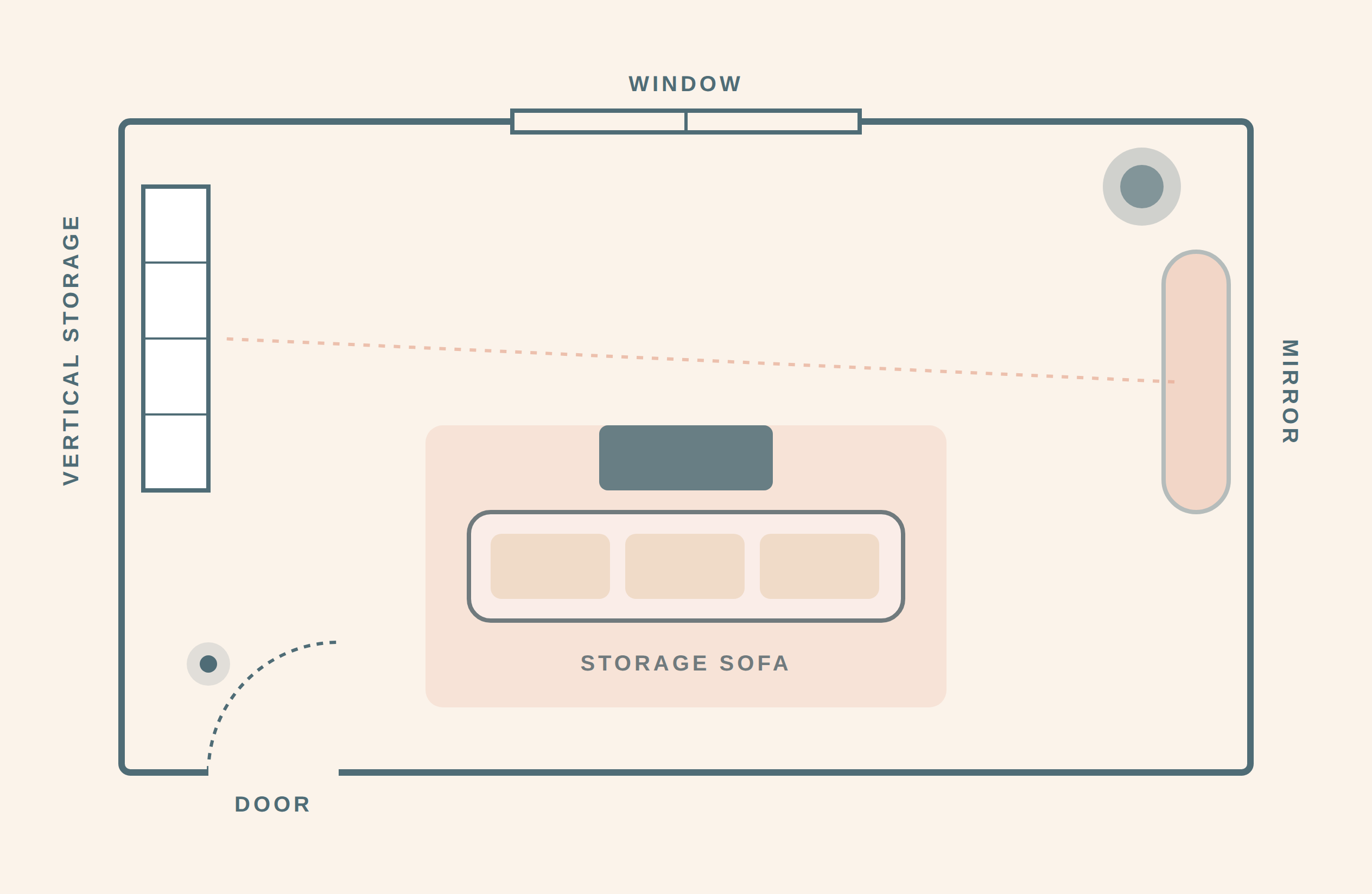
Shelving, tall bookcases and wall-mounted units all pull attention away from the floor plan and up towards the ceiling — which instantly makes a room feel taller. Better still, vertical storage keeps the floor itself as clear as possible, and a clear floor always reads as more space. A single floor-to-ceiling bookcase can do more for the feel of a small room than three low sideboards ever will.
Light, soft colours reflect natural light around a room, and the more light that bounces, the larger the space feels. Creams, off-whites, chalky neutrals and pale greens work beautifully on walls and ceilings — and painting both in the same tone blurs the edges of the room, making it feel less boxed in. Keep any darker accents for smaller pieces: a lamp, a cushion, a throw.
A well-placed mirror can double the sense of space in a small room almost instantly. The rule of thumb is to hang it opposite a light source — a window or a feature wall — so it reflects light back into the room. Placed opposite a bookcase, a mirror can make the whole wall of books feel like it repeats into the distance. It's a simple trick, but it works every time.
No matter the size of your room, certain choices will always make it feel smaller than it is — too many pieces competing for attention, a layout that cuts the space in half, or furniture that doesn't quite suit the room's proportions. Good living room decor is about editing as much as adding.
Every room benefits from one clear "hero" — the statement sofa, the fireplace, the piece of art above the mantel. When you try to give every corner its own moment of drama, the eye has nowhere to rest and the whole room feels busy. Choose your focal point first, then let everything else play a quieter supporting role. The result is a room that feels curated rather than crowded.
"Peace is the ultimate luxury — and in a living room, peace begins with the edit."
The direction your room faces has a huge effect on which colours will flatter it. Use this as a starting point:
|
North-facing
Warm creams, dusty pinks, gentle beiges to offset cool light
|
South-facing
Soft greys, pale blues, sage greens for a tranquil feel
|
East-facing
Warm-toned neutrals that hold up as the afternoon softens
|
West-facing
Muted earthy tones to temper golden evening light
|
Always test paint samples on more than one wall — colours shift dramatically depending on the time of day.
Oversized furniture is one of the quickest ways to shrink a room, even when there isn't much else in it. Measure your space carefully and leave generous "breathing room" around each piece — ideally, enough to walk freely between the sofa and coffee table without turning sideways. Where you don't put furniture matters as much as where you do. A pool of empty floor is a feature in itself.
Soft furnishings are the finishing touch on any living room — but sizing and placement matter just as much as style. These principles apply whether your room is open-plan, compact or an awkward shape that's never quite known what it wants to be.
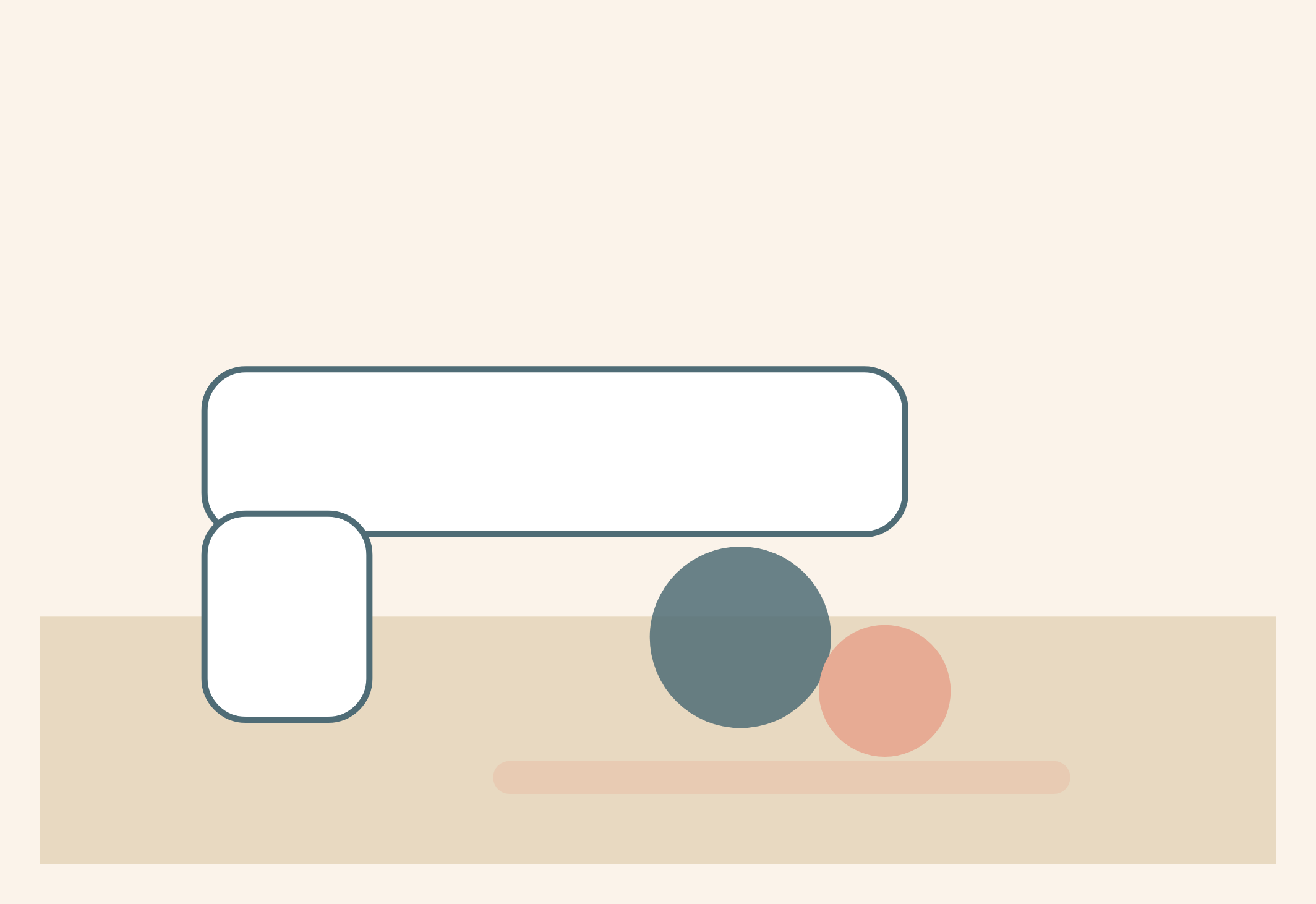
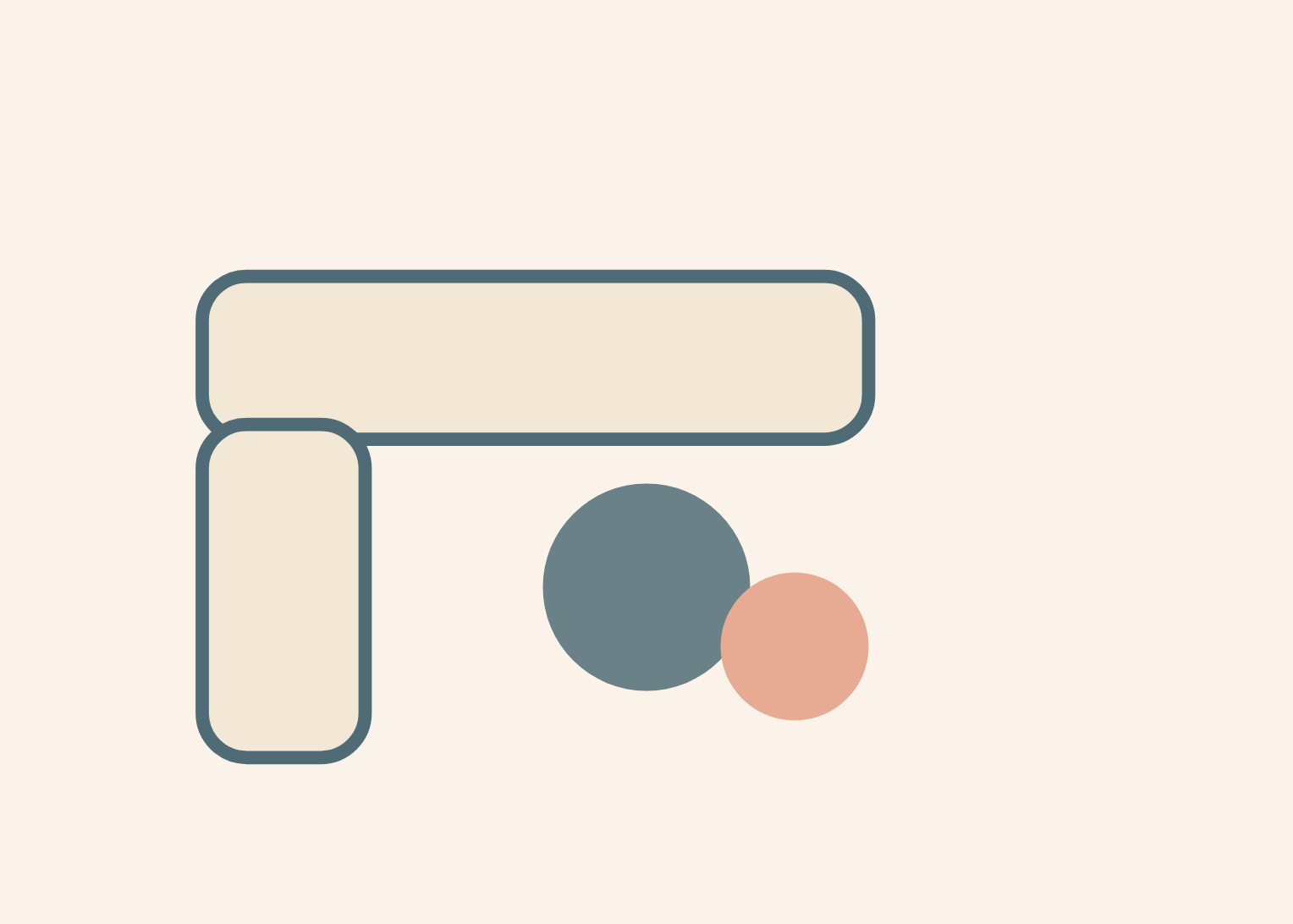
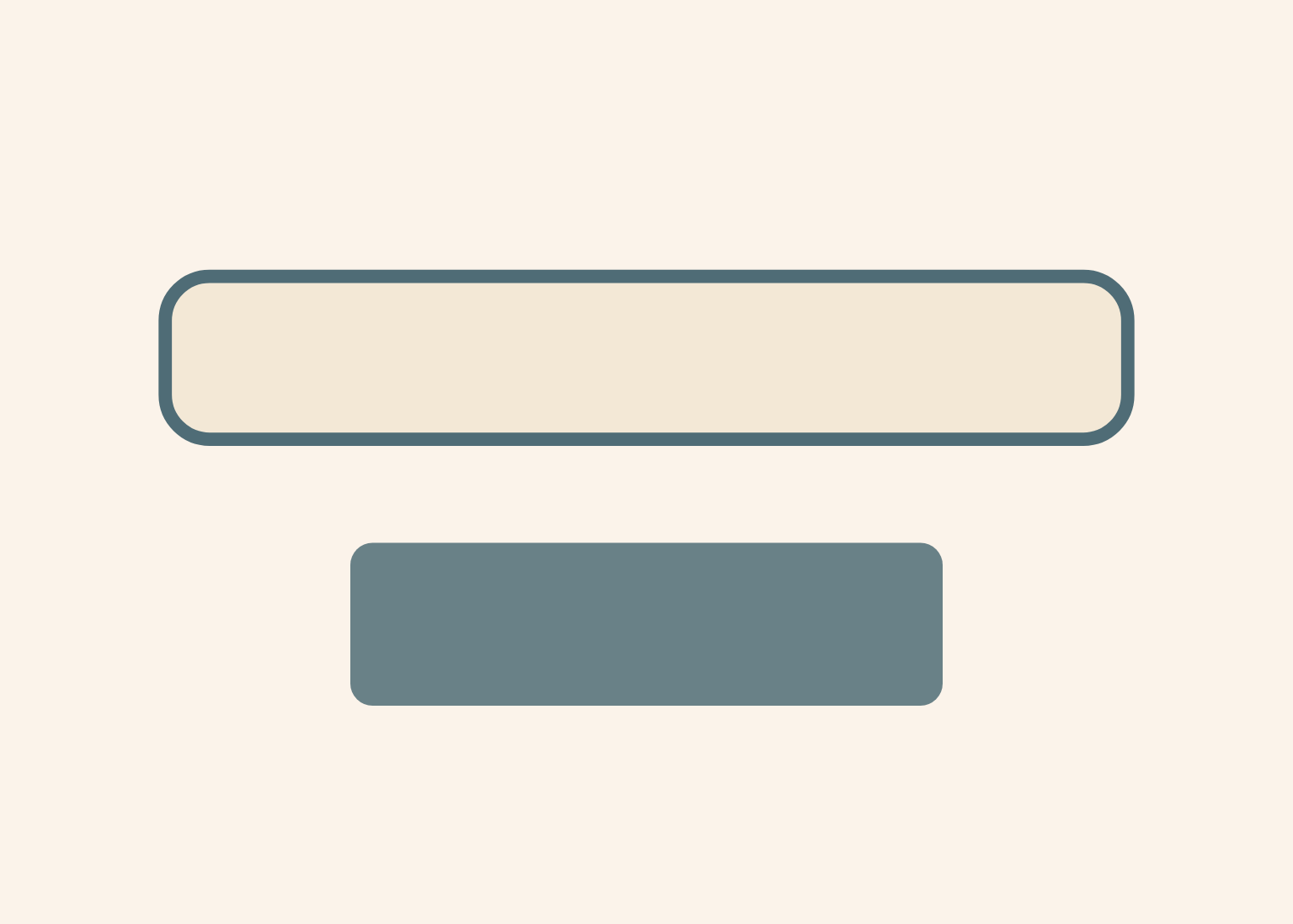
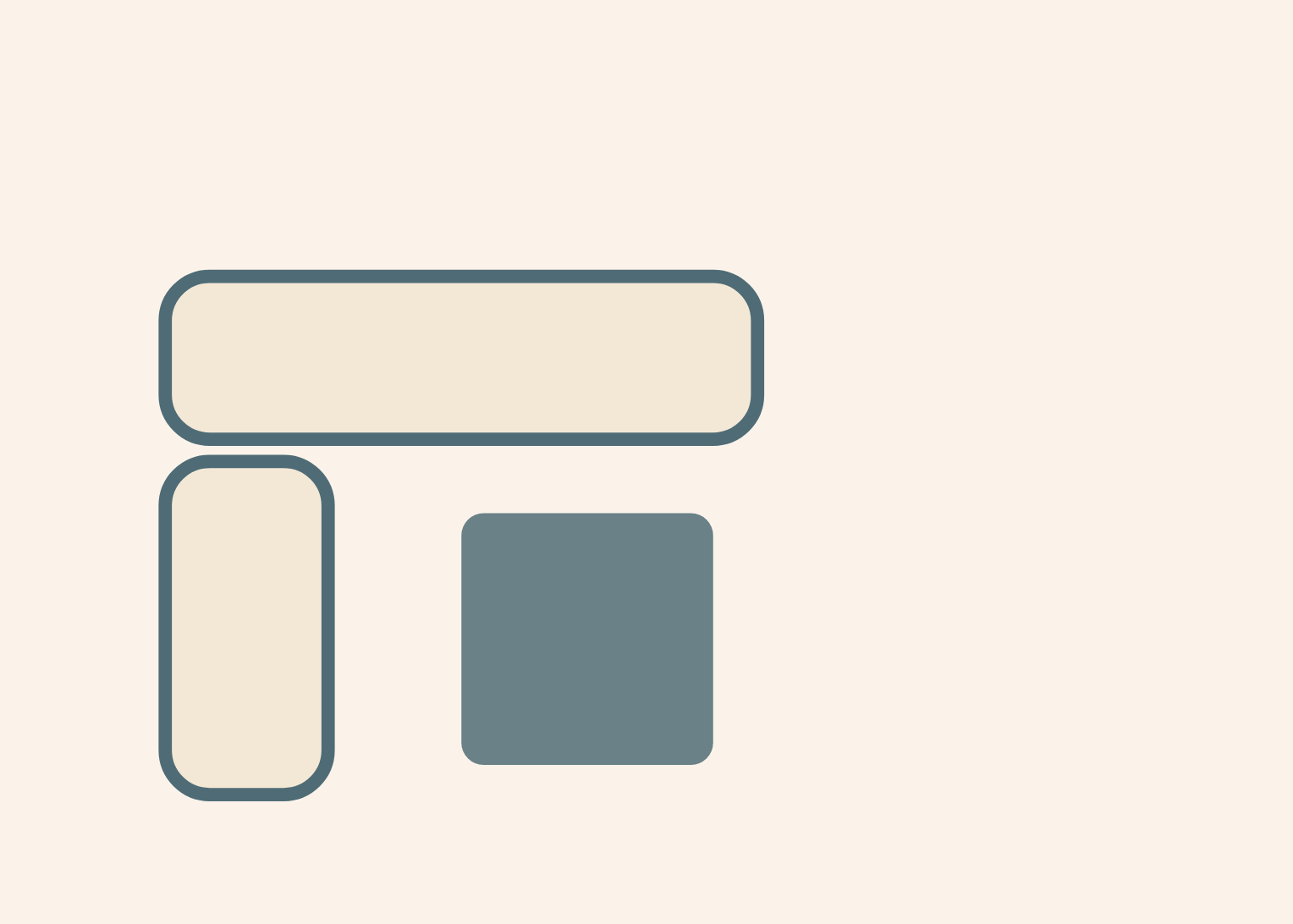
Coffee tables work hardest when their shape mirrors the sofa layout around them.
L-shaped sofa
Round nesting tables soften the angles and tuck away when not needed.
|
Straight sofa
A rectangular table gives everyone along the sofa something to reach.
|
Two sofas
A square table anchors the middle without favouring one side.
|
For rooms where the coffee table might occasionally need to do more — doubling as a dining table, say — an extending table that rises and opens out is a clever way to keep the footprint compact day-to-day.
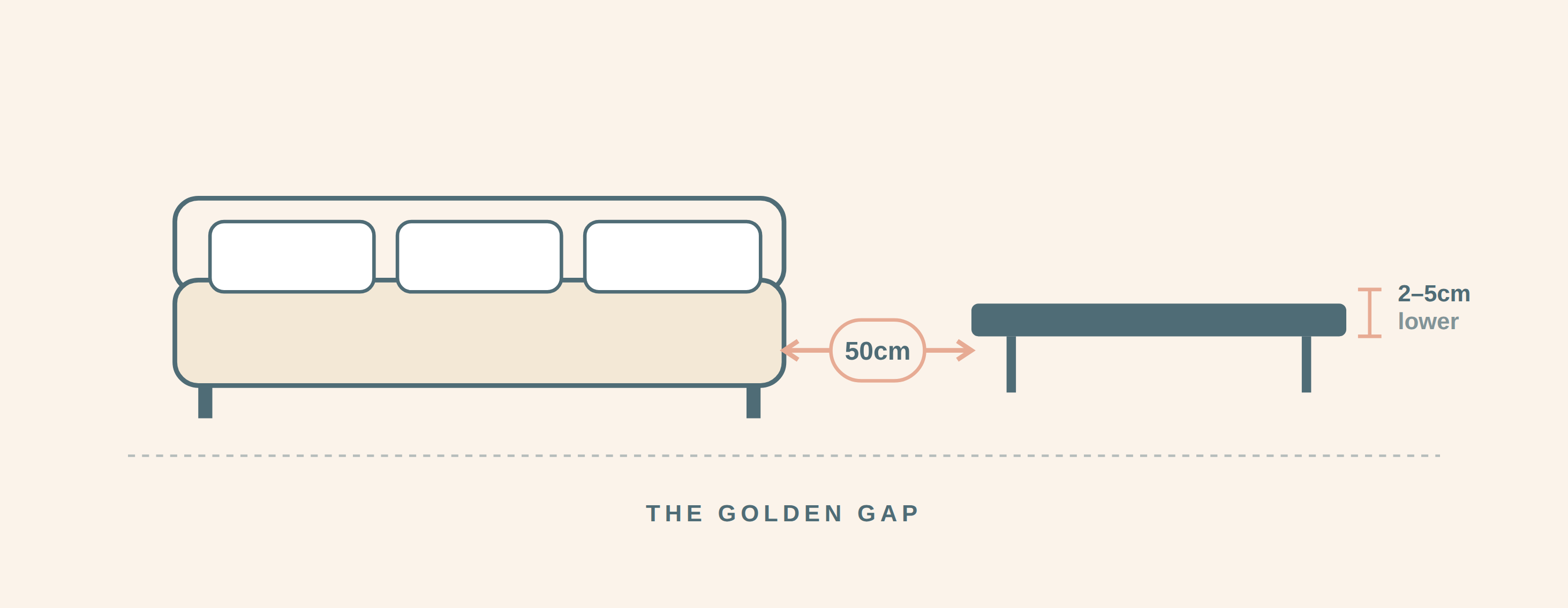
A reliable design rule: leave at least 50cm between the front of the sofa and the edge of the coffee table. It's enough to walk past comfortably and to stretch your legs out, but close enough to reach for a cup of tea without leaning. For length, aim for a table that's roughly two-thirds the length of your sofa — any longer and it dominates, any shorter and it looks lost. Height matters too: the tabletop should sit around 2–5cm lower than the seat cushions, so it disappears visually when you're sitting down.
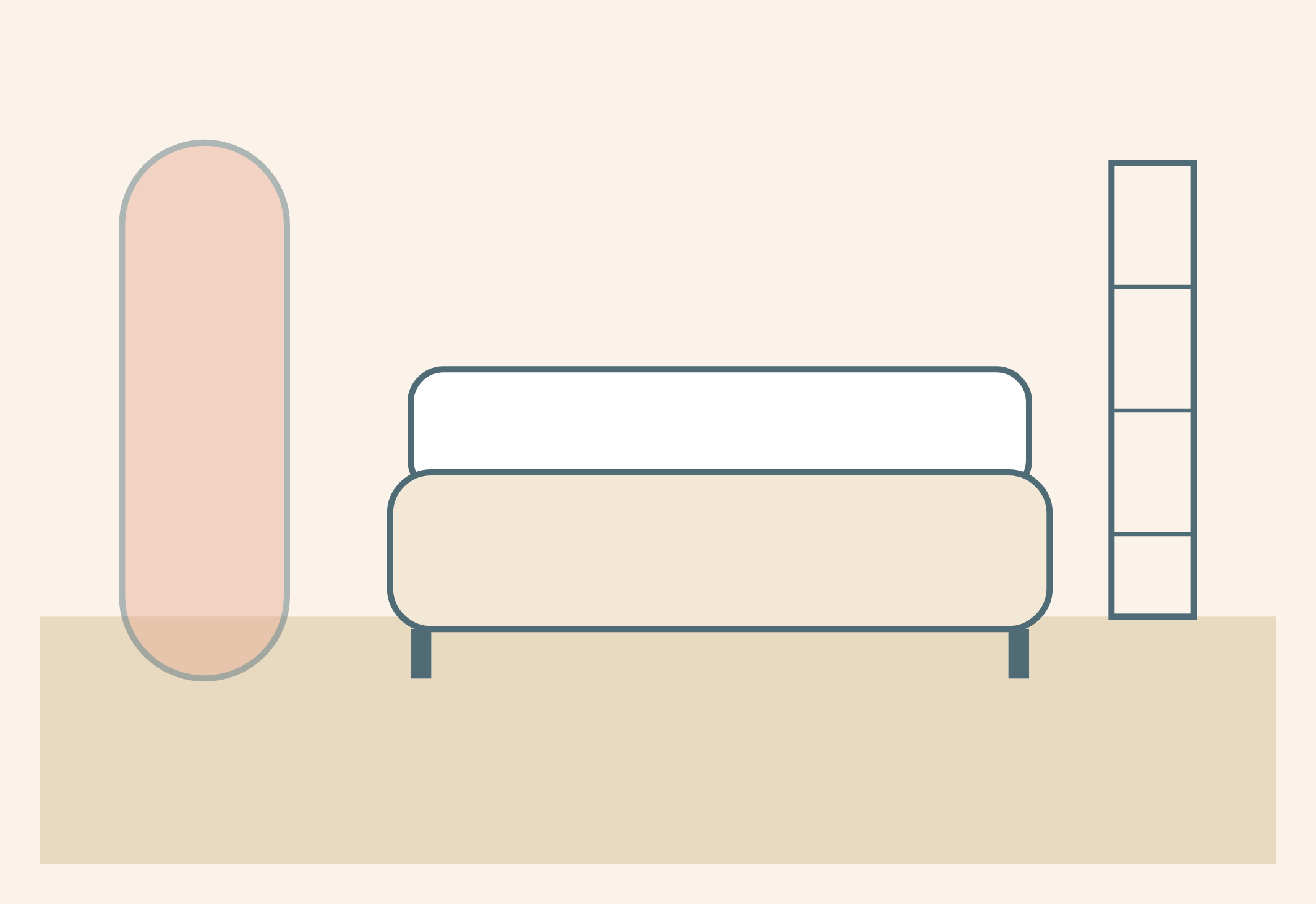
A rug is one of the simplest ways to make a living room feel softer, warmer and more considered — even over existing carpet. It adds a layer of texture and quietly defines the seating area, especially in open-plan spaces. But the wrong size rug is worse than no rug at all. As a guide, the rug should be large enough that the front legs of your sofa (and ideally your armchairs) sit on it — this visually "ties" the furniture together. A rug that floats in the middle of the floor, untouched by any furniture, tends to make the room feel disjointed. Pair a rectangular rug with a rectangular coffee table, a round rug with a round one, and the whole arrangement starts to feel intentional.
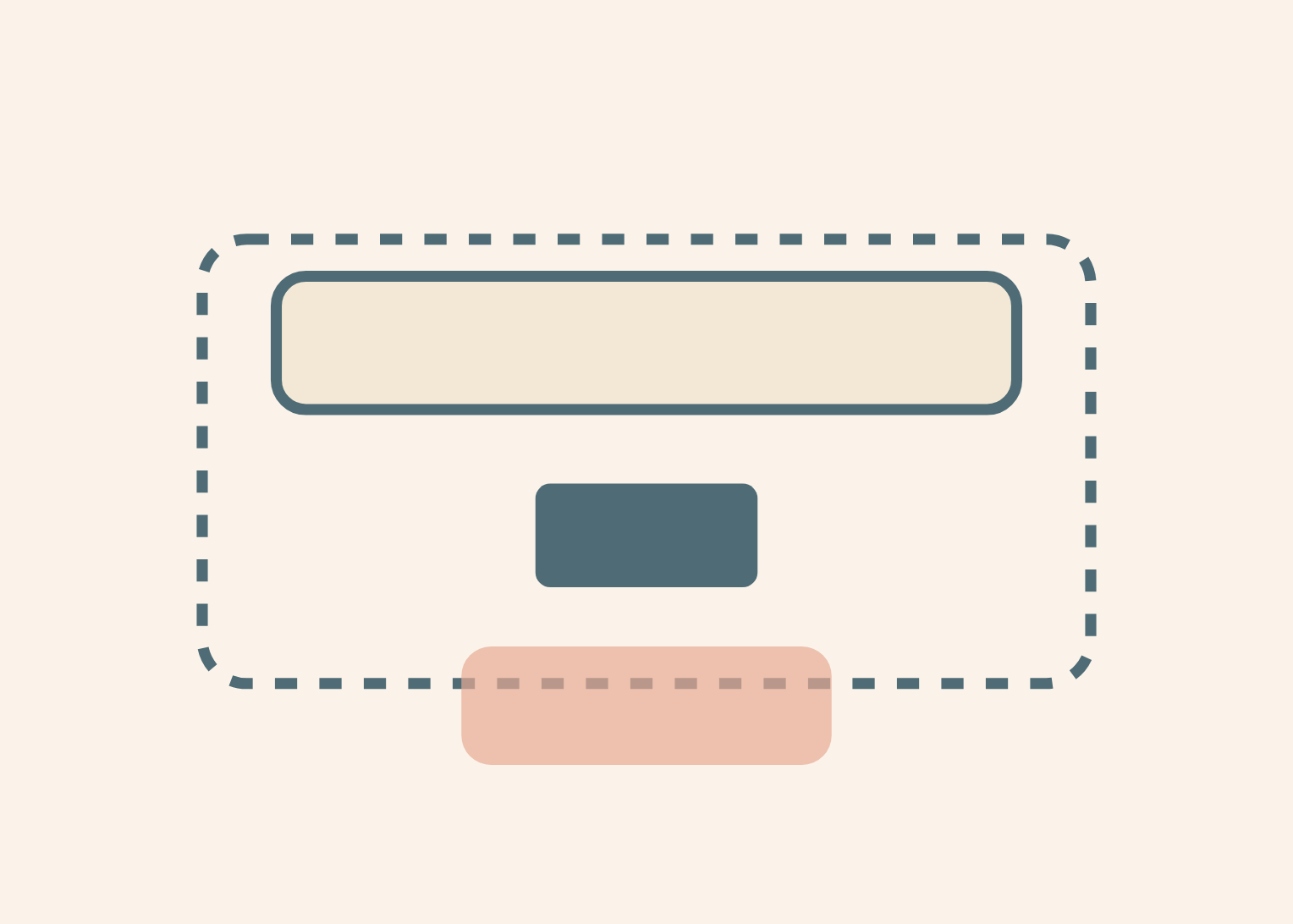
Too small
Floats in the middle — disjointed and cluttered.
|
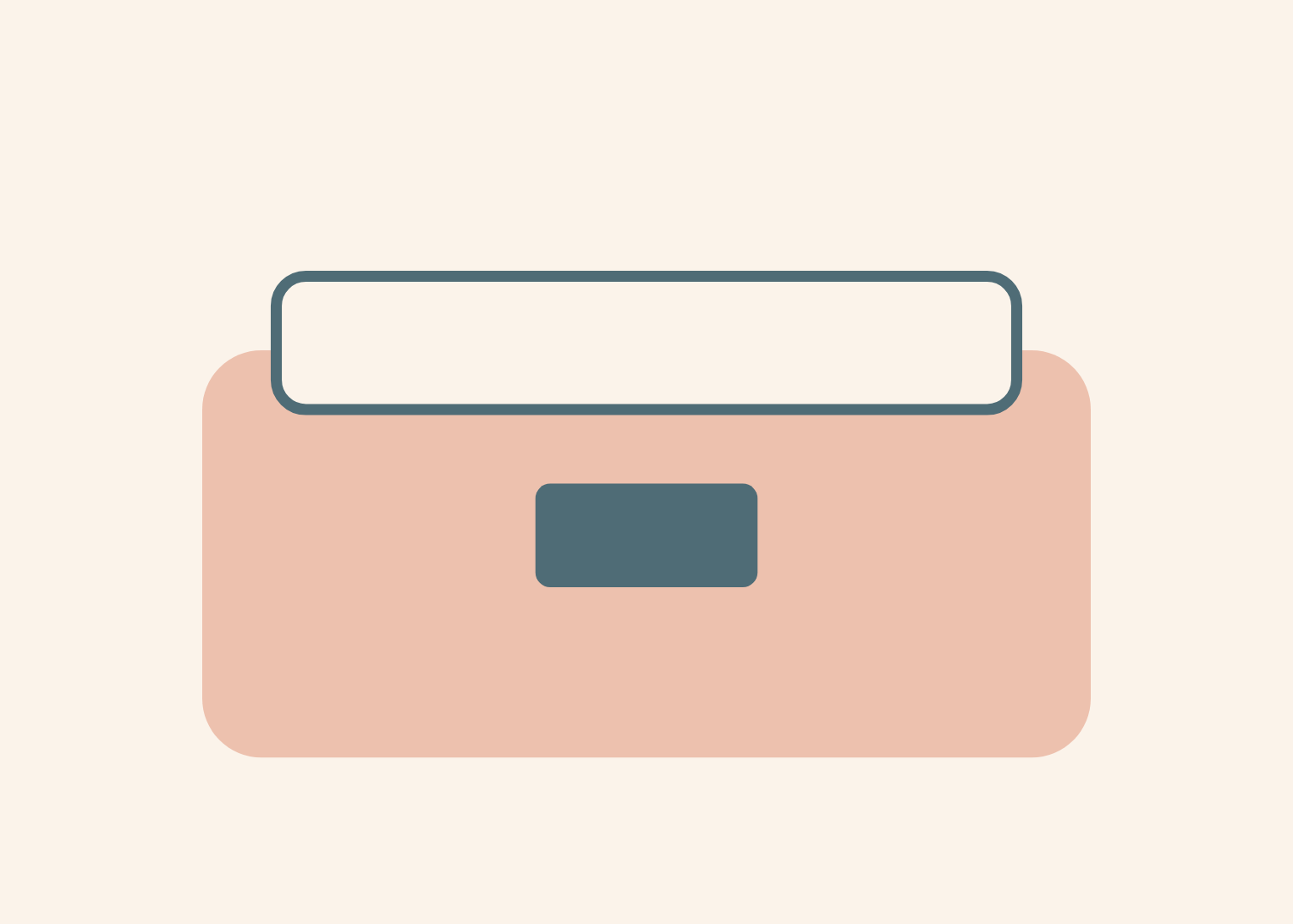
Just right
Front sofa legs on the rug — everything ties together.
|
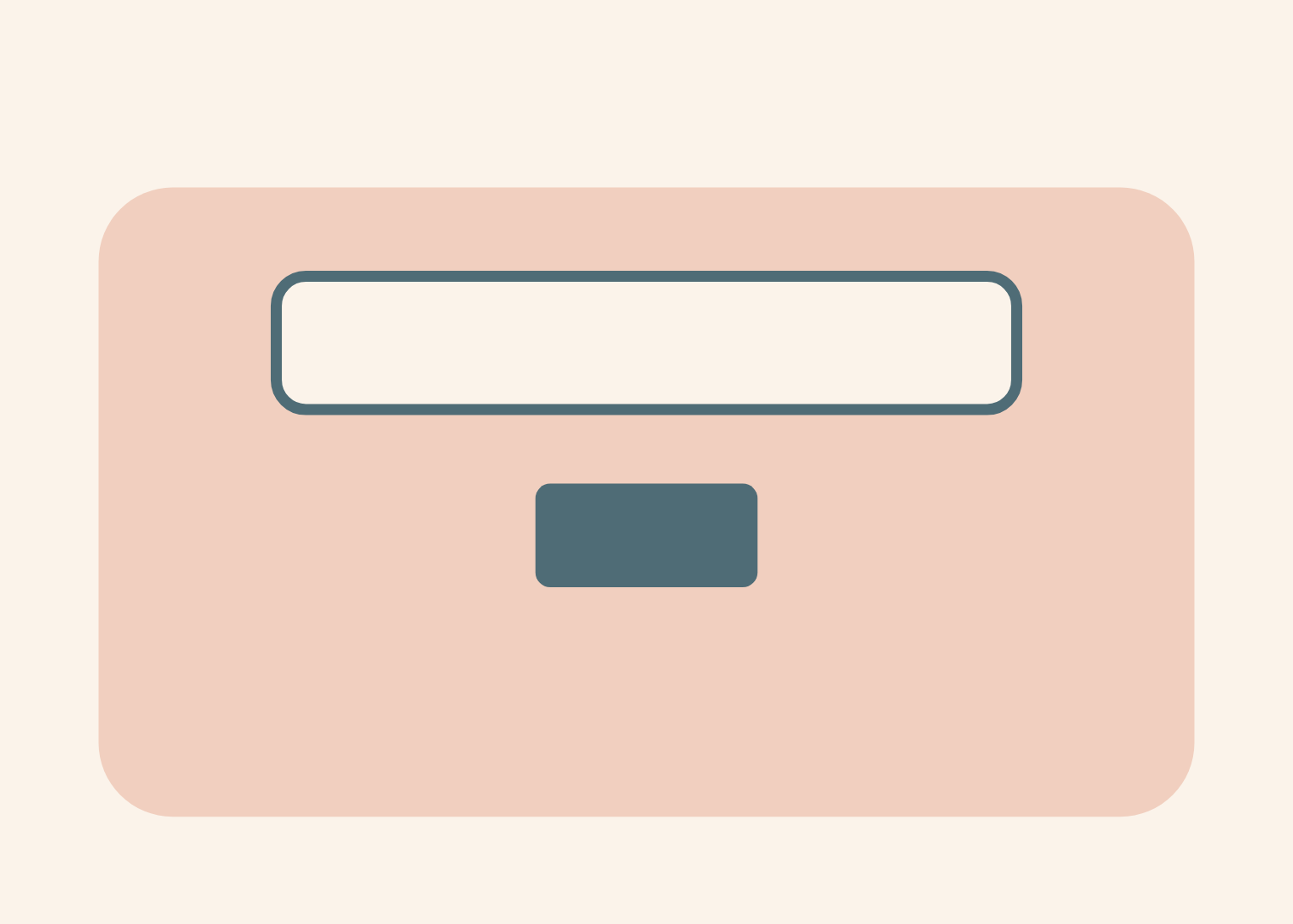
Generous
All legs on — a premium, enveloping feel.
|
Mirrors are a small room's best friend. Used thoughtfully, they double the sense of space and bounce natural light into corners that wouldn't otherwise see any. In a compact lounge, a full-length mirror leaned against a wall opposite a bookcase or window works wonders — it draws the eye through the room rather than stopping it at the wall. In larger rooms, a generous round mirror above a fireplace or console adds softness and reflects the room back at itself for a gentle, layered effect. For wall hangings, choose fewer, larger pieces over many smaller ones — a gallery wall of tiny frames tends to make a wall feel cluttered, while one considered piece lets the wall breathe.
A single overhead light flattens a room. Layered light opens it up. Aim for three sources in any living room: an ambient light (overhead or floor-standing), a task light (a reading lamp near the sofa), and an accent light (a table lamp or wall light that adds warmth in the evening). Floor lamps placed in the corners of a room draw light into spaces that would otherwise sit in shadow, which instantly makes the room feel larger. Choose warm-toned bulbs — anything around 2700K — and the whole space will feel calmer the moment the sun goes down.
We've spent nearly two decades designing furniture for calmer, more considered homes — often for people living in London flats where every centimetre counts. These are the principles we come back to again and again:
The best way to find your own living room style is to see what calm, considered design actually looks like in practice. Here's a gallery of looks to take inspiration from — each one a reminder that a beautiful living room isn't about how much you have, but how well it all works together.
Shop the full range of Furl sofa beds, storage sofas and extending tables, designed to fit seamlessly into any space and bring everyday versatility to your living room. Or drop by one of our London showrooms to talk your vision through with one of our design experts.