Most people agonise over the mattress. Pocket sprung or memory foam? Firm or medium? What about the pillow top?

And then they pair it with whatever bed frame happens to be on sale.

It's backwards. Because while a good mattress matters enormously, it can only perform as well as the frame beneath it allows. A mattress on a flimsy base will sag prematurely, develop uneven wear, and rob you of the support you paid for.

At Furl, we think about bed frames the way architects think about foundations. Invisible, unglamorous, and absolutely critical to everything that sits on top.

What a Bed Frame Actually Does

A bed frame isn't just a platform. It's a structural system designed to distribute weight, provide ventilation, protect your mattress, and ensure longevity.

A poor frame flexes under pressure, creating uneven support that accelerates mattress wear. It allows moisture to accumulate underneath, which breeds mould and dust mites. It creaks, shifts, and reminds you of its inadequacy every time you turn over in the night.

A good frame does none of these things. It holds firm, breathes properly, and lasts decades without complaint.

Most importantly, it extends the life of your mattress – which, given that a quality mattress can cost over a thousand pounds, is not a trivial consideration.

Material: The Foundation of Durability

Bed frames are made from timber, metal, or upholstered boards backed with engineered wood. Each has its strengths, but they're not interchangeable.

Solid wood – beech, oak, pine – offers unmatched durability when properly constructed. It's heavy, stable, and doesn't warp or flex under sustained weight. Timber frames also have a warmth that metal lacks, both visually and to the touch.

Metal frames are strong and slim, which suits minimalist interiors. They're also colder, noisier, and less forgiving if you accidentally knock into them in the dark. For platform beds or industrial-style spaces, metal works beautifully. For longevity and comfort, timber wins.

Upholstered frames – the kind wrapped in fabric or leather – can be built on either wood or engineered board. The upholstery hides the structure, which is convenient for aesthetics but makes it harder to assess quality. Always ask what's underneath. If the answer is vague, assume particleboard.

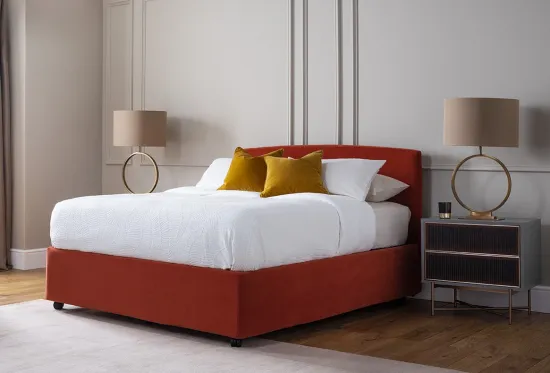
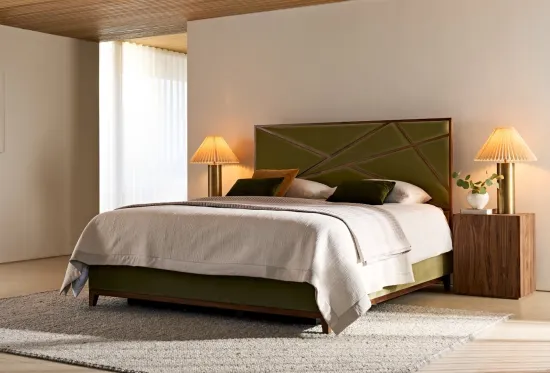
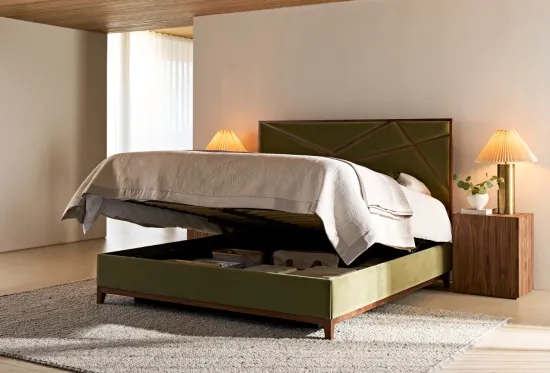
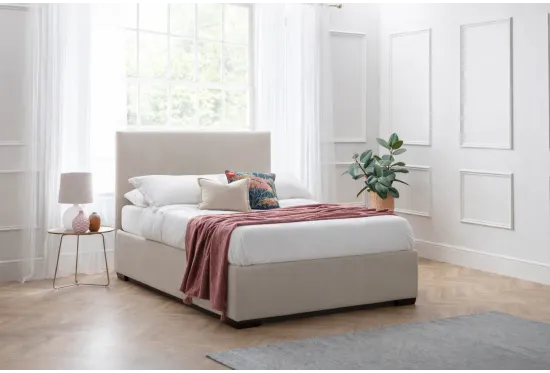
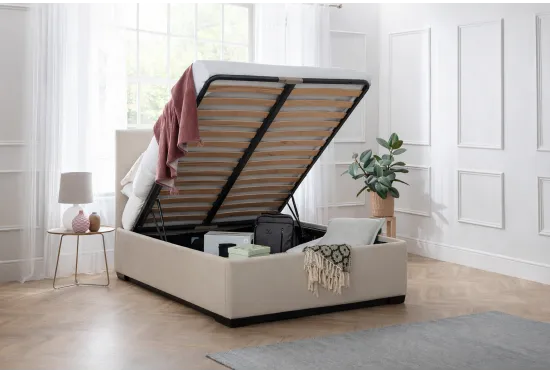
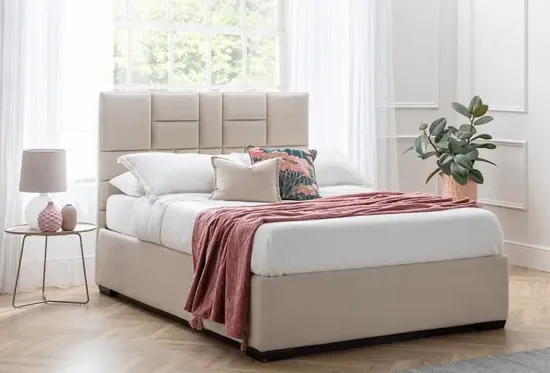
We use solid timber in our practical ottoman beds with integrated storage because we need frames that can bear weight, withstand daily opening and closing, and remain structurally sound for decades. Anything less would compromise the mechanism and the mattress support.

Slats vs. Solid Base: It's About Airflow

A mattress needs to breathe. Without adequate ventilation, moisture accumulates, which shortens the mattress lifespan and creates an environment where dust mites thrive.

Slatted bases allow air to circulate beneath the mattress, which keeps things dry and fresh. Slats should be no more than 7-8cm apart – any wider, and the mattress sags between them. They should also be slightly bowed or sprung, so they flex with your body weight rather than resisting it.

Solid platform bases offer a different kind of support – firmer, flatter, more stable. They work well with certain mattress types, particularly latex or very firm memory foam. But they don't breathe as effectively, so you'll need to lift the mattress occasionally to let air circulate.

There's no universally correct answer. It depends on your mattress type, your room's humidity, and whether you're prone to overheating at night.

Height: More Than Just Aesthetics

Low platform beds look sleek and modern. They also make it harder to get in and out, particularly as you age or if you have mobility issues.

A bed at the right height – roughly 50-60cm from floor to mattress top – makes sitting and standing effortless. It also creates storage space underneath, which matters enormously in smaller homes.

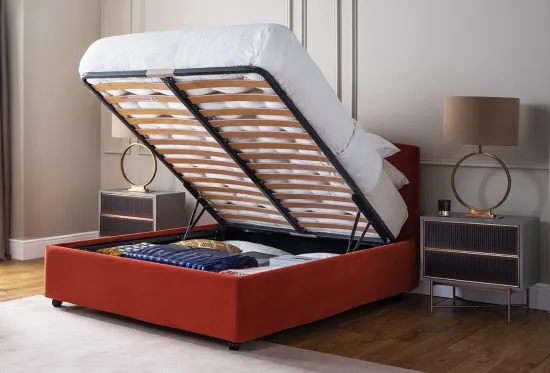
Our ottoman beds sit at a height that balances accessibility with storage capacity. The internal depth can reach 40cm, which is enough to hold seasonal clothing, spare bedding, luggage – all the things that would otherwise overflow into cupboards or pile up in corners.

And when it comes to understanding different bed frames, height is one of those details that seems minor until you're living with it daily. Too low, and you'll feel it in your knees. Too high, and you'll need a step stool.

The Frame Affects How Your Mattress Ages

Mattresses are designed to be supported evenly across their entire surface. When a frame doesn't provide that support – slats too far apart, a sagging centre beam, uneven weight distribution – the mattress compensates by flexing in ways it wasn't designed to.

Over time, this creates body impressions, sagging edges, and premature breakdown of the internal structure. You'll think the mattress is worn out, when in fact it's the frame that failed first.

A quality frame, properly constructed with adequate support, will keep your mattress performing as intended for its entire lifespan. That's ten years, sometimes more, depending on the mattress type and how well you maintain it.

Given that replacing a mattress is expensive and inconvenient, a frame that protects your investment isn't optional. It's essential.

Noise: The Thing No One Mentions

A bed frame shouldn't make a sound. Squeaking, creaking, groaning – these are signs of poor joinery, inadequate bracing, or materials settling in ways they shouldn't.

Timber frames, when properly dowelled and glued, remain silent. Metal frames can develop noise over time as bolts loosen or welds shift. Engineered wood, if it's thin or poorly supported, flexes and creaks under movement.

If your bed makes noise, it's not charming or inevitable. It's a sign that something isn't built properly.

Storage: Functional Design, Not Afterthought

Storage beds – the kind with drawers or lift-up mechanisms – are often dismissed as compromises. Something you choose when space is limited, not when you have options.

But a well-designed storage bed isn't a compromise. It's a smarter use of the footprint a bed already occupies.

We design ottoman beds specifically for people who want furniture that earns its place. The lift mechanism is gas-assisted, so accessing storage is effortless. The internal space is deeper than most drawer systems, and because there are no protruding handles or rails, the bed sits flush against the wall.

It's not about making do. It's about designing intelligently for how people actually live.

Assembly and Longevity

Flat-pack bed frames are affordable and convenient. They're also held together with cam locks and Allen keys, which means they weaken slightly every time you disassemble and reassemble them.

If you move house frequently, that's a real consideration. After two or three moves, the frame may feel less stable, joints may loosen, and you'll find yourself tightening screws periodically.

Frames delivered pre-assembled or in modular sections – the kind we deliver ourselves – avoid this issue entirely. They're built once, built properly, and designed to withstand a lifetime of use without needing maintenance.

Why We Build the Way We Do

We could make cheaper bed frames. Use thinner timber, wider slat gaps, lighter-duty mechanisms. It would reduce costs, speed up production, increase profit margins.

But we're not interested in furniture that barely lasts. We design for people who want to buy once, choose well, and stop thinking about whether their bed frame is doing its job.

Every frame we build is solid timber, properly jointed, and engineered to support both the mattress and the mechanism. Because a bed frame isn't furniture you replace. It's infrastructure you rely on, night after night, for years.

And if it's doing its job properly, you'll never think about it at all. Which is exactly the point.

Related Products

David Norman

David Norman is the founder of Furl, a UK-based furniture brand known for redefining how people live with space-saving, design-led storage beds and sofa beds.

With almost two decades of hands-on experience in product design, manufacturing, and brand strategy, David has built Furl into a trusted name among urban professionals seeking calm, clutter-free homes. His work has been recognised for its innovation and craftsmanship, with features in publications such as Yahoo Finance and The Telegraph.

David continues to lead Furl’s creative direction, developing furniture that solves real-world problems without compromise.