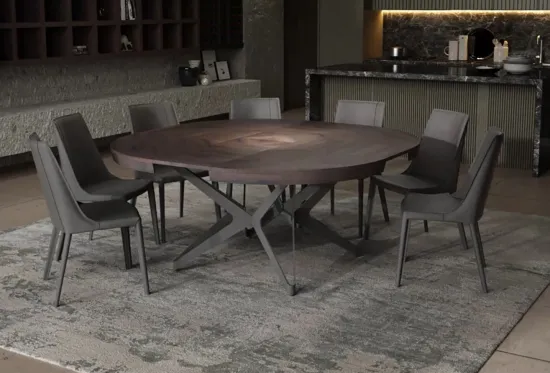
Small kitchens demand brutal compromises. Either you choose a permanent dining table, but you have to sacrifice prep counter space. Or, skip a dining table entirely, but eat standing over sinks or perched awkwardly on sofa arms balancing plates. Neither option satisfies, and both create daily frustration. Extendable tables eliminate this compromise entirely, creating compact footprints when cooking demands floorspace, and generous dining surfaces when meals require proper seating.

Comparison Table

Table Compact Footprint Expands To Kitchen Use Case Storage Integration
A4 35cm × 85cm (A4 paper size) Seats 6–14 Galley kitchens, studio flats 4 internal leaves, on castors
Minux 20cm deep folded Seats 8 Tiny kitchenettes, breakfast nooks Folds to wall-console
Golia 43cm deep Seats 12 Open-plan kitchen-diners 5 telescopic sections
Mondial Coffee table height Seats 6 raised Living-kitchen combos Lift-and-extend mechanism
Newood Coffee table height Seats 6–8 Eat-in kitchens without dining space Height-adjustable, extends

The Kitchen Space Problem Nobody Talks About

The UK average kitchen measures 3.6m x 3m - roughly 11 square metres total. Subtract cabinets, appliances, necessary walking space between counters (minimum 90cm), and usable floorspace shrinks dramatically. Fit a permanent four-person dining table (typically 120cm x 75cm requiring 230cm x 185cm total space including chair pullback), and kitchens become obstacle courses navigated sideways whilst carrying hot pans.

The standard advice - "just eat in separate dining rooms" - ignores reality for most UK housing. Flats lack dining rooms entirely. Terraced houses convert dining rooms into third bedrooms accommodating growing families or flatshares splitting costs. Open-plan conversions merge kitchens with living areas creating single multipurpose spaces where every furniture choice creates ripple effects.

Breakfast bars offer partial solutions but create new problems. Standing-height seating suits quick coffee, not leisurely weekend breakfasts with newspapers spread across surfaces. Stools lacking backs prove uncomfortable beyond 15-20 minutes. Children struggle climbing onto tall seats safely. Elderly relatives find perching precarious.

Extendable tables solve these challenges through radical space efficiency - present when needed, absent when not, adapting minute-by-minute to kitchen activities rather than permanently claiming territory.

a4 table by furl

A4 Table - Literal Shoebox to Dining Solution

The A4 (https://www.furl.co.uk/clever-tables/a4) collapses to A4 paper dimensions (35cm x 85cm x 75cm height) whilst extending to 267cm length seating 14 people maximum. This dimensional miracle results from telescopic Italian engineering storing four leaves internally within table structure. Castors enable wheeling between locations - against kitchen walls during cooking, centre-room for meals, beside worktops as temporary prep surfaces.

How A4 Solves Kitchen Constraints

Galley kitchens (narrow spaces with facing counters) accommodate A4 effortlessly. Store it collapsed against end walls occupying mere centimetres, wheel it centre when eating, and extend to exact length matching guest numbers (seats 6/8/10/12/14 through incremental leaf additions). Return to wall position immediately after meals, reclaiming prep and walking space within seconds.

Studio flats lacking separate kitchens benefit enormously. Position A4 as a room divider between sleeping and cooking zones when collapsed. Extend for dining, creating a temporary dedicated eating area. Wheel it elsewhere when floor space is needed for yoga, exercise, or children's play. The castors transform limitations into flexibility - furniture moves around life rather than dictating it.

Shared houses with multiple occupants eating different schedules appreciate A4's quick transitions. Leave extended during busy evening hours when housemates overlap mealtimes. Collapse mornings when individual breakfast timing varies. The 10-second transformation (genuinely timed - no marketing exaggeration) means adjusting table size creates zero friction or procrastination resistance.

Minux - The 20cm Miracle

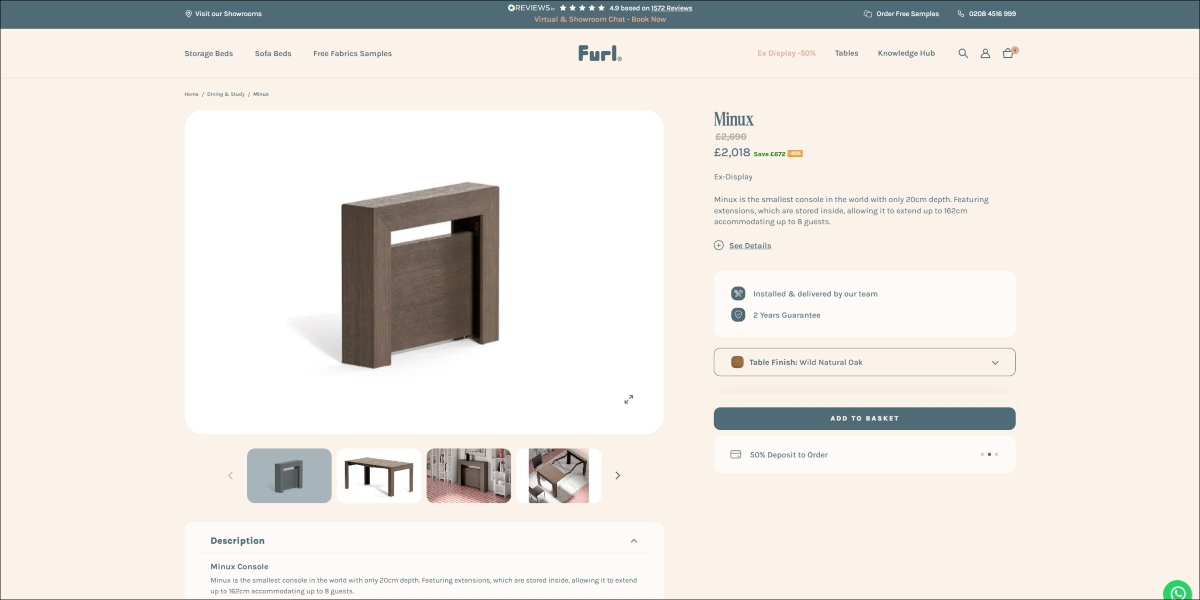
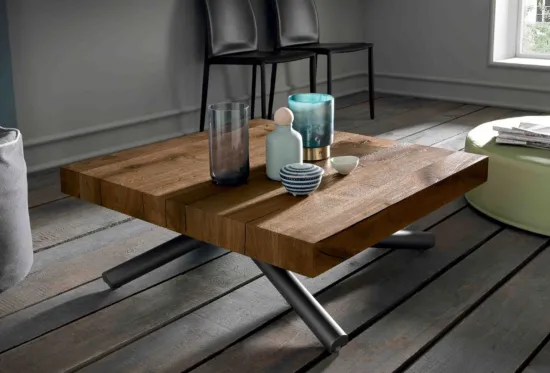
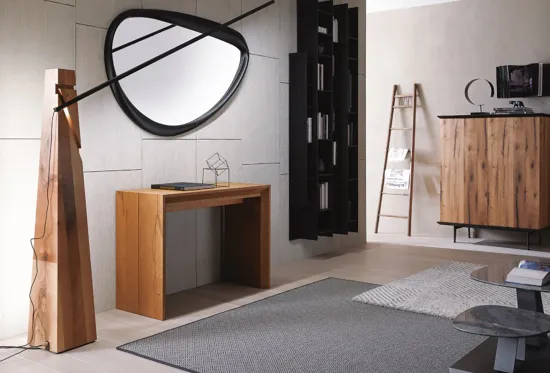
Minux (https://www.furl.co.uk/clever-tables/minux) folds to 20cm depth - slimmer than most wall-mounted radiators - whilst extending to a proper 8-person dining table. This extraordinary compression results from innovative folding mechanisms storing all expansion components within a minimal footprint. The table functions as a narrow console holding keys, mail, spice jars against kitchen walls when folded, and transforms completely when meals require seating.

When Minux Makes Sense

Tiny kitchenettes in studio conversions or basement flats where every centimetre counts desperately. The 20cm folded depth means Minux fits spaces rejecting standard furniture entirely. Position along walls between doorways and appliances in areas too narrow for conventional tables. Extend when eating, fold immediately after clearing plates.

Breakfast nooks in period properties where architectural quirks create awkward alcoves. Minux slides into spaces standard rectangular tables can't accommodate. The slim profile when folded maintains an open feeling, preventing claustrophobic cramming. Extension capability means occasional dinner parties don't require restaurant bookings or uncomfortable sofa-dining.

Rental properties where tenants can't modify layouts permanently. Landlords prohibit removing existing breakfast bars or fixed seating. Minux adds proper dining capacity without structural changes. Move between rentals easily - the compact folded form fits car boots for transport between properties.

minux table by furl
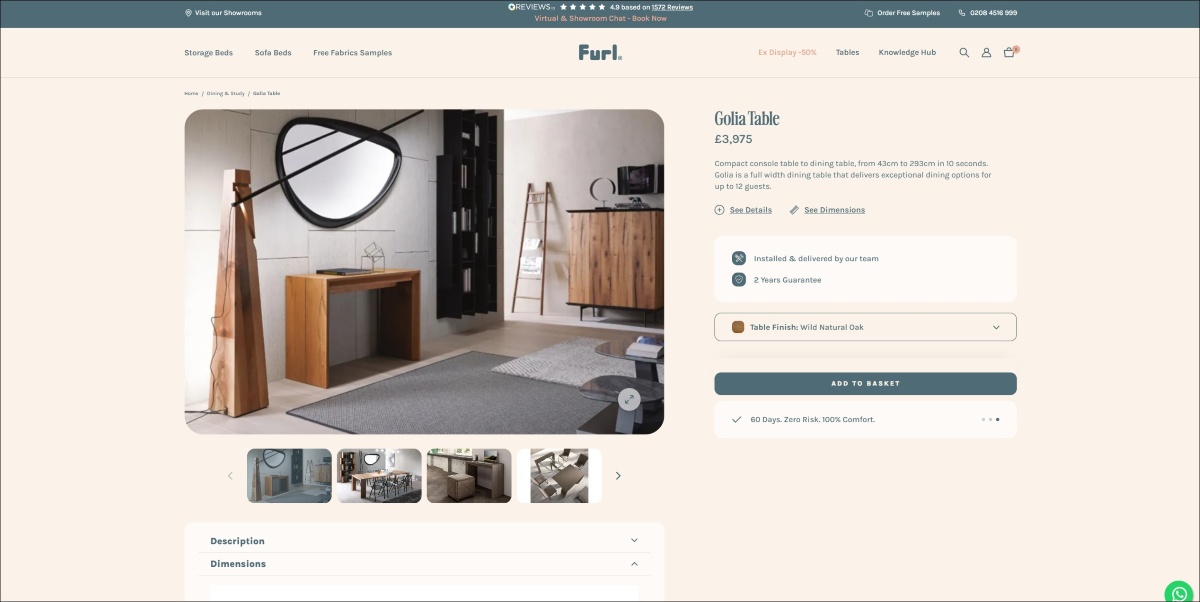
golia table by furl

Golia - Console to Command Centre

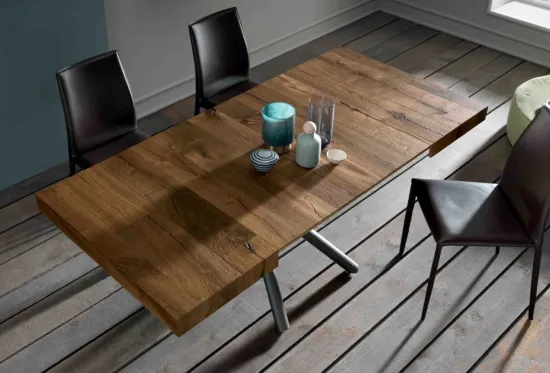
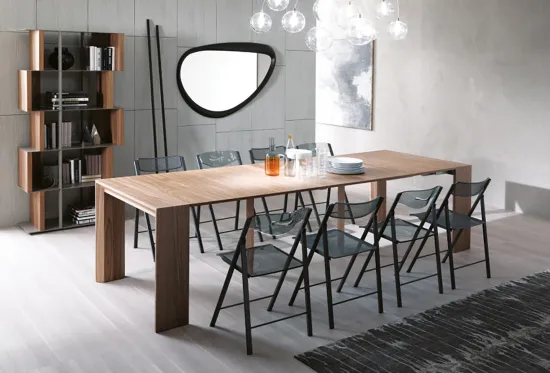
The Golia (https://www.furl.co.uk/clever-tables/golia) extends from 43cm hallway console to 293cm dining table seating 12 through five telescopic 50cm sections deploying sequentially. This range enables precise sizing - extend one section (93cm total) for intimate couple dinners, three sections (193cm) for family gatherings, all five (293cm) for celebrations. The pivoting central support leg stabilises fully-extended configurations preventing wobble or sag.

Golia's Kitchen Applications

Open-plan kitchen-diners benefit from Golia's console-mode aesthetics. Position against kitchen-living room boundary walls when cooking. The console form provides useful surfaces for serving platters during meal prep - set completed dishes there whilst finishing remaining courses. Extend into the living area when eating, using kitchen space for cooking and dining area for seating simultaneously.

The incremental sizing suits varied meal types perfectly. Tuesday night dinner for four? Extend to 143cm providing comfortable spacing without excess. Saturday lunch with visiting relatives bringing partners and children? Deploy a full 293cm accommodating the entire extended family. The flexibility eliminates "close enough" compromises where tables prove slightly too small (cramped) or excessively large (wasteful).

Period property kitchens with high ceilings and generous floorplans but awkward proportions appreciate Golia's dramatic size range. These rooms often lack obvious furniture arrangements - too large for compact tables appearing lost, too narrow for huge tables blocking circulation. Golia adapts daily, fitting space perfectly regardless of current requirements.

Mondial - Coffee Table Crossover

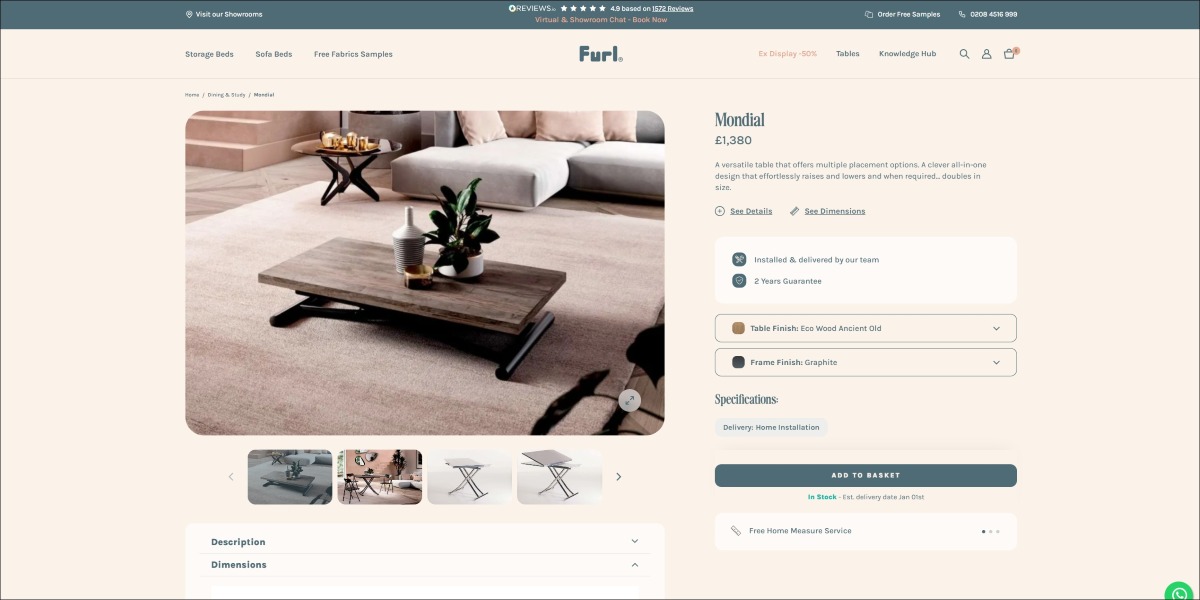
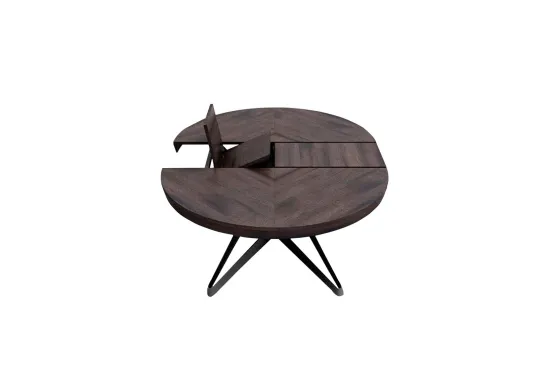
The Mondial (https://www.furl.co.uk/clever-tables/mondial) starts as standard coffee table height (40cm approximately) but lifts and extends becoming proper dining height (75cm) seating 6 people. The dual-functionality proves invaluable in kitchen-living combinations where separate dining furniture can't fit but sofa-dining feels unsatisfactory.

The Lift-Extend Advantage

Eat-in kitchens lacking space for dedicated dining tables but wanting better than standing/perching solutions. Position Mondial in kitchen sitting areas (where many modern kitchens include sofa seating creating casual zones). Use as a coffee table for morning newspapers and tea. Lift to dining height for proper seated meals. Extend length when guest numbers increase beyond everyday occupants.

The height adjustment matters more than initially obvious. Coffee table height (40cm) suits resting feet, holding drinks within arm's reach whilst lounging. Dining height (75cm) enables proper posture for extended eating - backs supported, arms resting naturally, plates positioned comfortably. Trying to eat prolonged meals at coffee table height creates neck strain and awkward hunching. Lift mechanisms solve this completely.

Kitchen layouts incorporating islands with surrounding floor space utilise Mondial brilliantly. The coffee table form doesn't visually compete with island dominance when not dining. Lift and extend for meals, creating a temporary dining zone using an otherwise-empty floor area. Lower and compact immediately after, restoring the kitchen's open feeling.

mondial table by furl
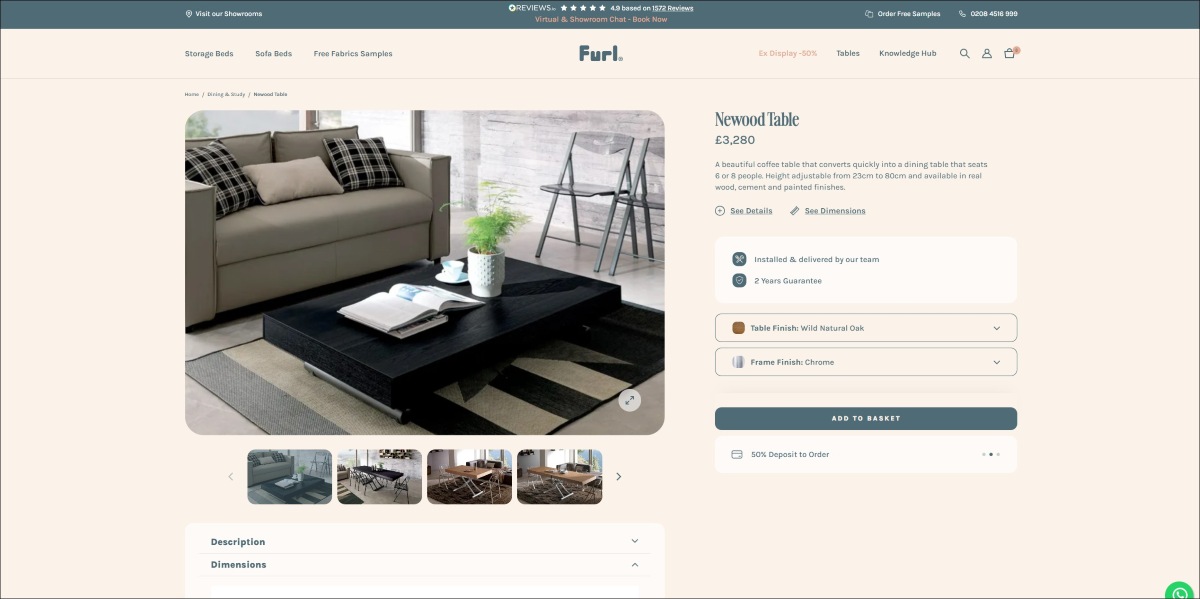
newood table by furl

Newood - Height-Adjustable Excellence

The Newood (https://www.furl.co.uk/clever-tables/newood) combines height adjustment (anywhere up to 84cm) with extension capability seating 6-8 guests. This versatility enables the table to function as coffee table, desk, and dining table depending on current requirements - perfect for kitchens doubling as home offices or study spaces.

Multi-Function Kitchen Uses

Work-from-home situations where kitchen tables must serve dual purposes. Keep Newood at desk height during working hours, positioned near windows for natural light. Lower to coffee table height during breaks. Raise and extend for meals. The adjustable height accommodates different tasks requiring different ergonomic positions.

Small flats where kitchen tables must serve all purposes - dining, working, children's homework, crafting projects. Rather than compromising on one fixed height suiting nothing perfectly, Newood adjusts to optimal height for each activity. The extension capability means homework sessions for multiple children don't require crowding around inadequate surface area.

The sleek modern lines suit contemporary kitchen aesthetics whilst the wood finish options enable matching existing cabinetry. Chrome or graphite frame choices complement different appliance finishes creating cohesive design rather than obvious "add-on" furniture appearance.

What to Consider Beyond Dimensions

Expansion Speed and Effort

Test mechanisms personally before buying. Some extendable tables require two people, significant strength, or awkward body positions. Others (like Furl's range) operate single-handed in under 30 seconds. In kitchens where you'll extend/retract frequently - potentially daily - mechanism ease determines whether you actually use functionality or avoid it due to hassle.

Cleaning Access

Extension mechanisms create crevices trapping crumbs and spills. Choose designs enabling easy wiping of all surfaces including underside areas where leaves store. Kitchens generate more food debris than other rooms - tables requiring disassembly for thorough cleaning become frustrating quickly.

Material Durability

Kitchen tables face harsher conditions than dining room furniture. Hot plates, water rings from glasses, acidic spills from cooking ingredients, knife scratches from cutting directly on surfaces (despite best intentions). Select finishes tolerating abuse - certain woods, laminates, treated surfaces. Avoid delicate veneers showing every mark.

Floor Surface Compatibility

Castors (on A4) work brilliantly on hard floors but struggle on thick carpets. If positioning table on rugs, ensure castor wheels large enough to roll smoothly rather than catching. Alternatively, choose non-wheeled options like Golia or Minux where location remains relatively fixed.

FAQs

1. Can I use extendable tables in genuinely tiny kitchens under 8 square metres?

Absolutely. The Minux at 20cm folded depth and A4 at 35cm depth specifically target extremely compact spaces. Both fold against walls occupying minimal floorspace whilst still providing proper dining surfaces when extended. The key is choosing tables where collapsed footprint is truly minimal rather than "compact" models still requiring substantial space.

2. Do telescopic mechanisms break easily with daily kitchen use?

Furl's Italian-engineered aluminium mechanisms withstand thousands of expansion cycles. However, proper operation matters - extend smoothly rather than forcing, keep mechanisms free from food debris through regular vacuuming, avoid overloading extended tables beyond stated weight limits. Treat mechanisms gently and they'll last decades through daily use.

3. How do I clean underneath extendable tables where mechanisms hide?

Vacuum monthly using crevice attachments reaching mechanism areas. Wipe accessible surfaces with barely-damp cloth quarterly. Avoid soaking mechanisms - water can cause corrosion over time. If spills enter mechanism areas, blot immediately with dry cloth preventing liquid pooling. Annual professional inspection worthwhile for heavily-used kitchen tables ensuring mechanisms remain debris-free and properly lubricated.

4. Will extendable tables work with underfloor heating in open-plan kitchens?

Yes, though wood finishes may require acclimatisation periods. Solid wood can expand/contract with temperature fluctuations from underfloor heating. Engineered wood veneers (used in most Furl tables) prove more dimensionally stable. Maintain consistent temperatures rather than dramatic heating cycles. Use protective pads beneath table legs preventing heat concentration potentially affecting mechanisms.

5. Can I see these tables demonstrated before buying for my specific kitchen layout?

Visit Furl's London showrooms (Barbican, Swiss Cottage, Chelsea) where complete extending table collections display. Staff demonstrate mechanisms, explain size options, and help match tables to your specific kitchen dimensions. Book appointments through https://www.furl.co.uk/booking-appointment or visit during regular hours including late-night Thursday openings until 8pm. Bring kitchen measurements and photos enabling staff to recommend optimal models for your exact space constraints.

In Summary

Small kitchen spaces don't require sacrificing proper dining experiences. The A4, Minux, Golia, Mondial, and Newood solve space constraints through radical adaptability - compact when cooking, generous when eating, transforming within seconds to match current requirements. Choose based on your smallest required footprint (collapsed size), maximum guest capacity needs, and whether wheeled mobility matters for your layout. Italian engineering delivers smooth mechanisms lasting years through daily operation. 

Related Products

David Norman

David Norman is the founder of Furl, a UK-based furniture brand known for redefining how people live with space-saving, design-led storage beds and sofa beds.

With almost two decades of hands-on experience in product design, manufacturing, and brand strategy, David has built Furl into a trusted name among urban professionals seeking calm, clutter-free homes. His work has been recognised for its innovation and craftsmanship, with features in publications such as Yahoo Finance and The Telegraph.

David continues to lead Furl’s creative direction, developing furniture that solves real-world problems without compromise.