There’s a particular kind of smallness that isn’t about square footage at all. We’ve all walked into a room that technically should feel spacious yet somehow shrinks around you - the ceiling seeming lower, the walls inching inward. It’s rarely the architecture. More often, it’s the way the room has been dressed.

At Furl, we see this constantly in our London showrooms, where space is precious and people are wrestling with visual clutter as much as physical clutter. And because the brand has always specialised in space-saving solutions - storage beds crafted in Nottingham, multi-functional sofa beds designed for daily use - we’ve learned how certain choices compress a room without anyone realising. A few decorating habits appear innocent on the surface, yet they have a remarkable ability to make even a generous room feel cramped.

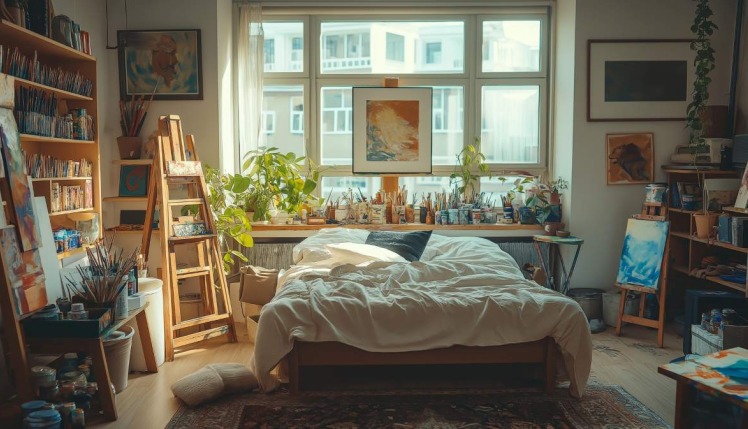
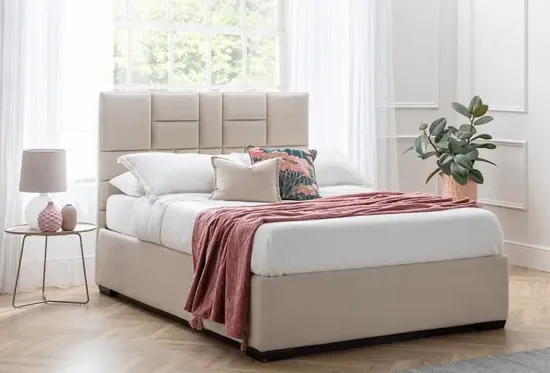
Cozy bedroom in a modern apartment
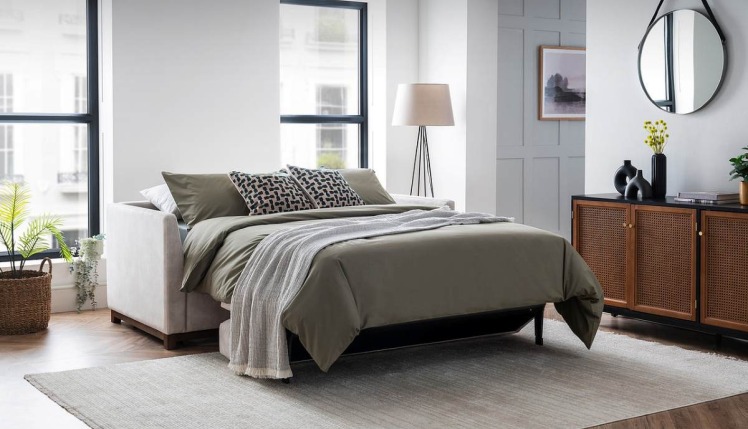
Stylish bedroom interior in modern apartment

Ignoring the Power of Colour

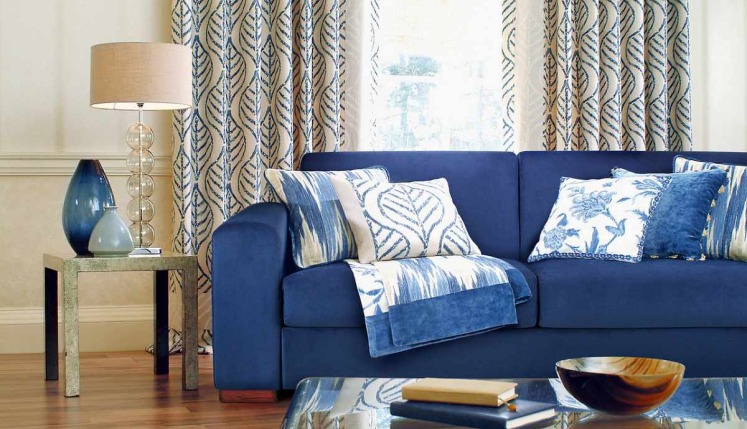
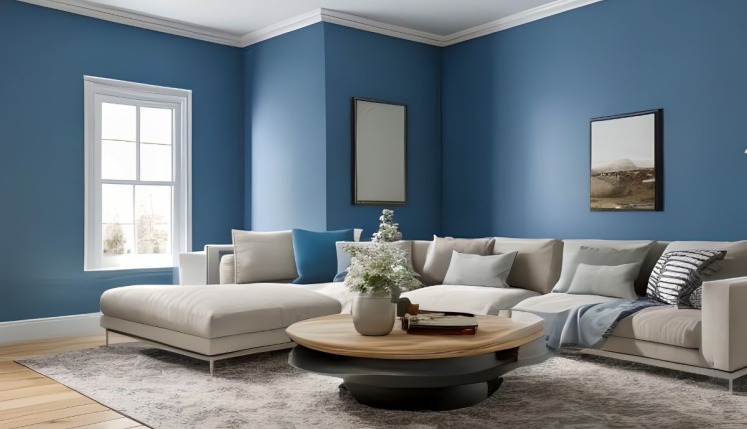
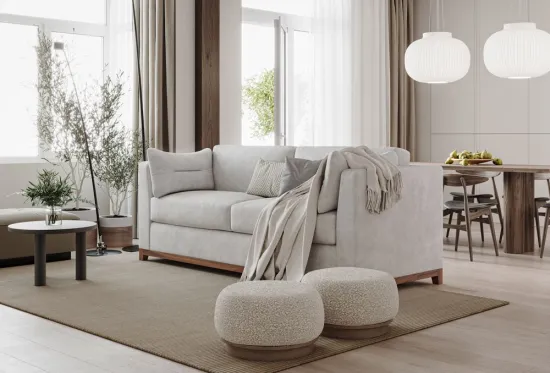
Colour - and how colour impacts room perception - is a bit like architecture: it shapes how we perceive height, depth and distance. Rooms often feel smaller because there’s no tonal consistency - a pale wall paired with a heavy mid-tone sofa; a patterned rug that dominates; artwork that floats in from another palette entirely. The eye stops rather than travelling, so the room reads as tighter. Soft neutrals, muted greens, earthy stones - they coax the light forward and push the room outward.

Choosing Furniture That Fights the Scale of the Room

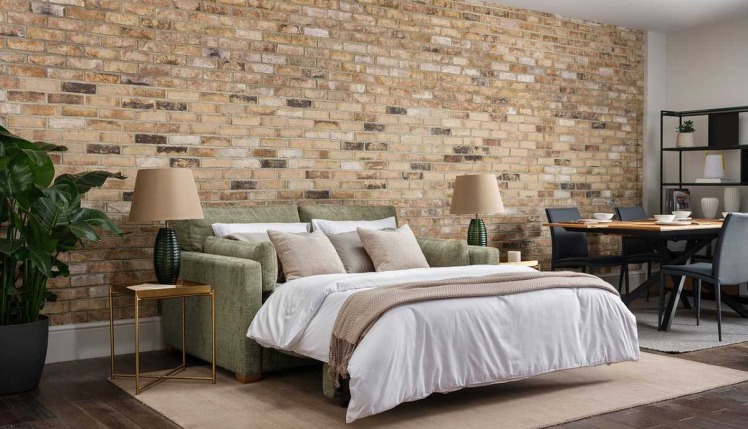
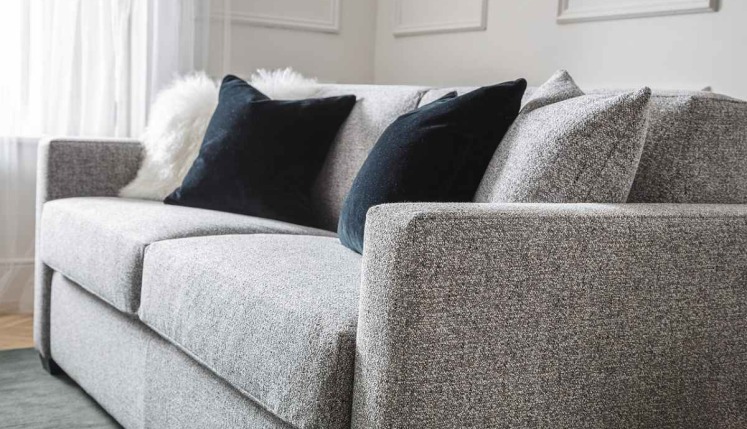
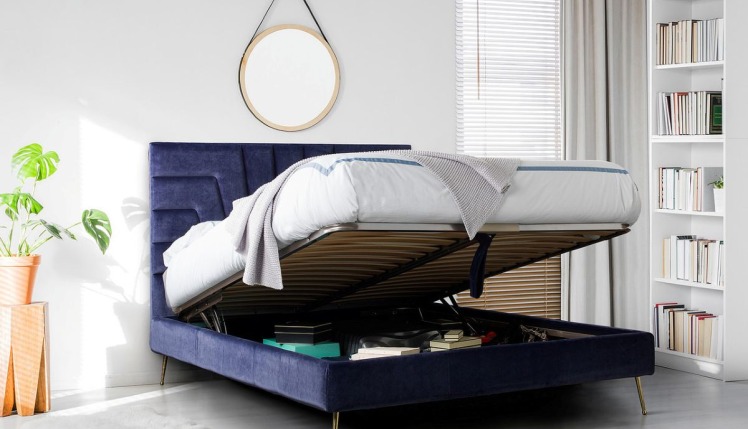
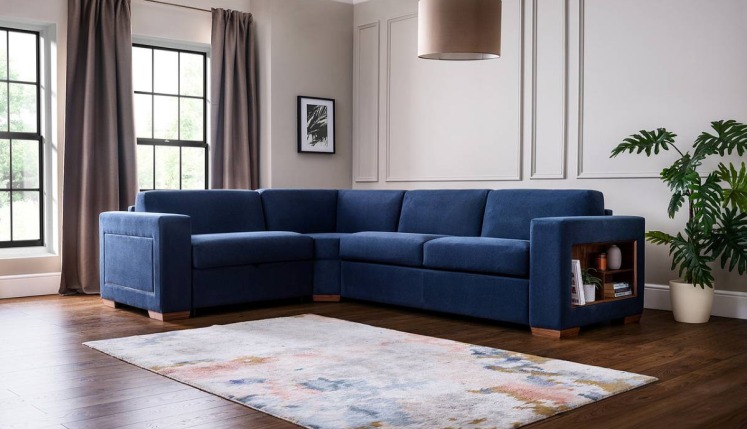
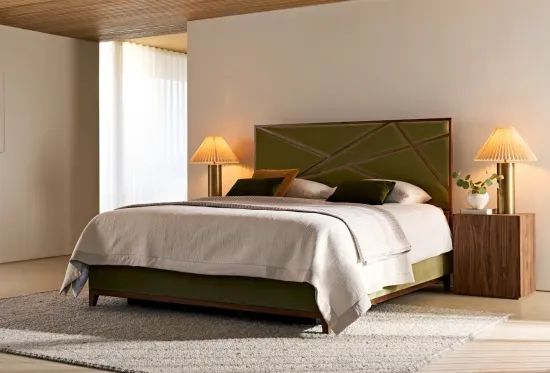
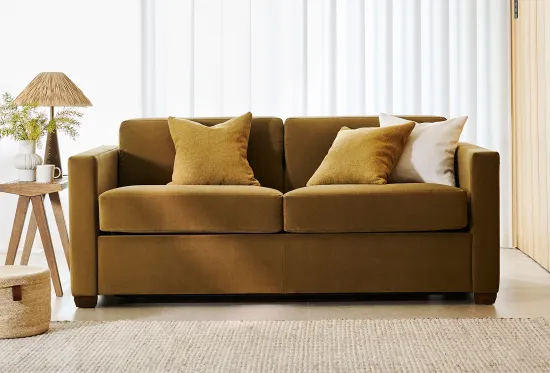
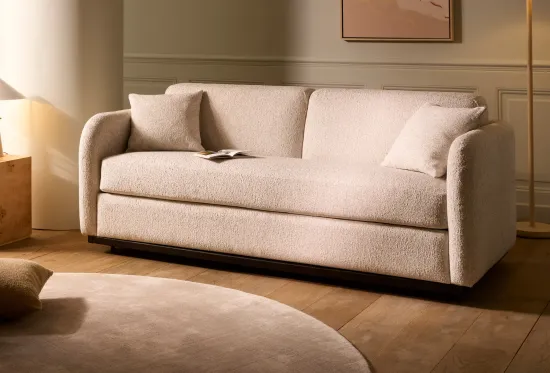
A common misconception: small rooms require small furniture. Undersized sofas or narrow beds often make the room look smaller because they feel lost. Proportion is less about size and more about presence. A full-depth sofa bed designed for real, everyday comfort anchors a space without overwhelming it. The same applies to a well-built storage bed - Furl’s lift mechanisms open up to 1.7 metres, yet the clean lines actually lighten the visual footprint. Streamlined silhouettes, elevated bases, integrated storage - these are the pieces that justify their space.

And if you’re rethinking your layout, you might want to explore our full sofa bed collection right here at Furl. After all, seeing the proportion done well recalibrates everything.

Cluttered Floors and Overcrowded Corners

Clutter accumulates quietly, but its impact on perceived space is immediate. When corners are filled, baskets lined up along the floor, or side tables crowding in, the room feels full before you’ve even entered. Elevation changes everything. Lamps off the floor, shelves instead of freestanding units, beds that swallow the overflow. Furl’s storage beds - with reinforced internal floors and deep storage options up to 40cm - often replace multiple pieces of external storage entirely. Towels, suitcases, bedding, odd bits that never quite had a home… all beneath the mattress, hidden but accessible. Once the perimeter of the room clears, the space expands.

Heavy Drapery That Blocks the Light

Light is the great expander. Even the smallest bedroom feels larger when sunlight isn’t trapped at the window. Heavy curtains that sit flush against the frame swallow the available light before it enters the room. Sheer linens or soft voiles hung higher and wider than the window transform the feel instantly. They stretch the visual height while letting light slip along the walls rather than stopping abruptly. When a room feels small, it’s rarely because it’s dark - it’s because the light has been suffocated.

Artwork Hung Too Low

Low art pulls the ceiling down. A room can have perfect proportions and still feel compressed simply because the artwork sits too near the furniture line. The centre of a piece generally wants to hover around eye level or marginally above. It gives the wall a vertical lift. Gallery walls, if overcrowded, can also crush the sense of space. Keep breathing room between each frame, even if the room itself is compact. Editing is often the difference between cosy and cluttered.

Overlooking the Importance of Negative Space

There’s a temptation to fill every wall, every shelf, every surface - a fear that empty space looks unfinished. But negative space is one of the most effective tools for making a room feel generous. A bare stretch of wall, an unstyled corner, a rug with a clear margin around it… these are the visual pauses that allow the rest of the room to feel deliberate. We see this in Furl’s workshop as well; the designs that perform best in real homes are the ones with quiet confidence rather than unnecessary embellishment. Space around a piece allows the room to breathe.

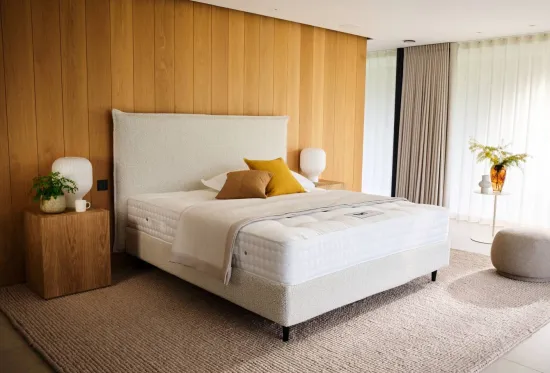
 A bed with white sheets and pillows in a small room

Using Too Many Visual Textures at Once

Texture brings warmth, dimension, and personality. But too many textures in a small space create visual static. Bouclé next to velvet next to rattan next to patterned cotton - the eye works overtime, and the room feels busy. A calmer palette might involve soft linen as the primary texture, one contrasting weave for interest, and perhaps timber or metal for structure. When texture has hierarchy, the room feels open rather than chaotic. The difference is subtle but transformative.

Forgetting the Vertical Plane

Many small rooms rely heavily on low furniture - low beds, low storage, low lighting. But height is one of the simplest tools for expanding space. A tall headboard (Furl’s can be wall mounted at any chosen height), slim shelving units, wall-mounted bedside tables… all shift the visual centre upward. The eye follows these lines, and the room gains vertical volume even when the floor space can’t grow. If a room feels boxy, chances are the vertical plane has been underused.

Why It All Matters

A room that looks small isn’t just an aesthetic issue. It affects how you move, how you sleep, how mentally spacious the environment feels. In a world where homes are shrinking and belongings keep accumulating, these small visual shifts make a difference. Furniture plays a role too. Pieces that store generously, open smoothly, and are handcrafted to last - like our British-made beds and sofas - create a baseline of order that changes how space functions day to day. 

And because we design every product in sections that navigate even the tightest London staircases, the result is not only beautiful but practical in the homes that need it most. Smallness is rarely a matter of square metres. It’s the way a room is allowed to breathe - or not.

Related Products

David Norman

David Norman is the founder of Furl, a UK-based furniture brand known for redefining how people live with space-saving, design-led storage beds and sofa beds.

With almost two decades of hands-on experience in product design, manufacturing, and brand strategy, David has built Furl into a trusted name among urban professionals seeking calm, clutter-free homes. His work has been recognised for its innovation and craftsmanship, with features in publications such as Yahoo Finance and The Telegraph.

David continues to lead Furl’s creative direction, developing furniture that solves real-world problems without compromise.

Got Questions? Lets Talk!